
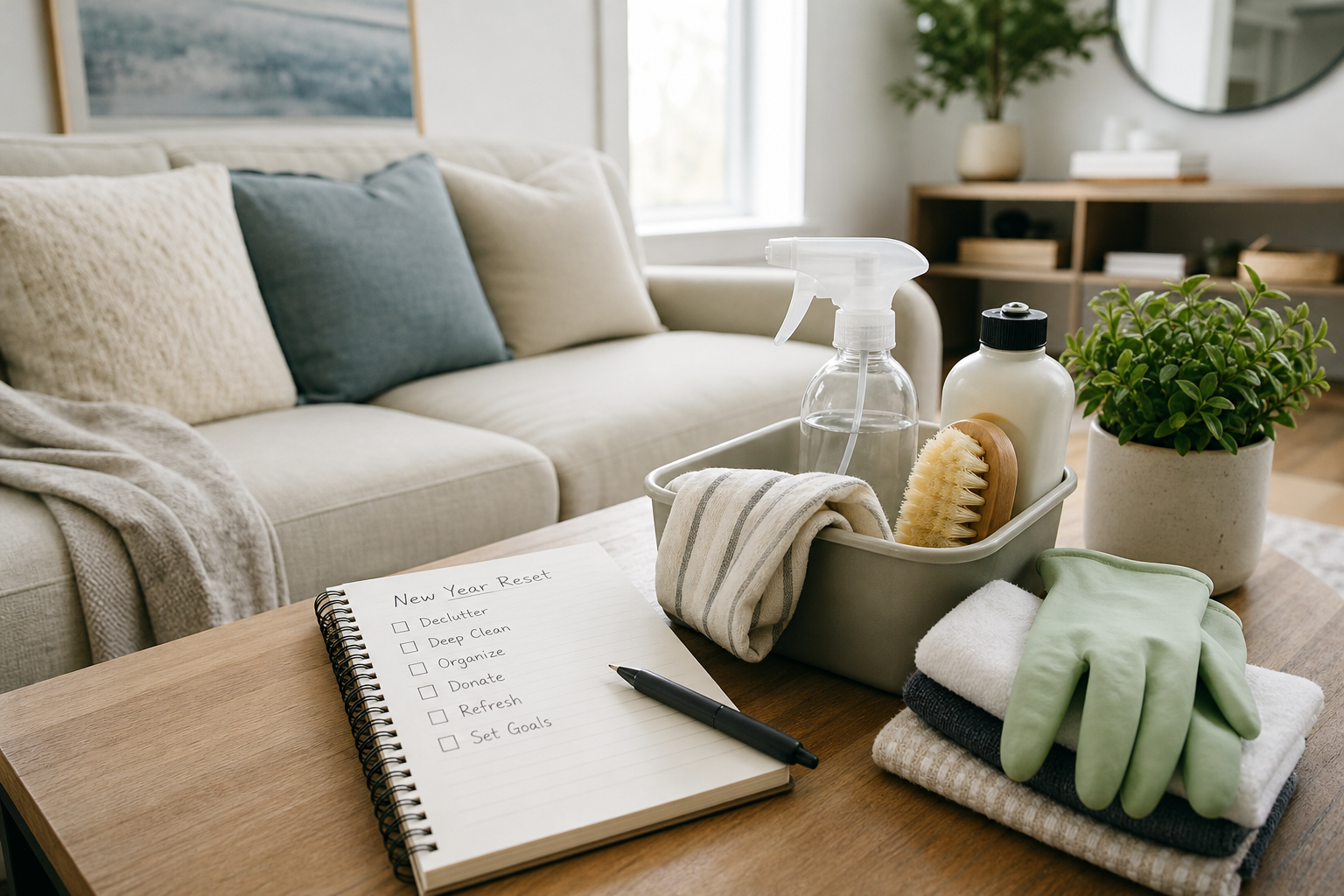
New Year Home Reset Checklist That Feels Doable
If you only have a weekend, that’s plenty. If you only have a few evenings, this still works. Just take it one area at a time and keep moving.
What you need
- 3 bags or boxes labelled bin, donate and put away
- Microfibre cloths
- Vacuum or broom
- Mop
- Washing-up liquid / dish soap
- All-purpose cleaner
- Bicarbonate of soda / baking soda for deodorising jobs
- Laundry basket for stray items
- Pen and notepad, or your phone, for anything you need to buy or fix later
Time: 2 to 5 hours total, split across a weekend or 3 to 4 evenings
Difficulty: Easy to moderate
Safety notes: Check manufacturer instructions before cleaning appliances and sealed surfaces. Test any cleaner on a hidden area first. If you use bleach or disinfectant, ventilate the room well and never mix bleach with vinegar, ammonia or any other cleaner. For most routine home resets, ordinary cleaning is usually enough unless someone in the home is ill.
Related cleaning routines guides
New year home reset checklist: do these 10 steps in order
- Take down holiday decor and sort it before storing. Throw out broken hooks, dead batteries and damaged wrapping supplies. Donate any decor you didn’t use this year. If you need help with that part, use this guide on how to declutter Christmas decorations after the holidays.
- Clear food and packaging leftovers. Go through the fridge, freezer and pantry. Refrigerated leftovers generally need using within 3 to 4 days, and your fridge temperature should stay at 40°F / 4°C or below. Date labels are often about quality, not always safety, so use common sense and proper food storage guidance.
- Do a fast visible clutter sweep. Pick up anything left out that belongs somewhere else: gifts, returns, receipts, chargers, toys, unopened post and random laundry.
- Reset your entryway. Remove coats you’re not wearing every day, toss junk mail, and put a limit on shoes. One basket, one tray and one hook per person is usually enough.
- Reset the kitchen first. Wipe fronts, clear counters, wash the sink, clean the fridge shelves you can see, and sort out any under-sink clutter.
- Reset the bathroom next. Empty obvious empties, wash the sink, mirrors and toilet, and deal with mould or limescale spots before they spread.
- Refresh laundry and bedding. Wash towels, check the washing machine seal, and deal with any musty smells before they start feeling normal.
- Do one closet or storage zone. Linen cupboard, wardrobe, cleaning cupboard or that one drawer full of cables. Just one.
- Handle disposal properly. Set aside expired medicines for a local take-back scheme. Keep old paint, batteries and some cleaners for household hazardous waste disposal if your area offers it. Don’t pour them down the drain.
- Finish with home maintenance checks. Test smoke alarms, check HVAC or air filters, and note anything small that needs replacing.

Room-by-room reset plan
1. Entryway or front hall
This area sets the tone for the whole house, and it tends to fill up quickly after December.
- Recycle flyers, delivery boxes and old cards
- Return out-of-season shoes and coats to proper storage
- Shake out the doormat
- Wipe skirting boards, shelf tops and light switches
- Put a small basket there for returns, keys or gloves
If your home feels messy the second you walk in, start here before anything else.
2. Kitchen
Focus on food, surfaces and anything sticky. You do not need to deep-clean every cupboard.
- Throw out spoiled leftovers and check chilled food dates sensibly
- Wipe fridge handles, shelves and door seals
- Clear counters so daily cooking feels easier again
- Degrease cabinet fronts if needed with the best way to clean grease off kitchen cabinets
- Sort the cupboard under the sink with these small-space under-sink organising ideas
- Mop the floor, especially around the bin and cooker / stove
If your floor still feels tacky after all the holiday cooking, this guide on how to clean sticky wood kitchen floors will help.
Quick tip: write down anything you notice while cleaning, like a broken food clip or missing shelf liner, but don’t stop halfway through to shop.
3. Bathroom
Bathrooms tend to collect half-used products, old medicines and fast-growing grime. Keep this part simple and safe.
- Bin empty bottles and dried-up toiletries
- Wipe the mirror, sink and taps
- Remove toothpaste marks with this guide to cleaning toothpaste stains from the bathroom sink
- Clean problem spots like grout using this shower-corner grout method
- Check shower head buildup if the spray has gone uneven
- Gather unused or expired medicines for a proper take-back option
Don’t mix bathroom products just because the label says “powerful.” Use one cleaner at a time, rinse well, and ventilate the room.
4. Laundry area
This is worth doing early in January because stale towels and detergent residue can make the whole house feel less fresh.
- Wash bath towels and tea towels
- Clean the washer seal using this guide on how to clean a washing machine rubber seal
- Deal with stale-smelling towels with these steps to remove a musty smell from towels without bleach
- Match stray socks and set a small basket aside for singles
If your laundry setup is small, even a 10-minute tidy can stop clothes from piling up again next week.
5. Bedroom and linen storage
You don’t need a full wardrobe overhaul unless you want one. A reset is more about making everyday life run more smoothly.
- Change the bed and air the room
- Put away gift clothes that still need tags removed or returns decided
- Clear the bedside table
- Refold the linen cupboard and remove anything torn, stained or never used
These small linen closet organisation ideas are useful if sheets and towels are always falling out.
6. Living room
This room often ends up holding everyone else’s clutter.
- Return books, chargers, toys and paperwork to where they belong
- Dust shelves and TV stand
- Vacuum under cushions and furniture edges
- Store winter throws neatly instead of draping them over every chair
A basket for “belongs elsewhere” items is useful here. Empty it at the end, not every five minutes.
What to throw away, donate, store or deal with later
| Item | What to do |
|---|---|
| Broken holiday decor | Bin or recycle parts where possible |
| Decor you skipped this year | Donate |
| Leftover wrapping supplies you actually use | Store together in one box |
| Old medicines | Set aside for local take-back disposal |
| Old batteries, paint, strong chemicals | Use local hazardous waste disposal, not sink or general bin where restricted |
| Random gifts you won’t use | Donate or rehome promptly |
| Paper piles and receipts | Recycle, shred or file only what you must keep |
Don’t turn a reset into a deep-clean marathon
This is where a lot of January checklists go off track. They quietly turn into a total-home makeover with labelled bins, perfect cupboards and seven loads of laundry.
You don’t need that.
Try this rule instead: reset what affects your next normal week. Usually that means kitchen surfaces, fridge food, bathroom basics, laundry, your entryway and one storage area. The rest can wait.
Clutter can change how calm and functional your home feels, and it can create trip hazards too. That’s reason enough to clear floors, stairs and busy surfaces first, even if the cupboards stay imperfect for now.
A simple weekly plan so it still looks better in February
Once your home is reset, keep it going with a very short routine. This works better than trying to stay “caught up” all month.
- Daily: 10-minute evening tidy, dishes done, counters wiped, one laundry load only if needed
- Weekly: fresh towels, bathroom wipe-down, vacuum high-traffic floors, fridge check, paperwork sort
- Monthly: test smoke alarms, check clutter hotspots, look at filters and restock basics
If you want a ready-made version, this daily reset routine for a messy house is a good follow-on after your January tidy-up.
When to disinfect and when plain cleaning is enough
For most homes, routine cleaning is enough for a reset. Clean first to remove dirt and residue. Use disinfectant only when there’s a specific reason, like illness in the home or a surface that needs it according to product instructions.
If you do use disinfectant or bleach, follow the label exactly, open windows if possible, keep children and pets away until surfaces are dry, and never mix products.
A realistic one-week version if you’re busy
- Day 1: Take down decor and clear gift overflow
- Day 2: Fridge, leftovers and kitchen counters
- Day 3: Bathroom surfaces and toiletries
- Day 4: Laundry, towels and bedding
- Day 5: Entryway and living room clutter
- Day 6: One storage area only
- Day 7: Maintenance checks and a 15-minute whole-home tidy
If you’re staring at the mess and not sure where to begin, start with one bag for rubbish, one for donations and one laundry basket for things that belong in other rooms. That first pass usually changes the house faster than scrubbing does.
Frequently Asked Questions
What should I do first in a new year home reset?
Start with the things that make the house feel obviously unsettled after the holidays: take down decorations, clear packaging, deal with leftovers and pick up visible clutter. After that, move to the kitchen and bathroom. Those rooms affect your daily routine most, so resetting them first gives you the quickest win.
How long should a home reset take?
A realistic home reset can take 2 to 5 hours total if you keep it focused, or a week if you split it into short sessions. It doesn’t need to be a full deep clean. Think of it as getting the house back to working order, not making every cupboard perfect.
Do I need to disinfect the whole house in January?
Usually, no. For routine home care, ordinary cleaning is often enough unless someone is sick or a surface specifically needs disinfecting. Clean first to remove grime, then use disinfectant only when needed and always follow the product label. Never mix bleach with other cleaners.
What should I throw away after the holidays?
Throw away spoiled leftovers, broken decorations, dead batteries where local rules allow proper recycling, dried-up toiletries and packaging you don’t need. Donate decor you didn’t use and unwanted gifts you know you won’t keep. Set aside old medicines and certain chemicals for proper disposal rather than the sink or ordinary bin.
How do I keep my home reset from falling apart by February?
Use a short maintenance routine instead of another big tidy-up. A 10-minute evening reset, a weekly fridge check, fresh towels, quick bathroom wipe-down and one clutter sweep each weekend is often enough. Keeping surfaces clear and dealing with small messes early matters more than doing a monthly marathon.
Free printable
Get the 15-minute weekly cleaning checklist
One short block a day keeps the whole home under control. Open the printable checklist, then join the list for one new practical guide a week. No spam, unsubscribe any time.