How to Clean Washing Machine Rubber Seal Black Marks
To clean black marks off a washing machine rubber seal, pull back the gasket folds, remove any lint or slime, then wipe the seal with a mild cleaner or whatever your machine manufacturer recommends. Dry the seal thoroughly afterwards and leave the door open, since trapped moisture is usually why the marks keep coming back.
On a front-load washer, black marks on the seal are usually mould, mildew, detergent residue or grime caught in the rubber folds. The right cleaner does matter, so check your manual first. Some brands allow oxygen bleach or a washer-clean cycle, while others specifically warn against vinegar, citric acid or harsher products on rubber parts.
What you need
- Microfibre cloths or soft cleaning cloths
- An old soft toothbrush or soft detailing brush
- Warm water
- Washing-up liquid / dish soap
- A small bowl
- Gloves
- Optional: oxygen bleach, if your machine manual allows it
- Optional: cotton buds for tight corners
Time: 15 to 30 minutes
Difficulty: Easy
Before you start: two quick safety notes
- Check the manufacturer instructions for your exact washing machine before using any cleaner on the seal or running a maintenance cycle.
- Test any cleaner on a hidden area first, especially if the rubber is older or already worn.
If you use bleach, keep the area ventilated and never mix it with vinegar, ammonia or any other cleaner. The CDC advises against mixing bleach with other products, and bleach is not the best routine fix for every machine or every patch of mould.
Also skip abrasive pads and heavy scrubbing. They can damage the rubber.
How to clean washing machine rubber seal black marks step by step
- Open the door and inspect the full seal.
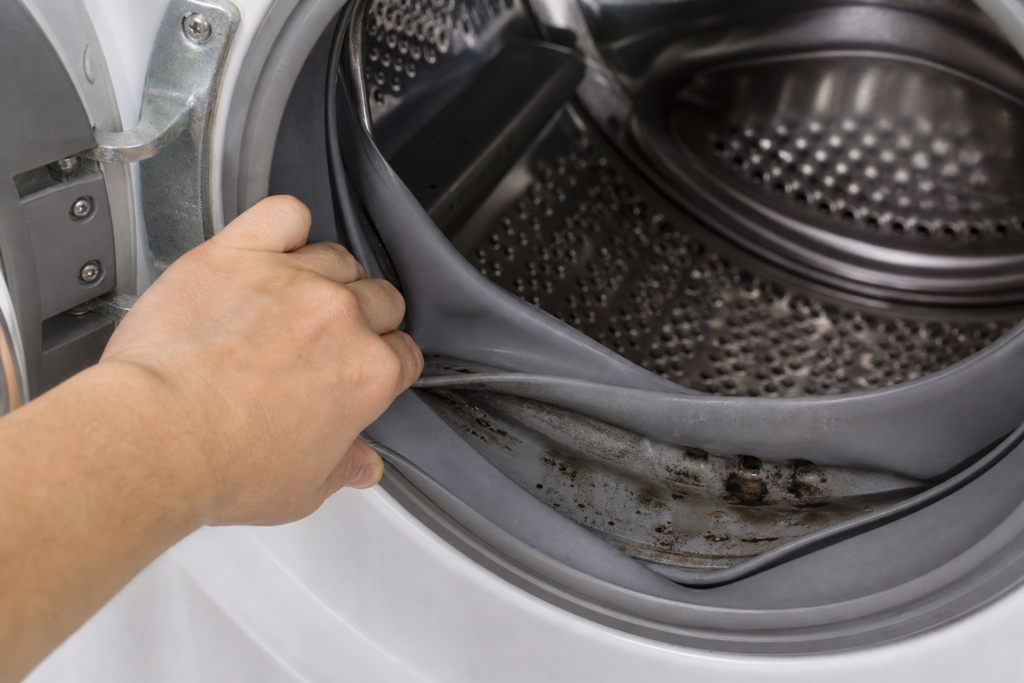
Gently pull the rubber gasket back all the way around. Pay close attention to the lower section, where water, lint and hair often collect. If you notice tears, deep cracks or a loose-looking seal, cleaning may not be enough. - Remove loose debris first.
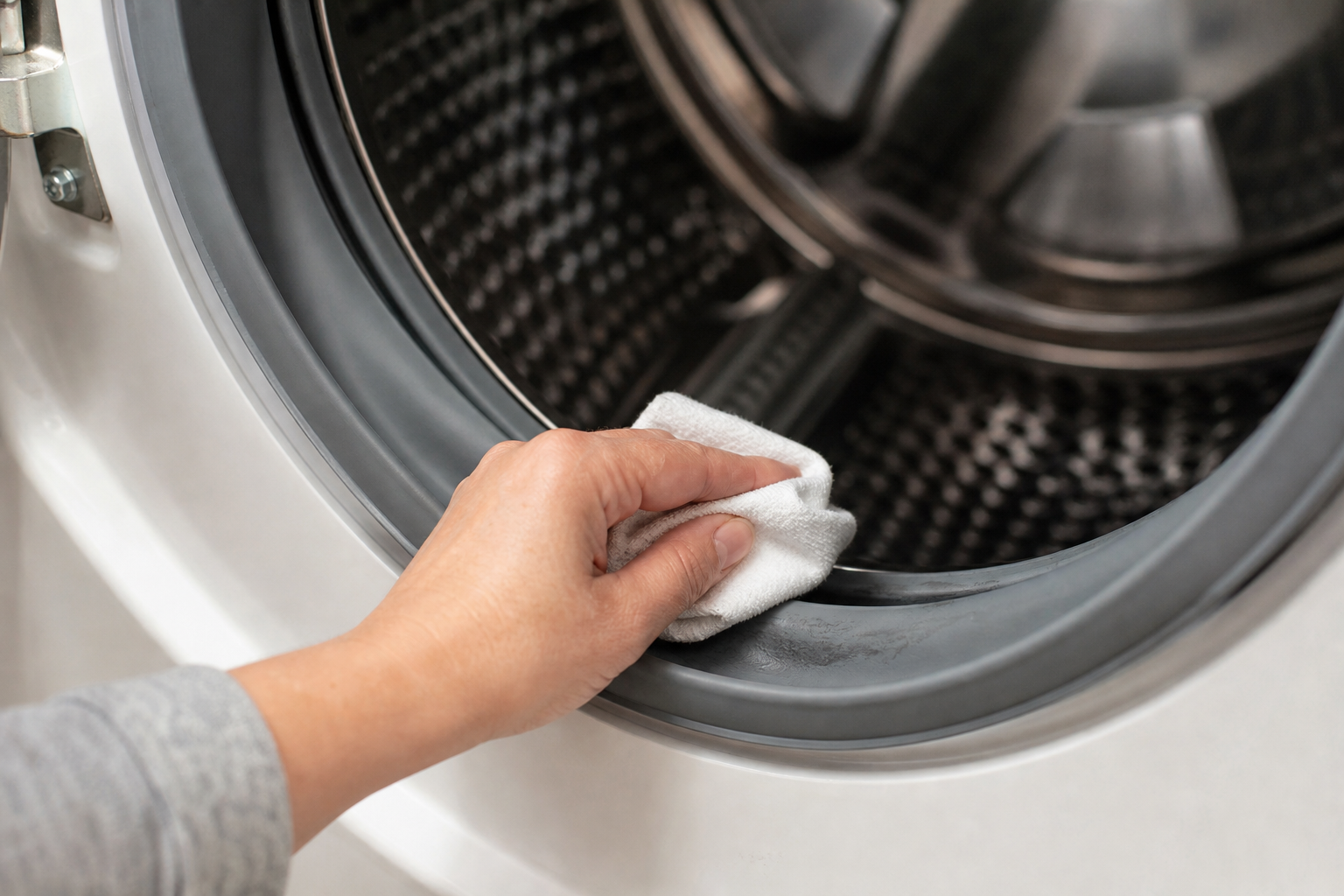
Use a dry cloth or paper towel to lift out lint, hair, slime and bits of detergent buildup. It makes the next step much easier and stops you rubbing grime deeper into the folds. - Wash the seal with warm, soapy water.
Mix a few drops of washing-up liquid / dish soap into warm water. Dip a cloth into the solution, wring it out, and wipe the whole gasket, including under the folds. Use a soft toothbrush for narrow creases. - Use a manufacturer-approved deeper cleaner if needed.
If black marks are still there, check your manual. For example, LG advises diluting a small amount of oxygen bleach in warm water for gasket cleaning, then wiping and drying well. Bosch warns against vinegar and citric acid on its washing machines because they can damage rubber parts. If your manual only recommends soapy water, stick with that. - Let the cleaner sit only if the instructions allow it.
Do not leave stronger cleaners sitting on the rubber unless your appliance guidance says that is safe. A short contact time can help with stubborn residue, but longer is not always better. - Wipe again with a clean damp cloth.
Remove any loosened grime and cleaner residue. Keep pulling back the folds as you work. Hidden residue is often why the seal still smells musty after cleaning. - Dry the seal thoroughly.
This matters just as much as the cleaning itself. Use a dry microfibre cloth and press into the folds until no moisture is left. If the room is humid, leave the door wide open for a while. - Run a maintenance or tub-clean cycle if your machine has one.
Many brands recommend a monthly clean-washer or tub-clean cycle. Some allow a washing machine cleaner or regular liquid chlorine bleach in that cycle, but not thickened or splashless bleach. Check your manual for the correct product and amount for your model.
What to use and what to avoid
| Cleaner or method | Usually okay? | Notes |
|---|---|---|
| Warm water and washing-up liquid / dish soap | Often yes | A safe starting point for most machines. Good for routine cleaning. |
| Oxygen bleach | Sometimes | Useful on grime and mouldy marks if your manufacturer allows it. |
| Washer-clean cycle | Usually yes | Follow the machine instructions. It helps clean the drum, but you still need to wipe the seal by hand. |
| Chlorine bleach | Sometimes | Only if your brand allows it. Never mix it with other cleaners. |
| Vinegar or citric acid | Not always | Some brands, including Bosch, advise against them because they can affect rubber parts. |
| Abrasive pads or harsh scrubbing | No | Can scratch surfaces and wear down the gasket. |
Why the black marks keep coming back
Front-load washers tend to hold moisture around the gasket. Add detergent residue, fabric fluff and a closed door, and the seal turns into a damp little pocket where grime builds up fast.
These habits usually make it worse:
- Closing the washer door right after a load
- Leaving water sitting in the gasket folds
- Using too much detergent
- Skipping the monthly tub-clean or clean-washer cycle
- Never checking the underside of the seal
If you also notice musty-smelling laundry, you may find this helpful: how to get rid of musty smell in towels without bleach.
How to stop mould and residue building up again
- Dry the seal after the last load of the day.
It takes less than a minute. Wipe the visible rim and the inner folds. - Leave the door ajar.
Even a small gap helps moisture evaporate. - Clean the gasket once a month.
LG recommends monthly cleaning, and that schedule works well for many busy households. - Run the machine’s tub-clean cycle regularly.
Use the setting and product your machine manual recommends. - Check for trapped debris.
Hair grips, tissues, pet hair and lint often sit in the bottom fold and can even contribute to leaks. - Use the right amount of detergent.
Too much detergent can leave residue behind, especially in cooler washes.
If you want more simple upkeep ideas, the cleaning routines category and laundry category both have practical maintenance guides you can slot into a weekly reset.
When cleaning is not enough
Sometimes the black marks are partly staining rather than active grime. If the seal looks cleaner but still has faint dark patches, that does not always mean you did anything wrong. Rubber can become permanently discoloured over time.
It is worth looking into a replacement seal or a repair if:
- The gasket is torn, split or warped
- The machine leaks from the door area
- The black buildup returns very quickly after proper cleaning and drying
- There is a strong smell that does not improve after cleaning the seal and running a maintenance cycle
For leaks or a damaged gasket, use your brand’s support guidance or speak to an appliance repair professional.
A few mistakes to avoid
- Do not mix cleaners. Never combine bleach with vinegar, ammonia or anything else.
- Do not assume all DIY methods are safe. Washing machine rubber is not the same as a shower screen or sink.
- Do not rely on the self-clean cycle alone. The folds still need manual wiping.
- Do not forget the underside of the seal. That is where the worst buildup often sits.
- Do not close the door straight away. A dry gasket stays cleaner for longer.
If you’re dealing with hard-water mess elsewhere too, you might also like how to remove limescale from a shower head without vinegar smell. For more room-by-room cleaning help, browse the bathroom and kitchen guides as well.
Helpful manufacturer guidance
If you want to check your brand’s official advice before using anything stronger than soapy water, these pages are useful:
- LG’s support guide for stains and mould in the door gasket
- Bosch guidance on cleaning washing machine rubber parts
- CDC mould cleanup guidance
Start with a cloth, warm soapy water and a careful look inside the folds. In many cases, that simple clean plus better drying habits is enough to get the seal back under control.
Frequently Asked Questions
What are the black marks on my washing machine rubber seal?
They are usually a mix of mould or mildew, detergent residue, slime, lint and general grime trapped in the gasket folds. On older machines, some marks can also be staining that does not fully lift even after cleaning. Check the seal for tears as well, because damaged rubber can trap more buildup.
Can I use vinegar on a washing machine rubber seal?
Sometimes, but not on every machine. Some manufacturers advise against vinegar and citric acid because they may affect rubber parts over time. The safest option is to check your manual first and start with warm soapy water or the cleaner your brand recommends for the gasket.
Do I need bleach to clean mould off a washer gasket?
Not always. Soapy water and a manufacturer-approved cleaner are often enough for routine buildup. Some brands allow bleach or oxygen bleach in specific amounts, but others do not. If you use bleach, ventilate the room and never mix it with vinegar, ammonia or any other cleaner.
Why does my washing machine seal keep getting mouldy?
The usual cause is moisture sitting in the folds after each wash. Add leftover detergent, lint and a closed door, and the gasket stays damp for too long. Drying the seal after use, leaving the door ajar and running a monthly tub-clean cycle usually helps reduce repeat buildup.
When should I replace the washing machine rubber seal?
Consider replacing it if the seal is torn, warped, leaking or still smells strongly after thorough cleaning and drying. If dark marks remain but the rubber is intact, they may be stains rather than active mould. For leaks or visible damage, a repair professional is the safer next step.