How to Remove Limescale From a Kettle Without Vinegar
Limescale usually comes from hard water minerals, mainly calcium and magnesium. If you just want the quickest fix, use a citric acid solution, leave it for about 15 minutes, then rinse the kettle several times and boil fresh water once or twice before making drinks.
What you need
- Citric acid powder, or bottled kettle descaler, or lemon juice
- Water
- Soft sponge or microfibre cloth
- A small soft brush or old toothbrush for the filter, if needed
Time: 20 to 30 minutes
Difficulty: Easy
Best method for most kettles: Citric acid
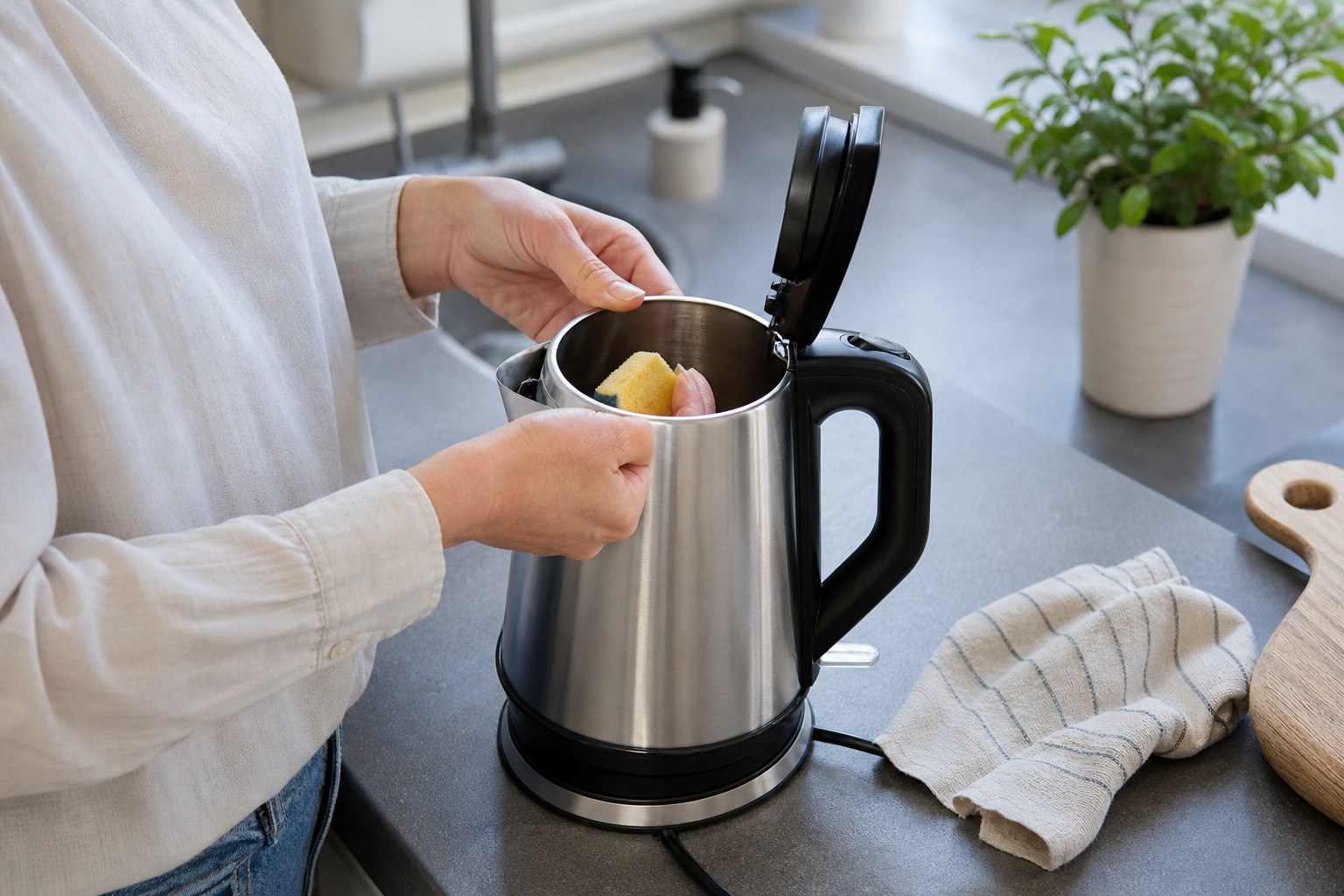
Before you start: Check your kettle manual first. Different models, coatings and filters may have their own descaling instructions. Don’t use scouring pads, steel wool, abrasive cleaners or sharp tools to scrape the heating area. Never immerse the kettle, base, cord or plug in water.
Safety note: If you use a commercial descaler, follow the label exactly. Don’t mix cleaning products. If you’re also cleaning nearby surfaces, test on a hidden area first and check the manufacturer’s instructions.
If hard water marks are a regular problem in your home, you might also find this guide to cleaning cloudy drinking glasses useful.
Related kitchen guides
Method 1: How to descale a kettle with citric acid
If you’re looking for how to remove limescale from a kettle without vinegar, start here. It’s straightforward, effective, and usually much less smelly than vinegar.
- Fill the kettle with 500ml of water. That’s about 2 cups in US measures. Stay between the minimum and maximum fill lines.
- Boil the water.
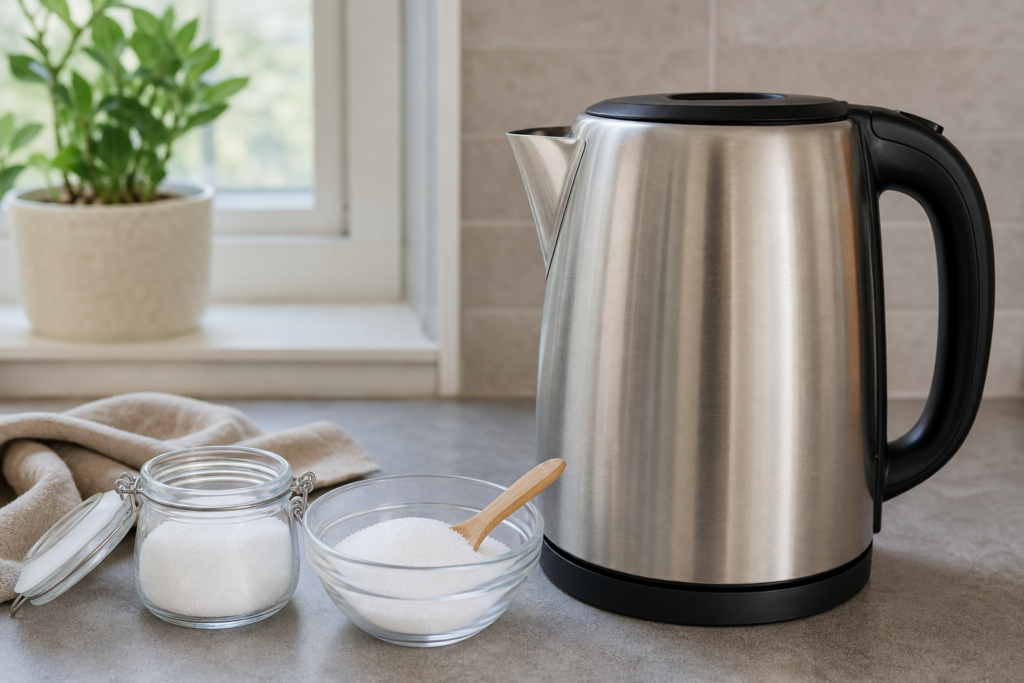
- Add the citric acid. A manufacturer method from KRUPS uses 0.88 oz citric acid to 0.5 litres of water, which works out to about 25g or roughly 2 tablespoons, depending on the granule size.
- Leave it for 15 minutes. Keep the kettle switched off while it sits.
- Pour it away.
- Rinse thoroughly. Fill and empty the kettle 5 or 6 times, or until no residue is left.
- Boil fresh water once or twice. Discard that water before making tea or coffee.
If there’s still a chalky ring inside, repeat the process once rather than making the mixture stronger. Stronger isn’t always better, and some brands warn against over-concentrated descaling solutions.
For the outside of the kettle, wipe it with a damp cloth and a tiny drop of washing-up liquid if needed. Then wipe again with plain water and dry it.
Method 2: Use a kettle descaler if your scale is heavy
If the inside of your kettle has thick, flaky buildup, a proprietary descaler may be the easiest option. This is especially useful in very hard-water areas where scale comes back quickly.
- Read the product label and your kettle manual. Some descalers are made for kettles and coffee machines, but dilution and soak times vary.
- Fill the kettle as directed. Don’t guess the amount.
- Let the solution work for the stated time.
- Empty the kettle and rinse well.
- Boil fresh water and discard it. Many guides recommend 1 or 2 full boil-and-discard cycles before you use the kettle again.
This is worth keeping in a small cleaning kit if you live in a hard-water area. If you’re short on storage, what to keep under the kitchen sink in a small space can help you avoid a cupboard full of half-used bottles.
Method 3: Can you use lemon juice?
Yes, lemon juice can help with lighter limescale, and most people prefer the smell to vinegar. It’s usually slower and less precise than citric acid powder, though, because the strength can vary.
- Add water to the kettle. Use enough to cover the scaled area while staying within the kettle’s fill limits.
- Add lemon juice. A generous splash can help, but bottled or fresh juice won’t be as exact as measured citric acid.
- Boil, then leave to sit for 15 to 30 minutes.
- Empty and rinse several times.
- Boil fresh water and discard it.
If your kettle has heavy white crusting, skip lemon and go straight to citric acid or a descaler. It’ll save time.
What not to use
Lots of people also search for how to remove limescale from kettle with vinegar and baking soda. It’s best to leave that off your list for kettles.
- Don’t use bicarbonate of soda / baking soda as your main descaler. It may help with odours or light residue, but it isn’t generally treated as a direct substitute for kettle descaler.
- Don’t mix vinegar with bicarbonate of soda / baking soda. It fizzes, but that doesn’t make it a better kettle cleaner.
- Don’t use bleach, oven cleaner or bathroom limescale sprays inside a kettle.
- Don’t scrape scale with a knife or metal utensil.
- Don’t use abrasive pads. They can damage the interior or heating area.
If you prefer low-fuss methods without harsh smells, you may also like how to clean a shower head without vinegar and how to clean a burnt pan bottom without scratching it.
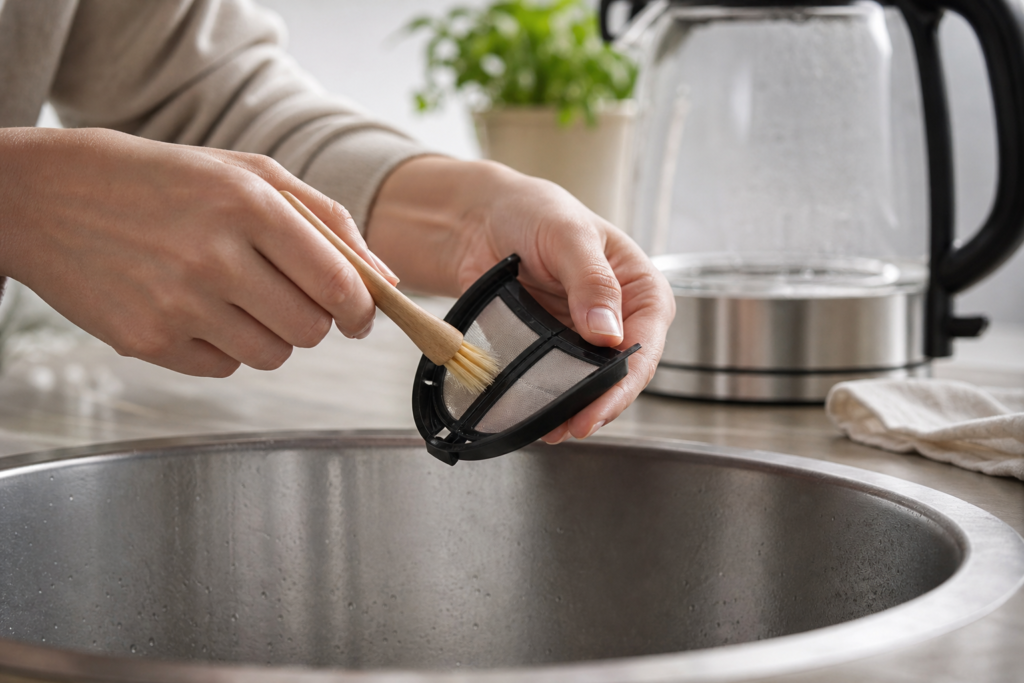
Don’t forget the kettle filter
If your kettle has a removable limescale filter near the spout, clean that too. In very hard-water areas, manufacturers say these filters can clog quickly, sometimes after as few as 10 to 15 uses.
- Remove the filter if your model allows it.
- Rinse it under water.
- Use a soft brush or toothbrush. Gently brush off loosened scale.
- Soak it in a little citric acid solution if the manual allows.
- Rinse well and refit it.
The filter catches bits of scale, but it doesn’t soften the water. Even with a filter, your kettle still needs regular descaling.
How often should you descale a kettle?
A good rule is to descale at least once a month, and more often if you live in a hard-water area or use the kettle several times a day.
| Water type | Suggested descaling frequency | What you may notice |
|---|---|---|
| Soft water | Every 6 to 8 weeks | Light film, few floating flakes |
| Moderately hard water | About once a month | White ring inside, cloudy boiled water |
| Very hard water | Every 2 to 3 weeks | Fast buildup, noisy boiling, visible flakes |
If your kettle starts taking longer to boil, sounds noisier than usual, or shows chalky white deposits, it’s time.
How to slow limescale buildup
You probably can’t stop limescale completely if your tap water is hard, but you can slow it down.
- Empty the kettle after use. Leaving water sitting inside can speed up scale formation.
- Only boil what you need. Less standing water means fewer chances for deposits to build.
- Rinse out loose flakes now and then.
- Clean the filter regularly.
- Keep a simple routine. Adding kettle descaling to a weekly or monthly kitchen reset works better than waiting until the inside is crusted over.
If you’re building a manageable routine, this daily reset routine for a messy house and the Cleaning Routines category are good places to start.
What if you do want to use vinegar?
This guide is about how to remove limescale from a kettle without vinegar, but plenty of people still search for how to remove limescale from a kettle with vinegar, how to remove limescale from a kettle using white vinegar, or how to remove limescale from kettle with vinegar and water.
Vinegar is a common descaling option, but it leaves a strong smell that some people really dislike. If you do use it, follow your kettle manufacturer’s instructions and rinse very thoroughly afterwards. Skip random internet recipes that suggest stronger concentrations or mixing vinegar with other cleaners.
And if you’re wondering about how to remove limescale from kettle with vinegar and baking, keep it simple instead. Mixing cleaners isn’t necessary here, and for kettles it’s better to use one approved descaling method properly.
When to stop and check the manual
If your kettle has a special interior coating, temperature settings, a concealed element, or unusual care instructions, pause and check the booklet or the brand’s website. Manufacturer guidance matters more than a generic hack.
That matters even more if you still see heavy scale after one treatment. Repeat the approved method once rather than experimenting with stronger chemicals or rough scrubbing.
For other small appliance jobs, you might also find how to clean an air fryer basket with baked-on grease and how to clean a toaster tray safely helpful.
If your kettle is due for a descale right now, start with citric acid, rinse it properly, and set a reminder to do it again next month. It’s one of those small habits that keeps tea-making simple.
Frequently Asked Questions
How to remove limescale from kettle without vinegar?
The simplest method is usually citric acid. Boil about 500ml of water, add roughly 25g of citric acid, leave it for 15 minutes, then empty and rinse the kettle several times. Finish by boiling fresh water once or twice and discarding it before making drinks.
How to remove limescale from a kettle with vinegar?
Vinegar is a common descaling option, usually mixed with water, but it can leave a strong smell behind. If you want to use it, follow your kettle manufacturer’s instructions rather than a random online recipe, and rinse very thoroughly afterward. Never mix vinegar with bleach or other cleaners.
How to remove limescale from kettle with vinegar and water?
People often use a diluted vinegar and water mixture, then boil or soak it depending on the kettle’s instructions. The exact ratio can vary by brand, so the safest approach is to check the manual first. Afterward, rinse well and boil fresh water once or twice before reuse.
How to remove limescale from kettle with vinegar and baking?
It’s better not to use vinegar and baking soda together for kettle descaling. The fizz looks active, but it isn’t the most useful or approved method for many kettles. A citric acid solution or a proper kettle descaler is usually more effective, with clearer instructions for rinsing and repeat use.
Can I use lemon juice instead of white vinegar to descale a kettle?
Yes, lemon juice can help with light limescale and has a milder smell than white vinegar. It’s usually less reliable than citric acid powder because the acidity is less precise. For heavy buildup, citric acid or a proprietary descaler is usually the better choice.
Free printable
Get the 15-minute weekly cleaning checklist
One short block a day keeps the whole home under control. Open the printable checklist, then join the list for one new practical guide a week. No spam, unsubscribe any time.