How to Clean Cloudy Drinking Glasses From Dishwasher
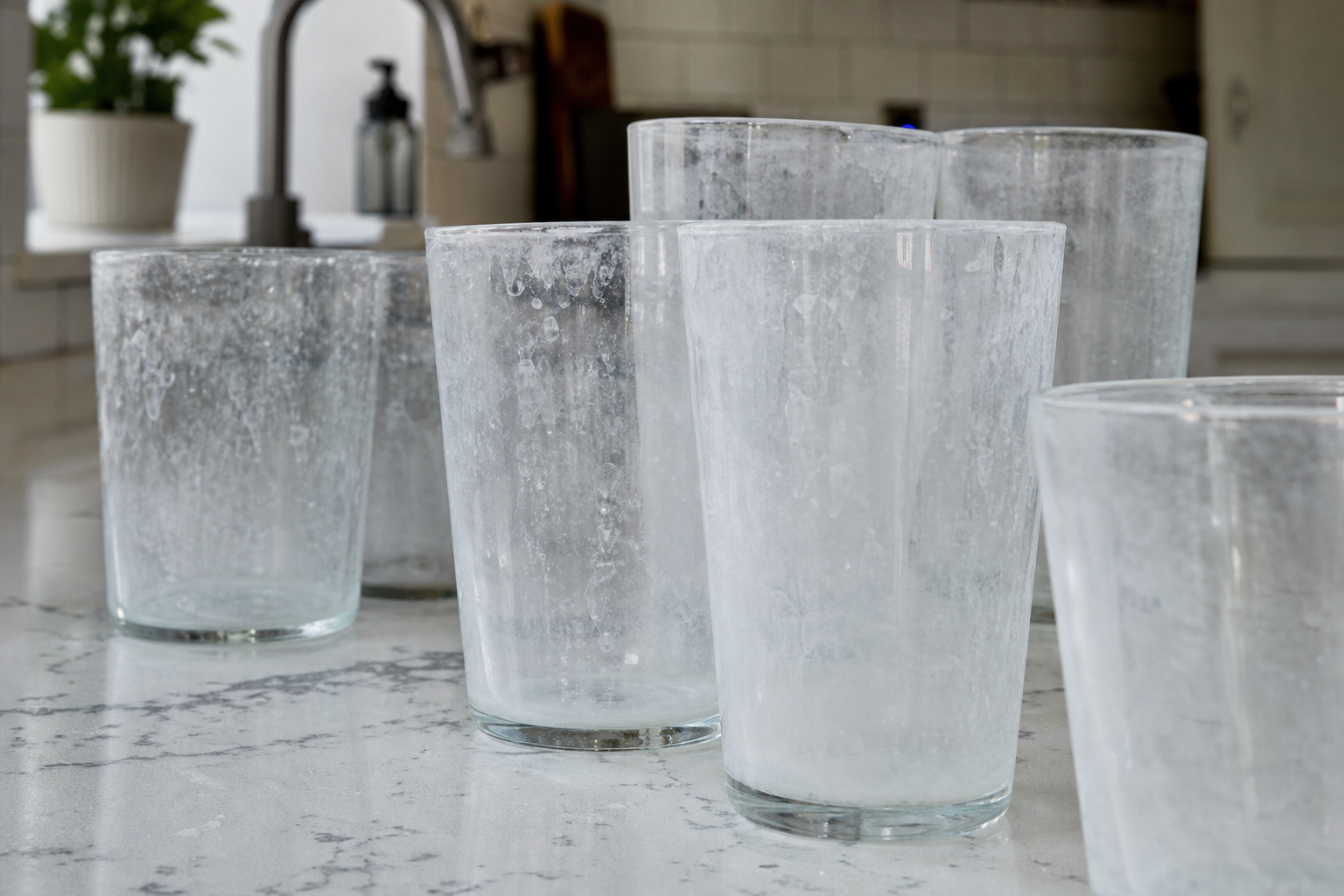
If you want to know how to clean cloudy drinking glasses from dishwasher cycles, first work out what the cloudiness actually is. If it wipes away with vinegar, it is usually hard water film. If it stays dull after that, the glass is likely etched, which means the damage is permanent.
There is a third possibility too: a food film, often left by protein-heavy residue, which needs a different approach. A quick test at the start saves time and frustration later.
What you need
- White vinegar
- Warm water
- A bowl or washing-up bowl large enough for the glasses
- Microfibre cloth or lint-free tea towel
- Soft sponge
- Mild washing-up liquid / dish soap
- Optional: citric acid cleaner made for descaling
Time: 20 to 30 minutes
Difficulty: Easy
Safety notes: Never mix vinegar with bleach or other cleaning chemicals. Test any cleaner on a hidden area first if you are unsure, and check the glassware or dishwasher manufacturer instructions before trying stronger descaling products.
First, tell the difference between film and etching
This is the step most people skip, but it makes a difference. Cloudy glassware from a dishwasher usually falls into one of these categories:
- Hard water film: a white, hazy mineral coating left behind as water dries
- Etching: permanent surface damage that looks cloudy or scratched
- Food film: residue left from food soils, sometimes proteins such as milk or egg
A simple vinegar test will help you tell which one you are dealing with.
The vinegar spot test
- Dry one cloudy glass fully.
- Put a little white vinegar on a soft cloth.
- Rub one small patch of the cloudy area.
- Rinse and dry that spot.
If the patch turns clear, you are dealing with removable mineral film. If it still looks cloudy, the glass is probably etched. If the cloudiness feels greasy or patchy rather than chalky, hand washing may remove a food film instead.
For a more detailed explanation of water hardness levels, the U.S. Geological Survey guide to water hardness is useful. Water is generally classed as hard at 121 to 180 mg/L and very hard above 180 mg/L as calcium carbonate.
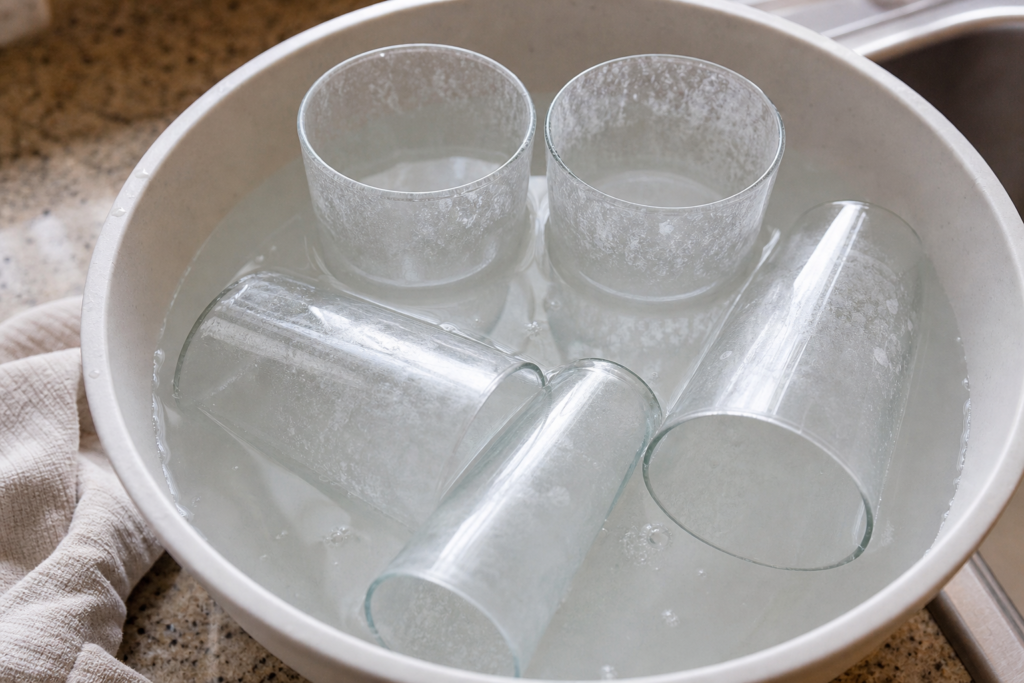
How to clean cloudy drinking glasses in dishwasher damage caused by hard water film
If the vinegar spot test worked, the cloudiness is usually mineral build-up, and you can often remove it completely.
- Fill a bowl with white vinegar. Use it neat for heavy film, or dilute it 1:1 with warm water for lighter cloudiness.
- Soak the glasses for 15 minutes. Make sure the cloudy areas are submerged.
- Gently rub with a soft sponge or cloth. Skip abrasive scrubbers, which can scratch glass.
- Wash by hand in warm water with a little washing-up liquid. This clears away loosened minerals and any vinegar smell.
- Rinse well and dry straight away. Use a microfibre cloth so minerals do not dry back onto the surface.
If the film is still there, repeat the soak once more. For stubborn build-up, a citric-acid based descaler can help, as long as the label says it is suitable for glassware. Test on a hidden area first and follow the product instructions exactly.
If limescale is a regular problem in your home, you may also find this guide useful: how to remove limescale from a shower head without vinegar smell.
What to do if the glasses are etched
If vinegar does not clear the cloudiness, the glass is likely etched. That means the surface has been permanently damaged, often by a mix of very soft water, too much detergent, and cycles that run too hot or too long.
Sadly, etched glasses cannot usually be restored to clear, shiny glass. You may be able to improve the look a little by washing and buffing them, but true etching will not come off with vinegar or home remedies.
Your best next step is prevention, so the rest of your glasses do not end up the same way.
How to remove cloudy food film from glasses
Not every cloudy-looking glass has limescale on it. Some have a food film instead, and another dishwasher run may not sort it out.
- Wash the glass by hand in hot, soapy water.
- Use a soft sponge and pay attention to the rim and base.
- Rinse thoroughly.
- Dry immediately with a clean cloth.
If the haze disappears, it was likely food residue rather than hard water or etching.
How to stop drinking glasses going cloudy again
Once you know the cause, prevention is much simpler.
1. Use the right amount of dishwasher detergent
Too little detergent can leave poor cleaning results. Too much can also cause problems, especially in soft water. Follow the dishwasher and detergent instructions rather than guessing.
As a general rule:
- Hard water: may need a bit more detergent
- Soft or softened water: often needs less
Do not replace dishwasher detergent with washing-up liquid, vinegar, or bicarbonate of soda / baking soda. Automatic dishwasher detergent is made for the machine.
2. Top up rinse aid
Rinse aid helps water sheet off the glass instead of drying in droplets. That means fewer spots and less mineral residue left behind.
If your glasses often dry with marks, check the rinse aid dispenser and adjust the setting if your dishwasher allows it.
3. Avoid very hot or very long cycles for glassware
Water temperature matters. Guidance often puts dishwasher water in the 120°F to 140°F range, and keeping glassware washes below 140°F can help reduce the risk of etching.
If your machine has a glass, eco, or quick cycle, try that for everyday tumblers and wine glasses instead of the hottest, longest programme.
4. Don’t overcrowd the dishwasher
When glasses are packed too tightly, water and detergent cannot circulate properly. That can leave film behind and raises the chance of chips.
Leave a little space between glasses, especially around the rims.
5. Dry glasses promptly if your water is hard
Air drying can leave mineral spots as water evaporates. If your area has hard water, take the glasses out soon after the cycle and dry them with a microfibre cloth.
6. Check your water hardness at home
If you keep seeing cloudiness, it may be worth checking your local water report or using a simple test strip. Hard water is mostly caused by dissolved calcium and magnesium. Knowing whether your water is soft, hard, or very hard helps you adjust detergent and rinse aid more accurately.
Quick troubleshooting table
| What you see | Likely cause | What to do |
|---|---|---|
| White haze that clears with vinegar | Hard water film | Soak in vinegar for 15 minutes, hand wash, rinse, dry |
| Cloudiness that stays after vinegar | Etching | Cannot usually be reversed, change dishwasher settings to prevent more |
| Patchy or greasy-looking film | Food film | Hand wash in hot soapy water and dry well |
| New spots after every wash | Hard water, low rinse aid, or poor drying | Top up rinse aid, adjust detergent, dry glasses promptly |
Common mistakes that make cloudy glasses worse
- Using too much detergent in soft water. This can contribute to etching.
- Using too little detergent in hard water. Cleaning suffers and film can build up.
- Choosing long, high-heat cycles for every load. Fine for heavy pans sometimes, but not ideal for all glassware.
- Letting glasses air dry in very hard water. Spots are more likely to set.
- Assuming vinegar fixes everything. It helps with mineral film, not etched glass.
For another practical kitchen cleaning guide, see how to clean a burnt pan bottom without scratching. You can also browse more kitchen help in the Kitchen category or quick upkeep ideas in Cleaning Routines.
When the dishwasher itself may need attention
If every load comes out dull, not just the glasses, the machine may need a check-up.
- Clean the filter
- Check spray arms for blockages
- Make sure rinse aid is dispensing
- Review the manual for water hardness and detergent guidance
Manufacturer instructions matter here because settings and dispensers vary from one machine to another.
A simple routine that prevents most cloudy glasses
- Load glasses loosely on the top rack.
- Use the correct amount of dishwasher detergent for your water hardness.
- Keep rinse aid topped up.
- Choose a normal or gentler cycle for glassware rather than the hottest wash.
- Remove and dry glasses promptly if your water tends to leave spots.
If one glass still looks cloudy after all that, do the vinegar test before trying random fixes. It is the quickest way to tell whether the problem is removable film or permanent etching.
Frequently Asked Questions
How do I clean cloudy drinking glasses in dishwasher loads if vinegar does not work?
If vinegar does not clear the haze, the glass is likely etched rather than coated with mineral film. Etching is permanent surface damage, so home cleaning methods usually will not restore clarity. Your best option is to prevent more damage by using less detergent in soft water and avoiding very hot, long cycles for glassware.
Why are my drinking glasses cloudy after the dishwasher?
The most common reasons are hard water film, permanent etching, or a food residue film. Hard water leaves mineral deposits, etching comes from dishwasher conditions damaging the glass surface, and food film can cling after washing. A quick vinegar test helps tell the difference because mineral film usually wipes away.
Can I use baking soda or washing-up liquid instead of dishwasher detergent?
No. Washing-up liquid can create too much foam in a dishwasher, and bicarbonate of soda or baking soda is not a proper substitute for dishwasher detergent. Use a detergent made for automatic dishwashers, and adjust the amount based on whether your water is hard or soft.
Does rinse aid help with cloudy glasses?
Yes, it often helps if the cloudiness is caused by water spots or mineral residue. Rinse aid improves how water sheets off the glass, so fewer droplets dry on the surface. It will not fix etched glasses, but it can reduce new spotting and filming.
How long should I soak cloudy glasses in vinegar?
A 15-minute soak is a good starting point for mineral film. After soaking, gently rub with a soft sponge, wash by hand, rinse well, and dry with a microfibre cloth. If the cloudiness remains unchanged after that, the glass may be etched rather than dirty.