How to Organise Cleaning Supplies in a Small Apartment
The part many guides skip is safety. In a small flat or apartment, cleaning products often end up near food, toiletries, pets or children, so the best setup has to save space and store products properly.
What you need
- 1 small cleaning caddy with a handle
- 2 to 4 plastic bins or baskets
- 1 shallow tray for sprays or refill bottles
- Adhesive hooks or over-door hooks for cloths and gloves
- A slim basket or holder for bin bags, sponges and cloths
- Labels if you like them
- A tension rod or stacking shelf for under-sink space, if needed
Time: 30 to 45 minutes
Difficulty: Easy
Related organising guides
Before you organise, cut your supplies down
Most small apartments don’t have a storage problem first. They have a duplicate-products problem.
Pull everything out from under the kitchen sink, bathroom cupboard, laundry area and hallway closet. Put it all in one spot and sort it into four groups:
- Keep: products you use weekly or monthly
- Back-up stock: one spare only, if you have room
- Tools: cloths, brushes, rubber gloves, sponges
- Get rid: empty bottles, dried-up wipes, broken spray heads, products you never use
Be realistic here. In a small space, one bathroom spray, one kitchen degreaser, washing-up liquid, bicarbonate of soda / baking soda, a limescale product if you need one, and a floor cleaner may be all you need.
If you tend to overbuy, keep a short list taped inside a cupboard door. You can also pair this step with a bigger home reset using the New Year home reset checklist.
How to organise cleaning supplies in a small apartment: 5 simple steps
1. Build one portable caddy for everyday jobs
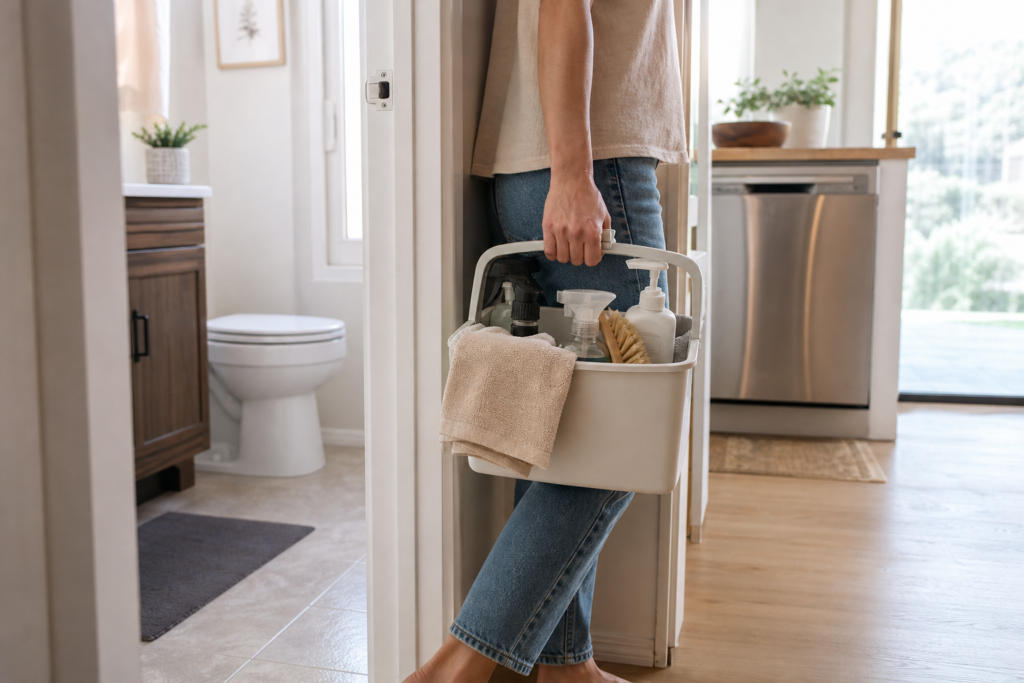
If your cupboard space is limited, a caddy does most of the heavy lifting. It stops you storing the same items in three different rooms and makes quick cleans much easier.
Your caddy should hold only the basics:
- All-purpose spray
- Bathroom spray or limescale remover
- Microfibre cloths
- Scrubbing sponge
- Rubber gloves
- Small brush, if you use one
Keep it light enough to carry with one hand. If it gets too heavy, it becomes another clutter spot.
This works especially well if you already do short tidy-ups like a daily reset routine for a messy house.
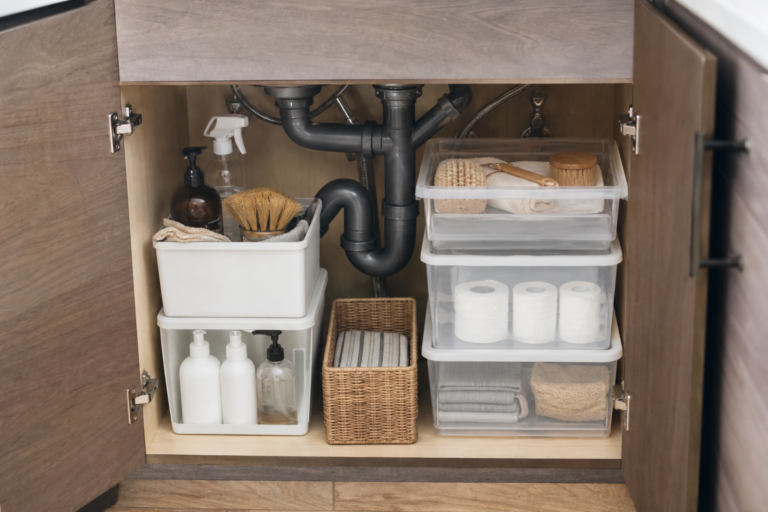
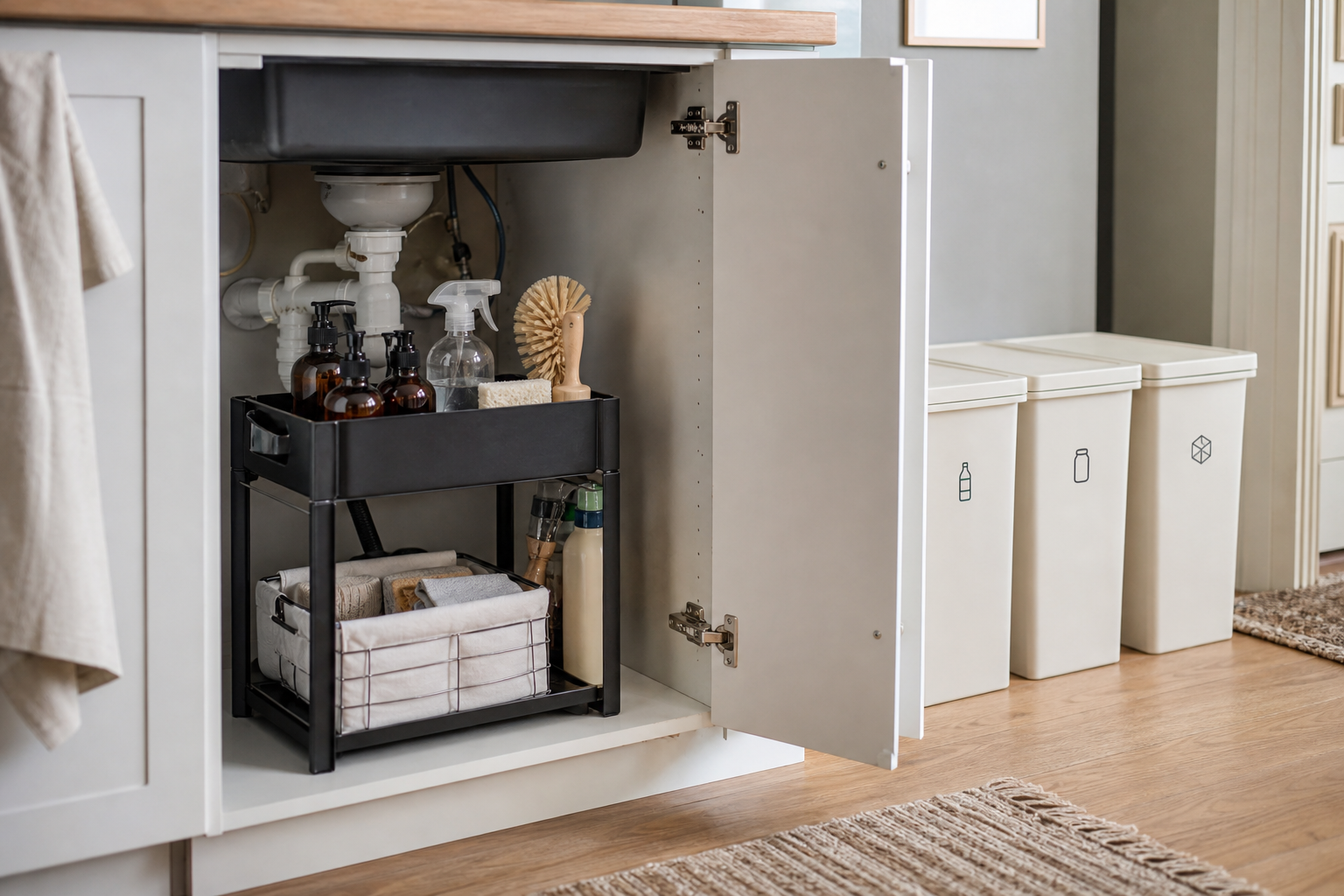
2. Use under-sink space properly, not just loosely
Under the sink can work well, but only if the area is dry enough, safe for your household and not packed with random extras.
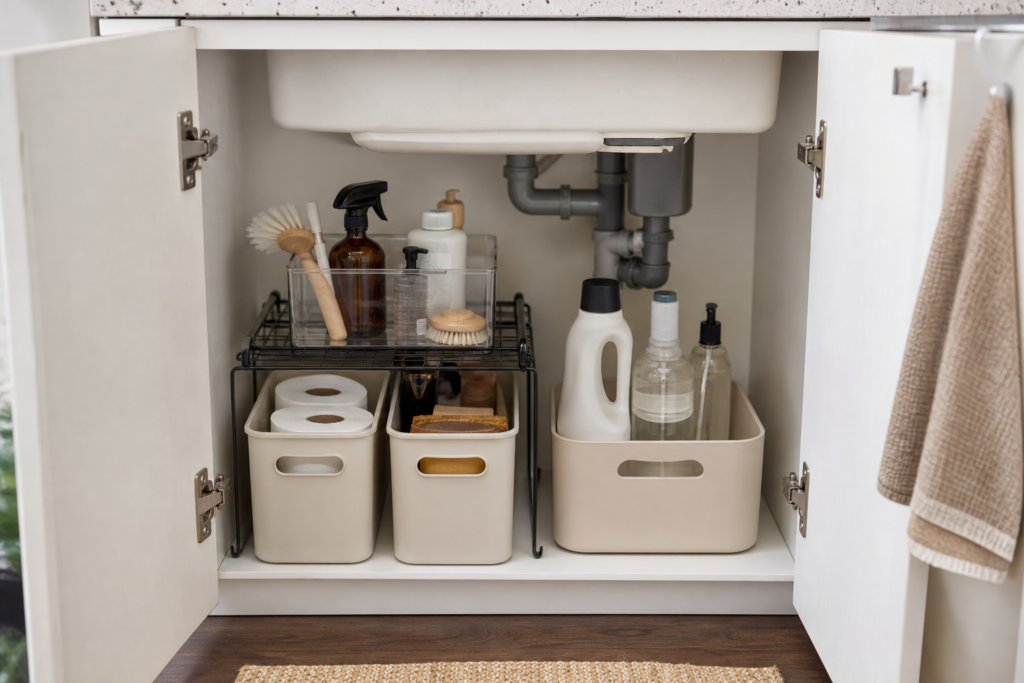
Try this layout:
- Left side: daily-use sprays in a bin or tray
- Right side: cloths, sponges and gloves in a separate basket
- Back: one back-up bottle of your most-used product
- Door or side wall: hooks for cloths or a small bag for bin liners
A shallow tray helps with leak-prone bottles. A small shelf or tension rod can also create a second level above the pipework.
If you want a more detailed setup, see what to keep under the kitchen sink in a small space.
3. Store products near the room where you use them
One reason cleaning supplies get messy is simple: everything is stored in the wrong place.
- Kitchen: washing-up liquid, dishwasher tablets if used, degreaser, cloths
- Bathroom: toilet cleaner, bathroom spray, grout brush, spare cloth
- Laundry area: detergent, stain remover, mesh bag, lint cloth
You don’t need full duplicate kits. A small bathroom basket with two or three items is often enough.
For example, if you regularly clean grout or sink marks, keeping those room-specific items nearby makes the job more likely to get done. These guides can help you decide what belongs there: how to clean grout in shower corners and how to remove toothpaste stains from a bathroom sink.
4. Give bulky tools a vertical home
Mops, brooms and dustpans usually take up more space than bottles. In a small apartment, vertical storage matters.
Good spots include:
- Inside a hallway cupboard
- On the inside wall of a utility cupboard
- Behind a door with over-door hooks
- Beside a washing machine, if there’s a narrow gap
Use clips or wall hooks if your rental agreement allows them. If not, stand tools in a tall basket so they don’t slide around every time you open the door.
5. Keep one small back-up bin and stop there
Small apartments rarely need a bulk stockpile. One lidded bin for refills or spares is enough for most households.
Set a limit such as:
- 1 spare washing-up liquid
- 1 spare toilet roll pack if it fits
- 1 spare bathroom cleaner
- 1 spare laundry detergent
Once the bin is full, that’s the limit. That simple boundary stops cupboards from turning into storage for things you won’t use for months.
The safest places to store cleaning supplies
Space matters, but safety matters more.
- Keep products in their original containers so the label, directions and safety information stay with the product.
- Don’t pour cleaners into drink bottles, food jars or unmarked containers.
- Store cleaning products away from food, even in small kitchens.
- Keep anything hazardous out of reach of children and pets, ideally in a locked cupboard or lockable box.
- Check lids are closed tightly before storing.
If a product label tells you to dilute it in another container, label that container clearly and make only what you need if possible. The EPA’s household chemical safety guide is helpful on this point.
Safety note: Never mix bleach with vinegar, ammonia or other cleaners. Open windows or use ventilation when using bleach products indoors. Always read the label first.
Even when you’re organising rather than cleaning, it still helps to check manufacturer instructions for appliance cleaners and specialist products. If any product could drip or touch a surface, test it on a hidden area first.
Best small-space setups that actually work
| Setup | Best for | What to store there |
|---|---|---|
| Portable caddy | Studios and 1-bed flats | Daily sprays, cloths, gloves, sponge |
| Under-sink bins | Kitchens with a bit of cupboard space | Sprays, cloths, bin liners, one spare |
| Bathroom basket | Fast bathroom touch-ups | Toilet cleaner, cloth, bathroom spray |
| Cupboard-door hooks | Tiny kitchens and bathrooms | Gloves, cloths, small brush |
| Tall slim basket | No closet storage | Broom, mop, dustpan |
If you’re already working on other small storage spots, these small linen closet organisation ideas use the same basic principle: contain categories, use height, and limit back-up stock.
Common mistakes that make a small apartment feel cluttered
- Keeping too many half-used products. Pick a few reliable basics.
- Buying giant packs with nowhere to put them. Small storage often works better with smaller refills.
- Storing cleaners beside snacks, pet food or food prep items. Keep them separate.
- Using one deep basket with everything piled in. Shallow bins are easier to maintain.
- Decanting products into pretty bottles. Original containers are safer.
- Letting cloths and sponges stay damp in a closed cupboard. Dry them first or use a breathable basket.
A simple apartment cleaning supply list
If you want to keep things minimal, this is a sensible starting point for many homes:
- Washing-up liquid
- All-purpose cleaner
- Bathroom cleaner
- Toilet cleaner
- Bicarbonate of soda / baking soda
- White vinegar for suitable jobs only, if you use it
- Microfibre cloths
- Sponges
- Rubber gloves
- Small scrub brush
- Bin bags / trash bags
- Broom or vacuum, depending on your floors
If you’re trying to reduce product overload, looking for the EPA Safer Choice label can be a useful shortcut when you shop.
If you only have 10 minutes, do this
- Throw away empty bottles and worn-out sponges.
- Put daily supplies in one caddy.
- Move all spares into one bin.
- Separate cleaning products from food.
- Hang gloves and cloths on a hook.
That quick reset is often enough to make your cleaning routine feel easier straight away.
Pick one cupboard, set a hard limit for back-up stock, and make the caddy first. That’s usually the part that changes everything.
Frequently Asked Questions
Where should I store cleaning supplies in a small apartment?
Store them as close as possible to where you use them, but away from food and out of reach of children and pets. A small caddy for daily items, an under-sink bin for kitchen products, and a small bathroom basket usually work well in a flat or apartment.
Is it safe to keep cleaning supplies under the kitchen sink?
It can be, as long as the area is dry enough, the products are sealed, and they are stored away from food items. If you have children or pets, use a lock or choose a higher cupboard. Keep products in their original containers and check for leaks regularly.
How many cleaning products do I actually need in a small space?
You usually need fewer than you think. For many homes, one all-purpose cleaner, one bathroom cleaner, toilet cleaner, washing-up liquid, bicarbonate of soda or baking soda, cloths, gloves and a scrub brush are enough. The goal is to cover common jobs without filling every cupboard.
Can I decant cleaning products into matching bottles?
It’s better not to. Original containers include directions, warnings and first-aid information, and some also have child-resistant lids. If a label specifically tells you to dilute a product in another container, label that container clearly and only make what you need.
Free printable
Get the 15-minute weekly cleaning checklist
One short block a day keeps the whole home under control. Open the printable checklist, then join the list for one new practical guide a week. No spam, unsubscribe any time.