
How to Remove Limescale From a Shower Head Without Vinegar Smell
If you want to know how to remove limescale from shower head without vinegar smell, use a citric acid solution or a gentle limescale remover that suits your shower finish. Both break down mineral buildup without that sharp vinegar odour, and both work on removable and fixed shower heads.
Limescale usually shows up as blocked nozzles, weak flow, or water spraying off at odd angles. The fix is straightforward: use a mild descaler, give it enough soaking time, then rinse thoroughly so nothing is left inside the head.
Hard water leaves behind calcium and magnesium deposits on shower heads, especially where water heats up and then dries on the nozzles. If you can see white, crusty marks or the spray pattern has changed, it is worth cleaning it now before it turns into a full blockage.
What you need
- Citric acid powder
- Warm water
- A bowl or jug for mixing
- A plastic bag and elastic band or twist tie for fixed shower heads
- A soft microfibre cloth
- An old soft toothbrush
- A pin or toothpick for stubborn nozzle holes, if your manufacturer allows it
- Rubber gloves
- Optional: a gentle ready-made descaler labelled safe for bathroom fittings
Time: 15 minutes hands-on, plus 30 to 60 minutes soaking
Difficulty: Easy
Before you start
- Check the manufacturer instructions. Some brands warn against certain acids, sprays, or abrasive tools. If you still have the manual, use it.
- Test on a hidden area first. This matters if your shower head has a special finish such as brushed brass, matt black, polished nickel, or coated chrome.
- Do not mix cleaners. Never mix bleach with vinegar, citric acid, ammonia, or any other cleaner.
- Use a soft cloth, not a scouring pad. Abrasive pads can scratch the finish.
- Do not spray cleaner directly into the shower head unless the product instructions say you can. It is usually safer to soak the head or apply cleaner to a cloth.
If your shower has not been used for a week or more, flush it after cleaning by running cold water for 2 minutes, then hot water until it feels hot. The CDC also advises following manufacturer instructions when cleaning shower heads.
You can find more bathroom cleaning guides here if hard water marks are building up on other fixtures too.
How to clean a removable shower head without vinegar
- Unscrew the shower head. Put a towel in the shower tray or bath first so dropped parts do not chip surfaces or disappear down the drain.
- Remove the filter screen if your model has one. Not every guide mentions this, but mineral deposits often collect there as well as on the face of the shower head.
- Mix your soaking solution. A practical starting point is 1 to 2 tablespoons of citric acid in about 500ml to 1 litre of warm water. Stir until fully dissolved.
- Soak the shower head. Place the shower head and filter screen in the solution for 30 minutes. If the scale is heavy, leave it for up to 60 minutes and check the finish partway through.
- Wipe and brush gently. Use a soft cloth and a soft toothbrush around the nozzles, threads, and rim.
- Clear stubborn nozzles carefully. If the manual allows it, use a toothpick or pin very gently to loosen scale in blocked holes.
- Rinse thoroughly. Rinse the inside and outside with clean water. This part matters because you do not want cleaner left sitting inside the shower head.
- Reassemble and flush. Put the filter screen back, screw the head on, and run the shower for a minute or two.
How to descale a fixed shower head without the vinegar smell
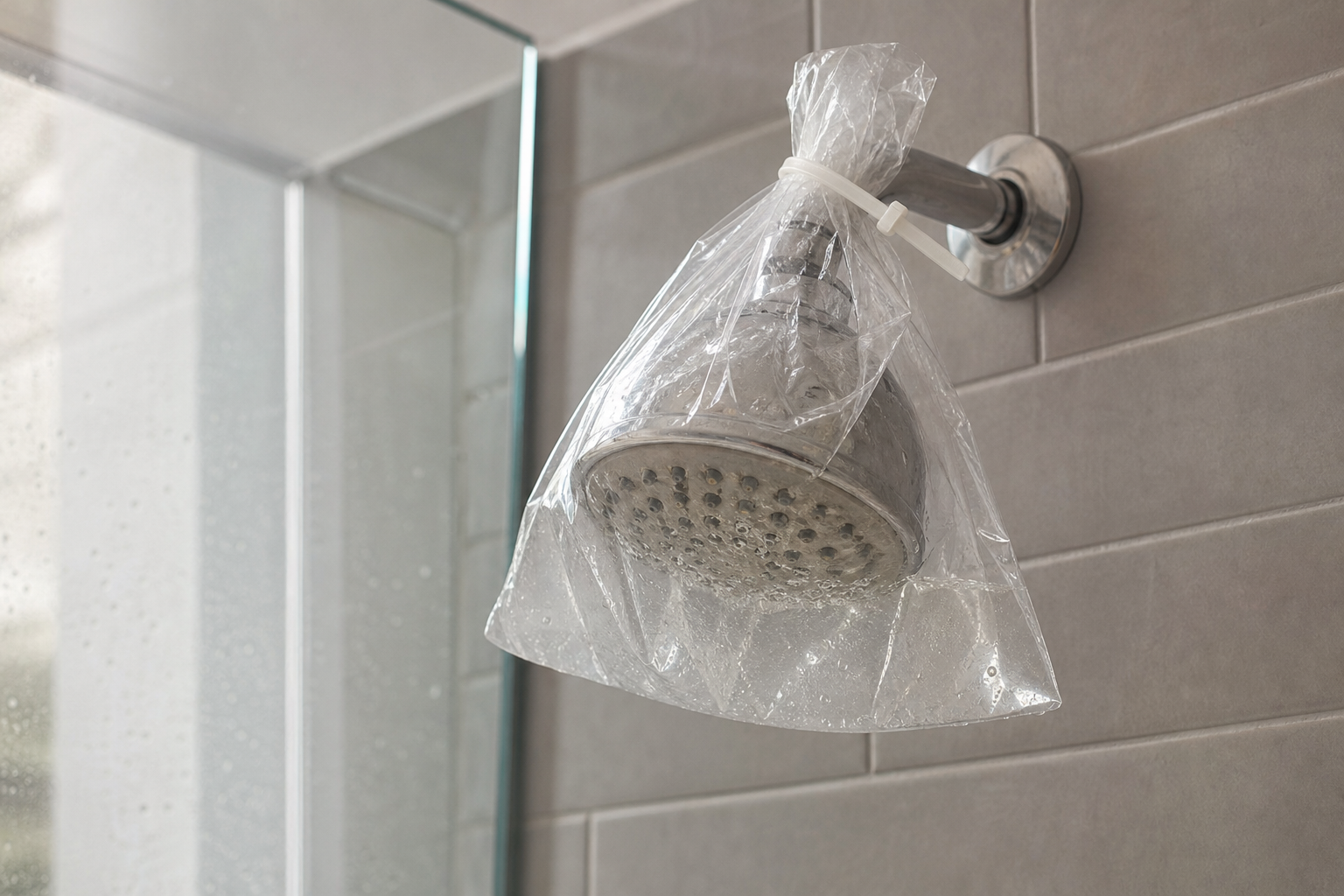
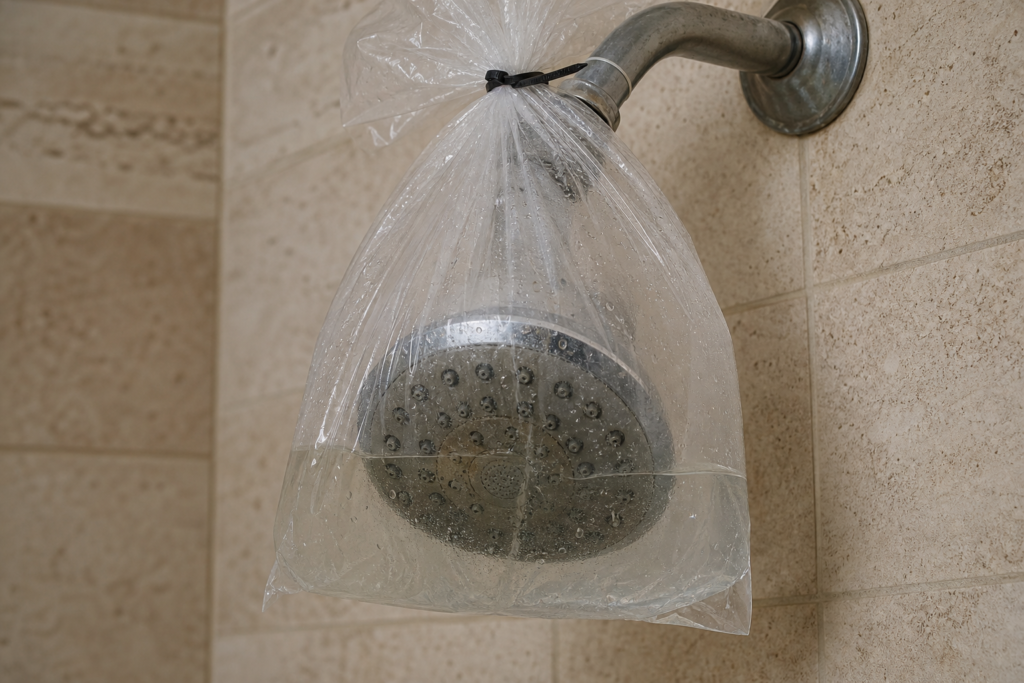
If the shower head does not come off easily, the bag method is usually the simplest option.
- Mix a citric acid solution. Use warm water and enough citric acid to make a mild descaling bath. For a small bag, 1 tablespoon in roughly 500ml warm water is usually enough.
- Fill a plastic bag. Add the solution to a sturdy bag.
- Secure the bag over the shower head. The nozzles should sit below the liquid line. Use an elastic band or twist tie, but do not fasten it so tightly that you strain the fitting.
- Leave it to soak. Around 30 to 60 minutes is usually enough. For light scale, start with 30 minutes.
- Remove the bag and wipe the head. Use a soft cloth and a soft toothbrush around the nozzles.
- Run the shower through well. Flush with warm water for a minute or two to clear loosened scale and any cleaning residue.
Which? gives similar advice for fixed shower heads using a bagged descaling solution, which is handy when you cannot remove the fitting.
Citric acid or ready-made descaler?
| Option | Best for | Smell | Notes |
|---|---|---|---|
| Citric acid solution | Most routine limescale cleaning | Low odour | Affordable and simple. Good if you want a no-vinegar option. |
| Ready-made limescale remover | Heavy buildup or convenience | Varies by product | Check it is suitable for your shower finish and follow the label exactly. |
Citric acid is often the easiest choice if you want something effective with very little smell. Some manufacturers specifically recommend gentle cleaners containing citric acid for shower descaling. If you would rather use a shop-bought product, read the label closely and make sure it is safe for taps, shower fittings, and plated finishes.
What to do if the limescale is still there
If the shower head still looks blocked after one soak, do not jump straight to harsher products.
- Repeat the soak once more.
- Clean the filter screen separately again.
- Rub flexible nozzles with your fingertip or a cloth to work loose any softened scale.
- Flush the shower head for longer.
- Check whether the poor spray is actually a damaged washer or a failing shower head, not just scale.
If you see flaking finish, discolouration, or pitting, stop there and check the manufacturer care guide before doing more.
Mistakes that can damage your shower head
- Using vinegar by default. Some manufacturers warn against acetic acid on certain products and finishes.
- Using abrasive scrubbers. They can scratch chrome and coated finishes.
- Ignoring the filter screen. Buildup inside the head can keep affecting flow even if the outside looks clean.
- Leaving descaler on too long. More time is not always better, especially on delicate finishes.
- Spraying cleaner directly into the fixture. Some brands warn this can let cleaner get into the mechanism.
- Mixing products. Keep it simple and use one cleaner at a time.
How often should you clean a shower head?
If you live in a hard water area, it makes sense to check the shower head once a month. Clean it whenever you can see buildup, or sooner if the spray pattern changes.
To slow limescale down:
- Wipe the shower head dry after use
- Rub flexible nozzles now and then with a dry cloth
- Flush infrequently used showers before using them again
- Keep an eye on white marks on nearby taps and tiles, which often means the shower head will scale up too
The EPA suggests inspecting shower heads periodically for scale buildup, and the CDC says to clean them whenever you can see buildup. So this is not just about appearance. Keeping the shower head clear helps maintain water flow and stops residue sitting there for long periods.
A quick checklist for removable vs fixed shower heads
If your shower head is removable
- Unscrew it
- Check for a filter screen
- Soak in citric acid solution for 30 to 60 minutes
- Brush gently
- Rinse thoroughly inside and out
- Reattach and flush
If your shower head is fixed
- Use the bag-over-the-head method
- Soak for about 30 to 60 minutes
- Wipe nozzles gently
- Flush well after soaking
If you are trying to keep bathroom cleaning manageable, adding this to a simple monthly reset helps. The Tidy Habit cleaning routines section has more quick upkeep ideas, and our approach to simple cleaning methods explains why low-fuss maintenance usually works better than waiting for a big scrub day.
And if you are tackling other mineral or burnt-on messes around the house, this guide to cleaning a burnt pan bottom without scratching it uses the same gentle-first approach.
Your next step is simple: check whether your shower head unscrews, mix a small bowl of citric acid solution, and deal with the buildup before it gets any thicker.
Frequently Asked Questions
What can I use instead of vinegar to clean a shower head?
Citric acid is the most useful low-odour alternative for most shower heads. Dissolve it in warm water, soak the head, then rinse thoroughly. You can also use a ready-made limescale remover if the label says it is safe for your shower finish and fittings.
How long should I soak a shower head in citric acid?
For light to moderate limescale, 30 minutes is often enough. For heavier buildup, you can usually extend that to about 60 minutes, checking the finish partway through. After soaking, brush gently and rinse very well before using the shower again.
Can I use citric acid on a fixed shower head?
Yes, usually by using the bag method. Fill a plastic bag with warm water and citric acid solution, secure it over the shower head, and leave it for 30 to 60 minutes. Then remove the bag, wipe the nozzles, and run water through the head thoroughly.
Why is my shower head still blocked after descaling?
The scale may be inside the filter screen or deeper in the nozzle openings, not just on the outside. Remove and clean the filter screen if possible, repeat the soak once, and flush the shower head well. If flow is still poor, a worn part may be causing the problem.
How often should I clean limescale from a shower head?
In a hard water area, checking it monthly is a good habit. Clean it whenever you can see white buildup, reduced flow, or water spraying unevenly. Wiping the shower head dry after use can help slow new limescale from forming.