How to Clean a Stainless Steel Sink Without Streaks
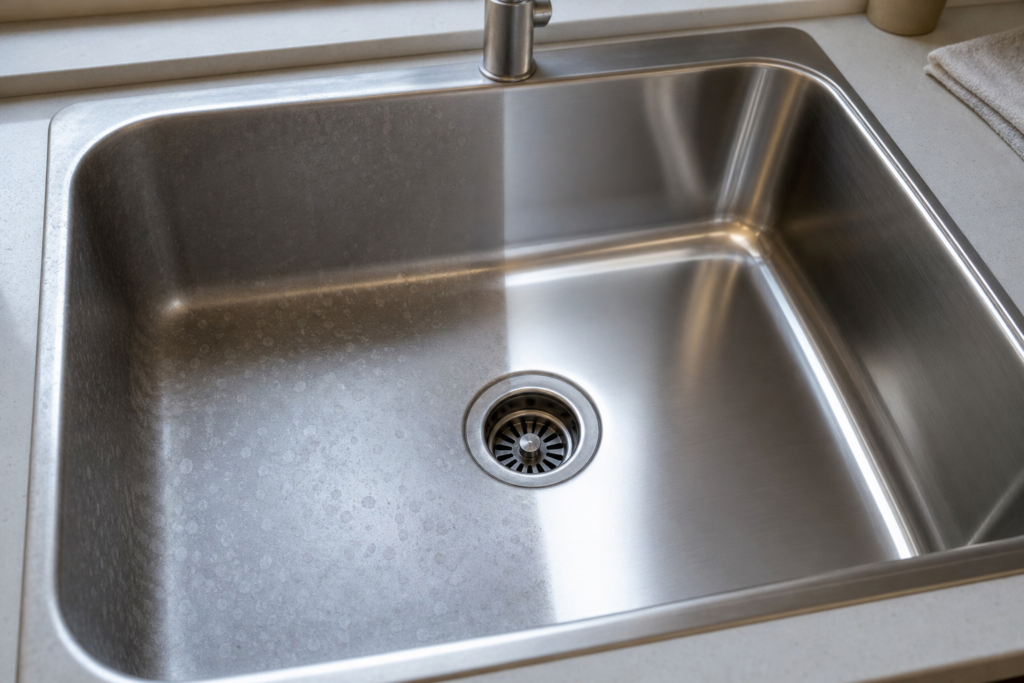
That streaky, cloudy look is often hard-water residue, not a sink that is still dirty. Once you remove that mineral film and stop letting the sink air-dry, the finish usually looks noticeably better.
What you need
- Washing-up liquid / dish soap
- Warm water
- 2 clean microfibre cloths
- Soft sponge or non-scratch cloth
- White vinegar, diluted
- Spray bottle or small bowl
- Soft dry towel for the final buff, if you like
Time: 10 to 15 minutes
Difficulty: Easy
UK/US note: bicarbonate of soda and baking soda are the same thing, but for this method you may not need it unless the sink is greasy or dull.
Related kitchen guides
Safety notes before you start
- Check the sink manufacturer’s care instructions first, especially for brushed, satin or coated finishes.
- Test any cleaner on a small hidden area first.
- Do not use steel wool, metal scourers or harsh abrasive pads. They can scratch the finish and may leave tiny iron particles behind.
- Do not use chlorine bleach on stainless steel sinks. Never mix bleach with vinegar, ammonia or any other cleaner.
- If you use a stronger shop-bought stainless steel cleaner, follow the label exactly and rinse if the product says to.
For routine stainless steel cleaning, mild soap or detergent in warm water is generally a safe choice. For water spots and scale, vinegar is commonly recommended as long as you rinse it off and dry the sink afterwards.
How to clean a stainless steel sink without streaks
- Clear the sink completely.
Remove washing-up bottles, plugs, strainers, racks, wet cloths and sponges. When things sit in the sink all day, trapped water can leave marks and discolouration. - Rinse away crumbs and loose residue.
Use warm water to wash away bits of food, toothpaste-like splashes from handwashing, and any gritty debris that could scratch the surface while you wipe. - Wash with washing-up liquid and warm water.
Put a few drops of washing-up liquid on a soft sponge or cloth. Clean the basin, sides, drain area and tap base using light pressure. - Wipe with the grain.
Look closely and you should see faint polish lines in the steel. Wipe in that direction instead of in circles. It helps the finish look more even and makes fine scratch marks less obvious. - Deal with water spots separately.
If cloudy patches or white marks are still there, apply diluted white vinegar to those areas. A simple mix of about 1 part vinegar to 4 or 5 parts water works well for light scale. Leave it for a few minutes, but do not let it dry on the surface. - Rinse thoroughly.
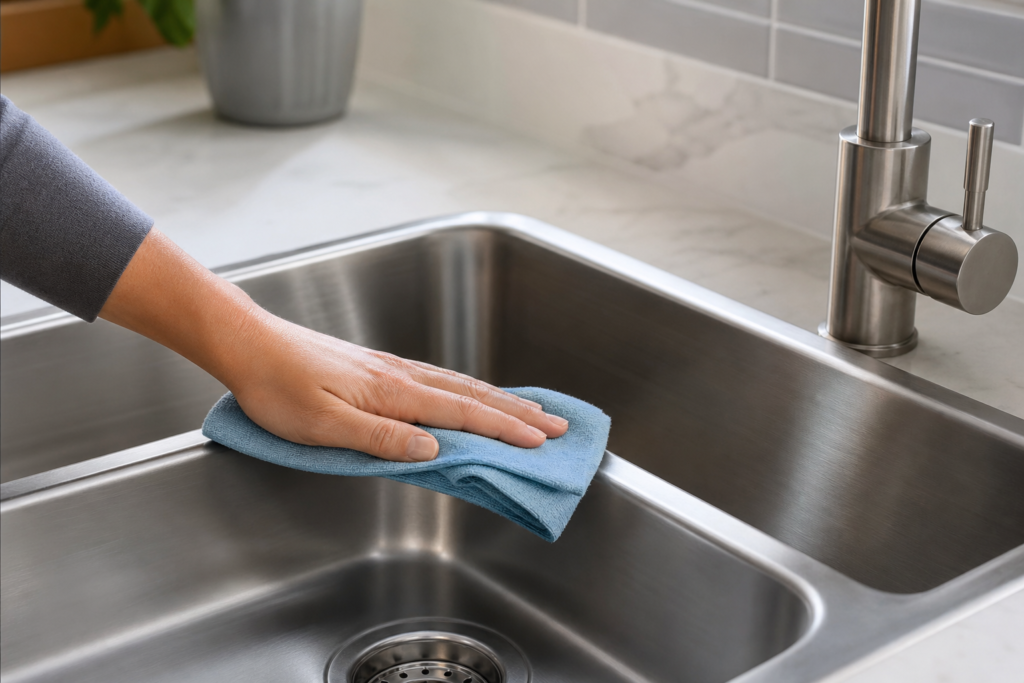
This matters more than many people think. Cleaner left behind can dry into streaks, and vinegar should always be rinsed away completely. - Dry immediately with a clean microfibre cloth.
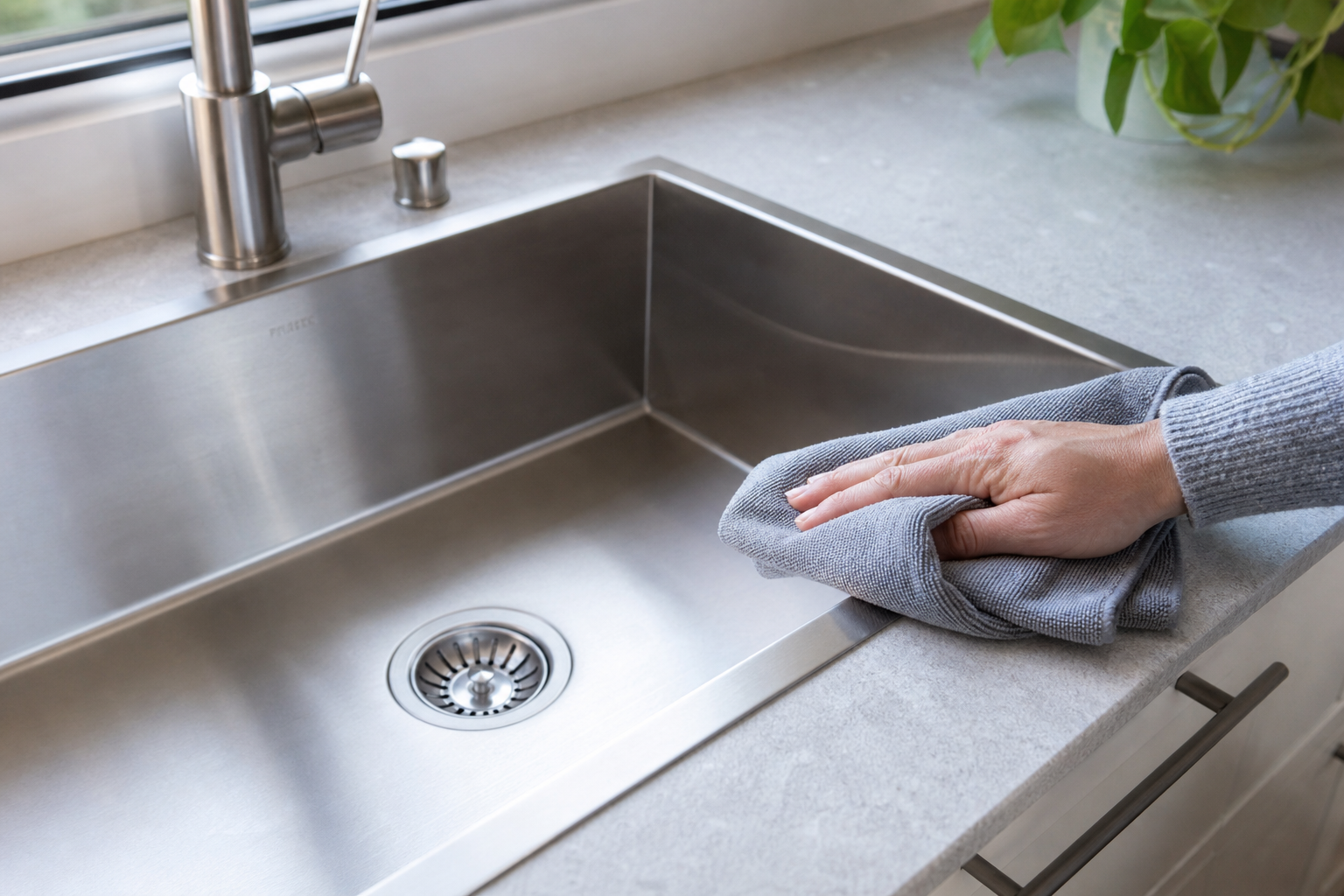
Start near the tap and work down. Use one cloth to remove the moisture, then switch to a second dry cloth if you want to give it a quick buff. - Buff with the grain for the final finish.
A brief final wipe in the direction of the brushed finish is what gives the sink that clean, even look instead of a smeary one.
That’s the whole method. Most of the streak-free result comes from the rinse-and-dry stage, not from using a fancy product.
Why stainless steel sinks get streaks and water marks
If your sink looks dull again an hour later, minerals in the water are usually the reason. As the water evaporates, it can leave behind a light film or scattered spots, especially in hard-water areas.
So you can clean the sink properly and still end up with marks if you let it air-dry. The sink is clean. It just does not look clean.
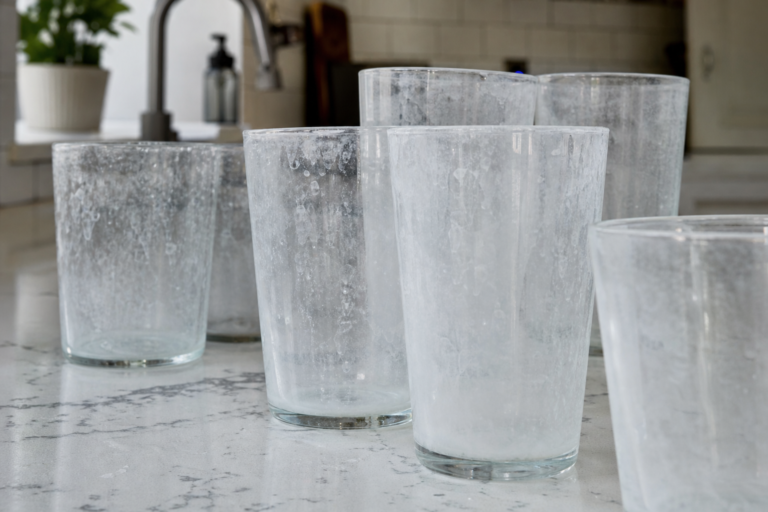
If you see the same cloudy residue on glasses, taps or your kettle, hard water is probably behind it. You might find these guides useful too: how to clean cloudy drinking glasses and how to remove limescale from a kettle without vinegar.
Best products to use, and what to avoid
Usually safe for routine cleaning
- Washing-up liquid / dish soap
- Warm water
- Soft sponge
- Microfibre cloth
- Diluted white vinegar for hard-water spots
Use with caution or skip
- Abrasive powders on brushed finishes
- Scrubbing pads that feel rough
- Oil-based polishing hacks that leave a greasy film around the basin
Do not use
- Steel wool
- Metal brushes
- Chlorine bleach
- Cleaners that tell you not to use them on stainless steel
If your sink is badly dulled by limescale, a vinegar treatment is usually the simplest place to start. If you dislike the smell of vinegar, the same problem often shows up elsewhere in the kitchen and bathroom, so you may also like how to clean a shower head without vinegar.
How to remove stubborn water spots from a stainless steel sink
When basic washing still leaves white spots or a chalky film behind, use this short reset:
- Dry the sink first so you can see the marks clearly.
- Apply diluted white vinegar to the spotted areas with a cloth.
- Leave for 3 to 5 minutes.
- Wipe gently with the grain.
- Rinse very well with clean water.
- Dry straight away with a fresh microfibre cloth.
If there is greasy residue as well as water marks, wash with washing-up liquid first, then do the vinegar step. Grease can stop the vinegar from reaching the mineral film properly.
Quick tip: Use two cloths, not one. Keep one for washing and one for drying. A damp cloth usually just moves water around and creates fresh streaks.
Common mistakes that make a stainless steel sink look dull
- Letting it air-dry. This is the biggest one.
- Using one cloth for everything. A cloth that is already damp or soapy will not leave a clear finish.
- Scrubbing against the grain. This can make the surface look patchy.
- Not rinsing properly. Cleaner residue dries into haze.
- Leaving wet sponges, mats or bottles in the sink. They trap moisture and can leave marks underneath.
- Using steel wool. It can scratch and may lead to rust-like spotting.
- Using bleach. Stainless steel is not bleach-proof.
A simple routine that keeps the sink streak-free
You do not need to deep-clean it every day. A quick routine usually works better.
| How often | What to do |
|---|---|
| Daily or after the last wash-up | Rinse, wipe with a little washing-up liquid if needed, rinse again, then dry with microfibre |
| Weekly | Clean the whole sink, edges and drain area, then treat any water spots with diluted vinegar |
| As needed | Remove items left in the sink and clean under soap bottles, mats or caddies |
If you like quick kitchen resets, you may also find this daily reset routine for a messy house helpful, along with what to keep under the kitchen sink so your cloths and cleaners are easy to grab.
If your sink still looks cloudy after cleaning
If the sink still looks flat after you wash, rinse and dry it properly, check what you are actually dealing with:
- White or chalky marks: usually hard-water scale
- Rainbow discolouration: sometimes heat or cleaner residue
- Fine scratchiness: often from rough pads or powders
- Brownish dots: can be rust stains from metal items or steel wool particles, not usually the stainless steel itself rusting
At that point, check the sink brand’s care guide before trying anything stronger. Different finishes can come with slightly different rules.
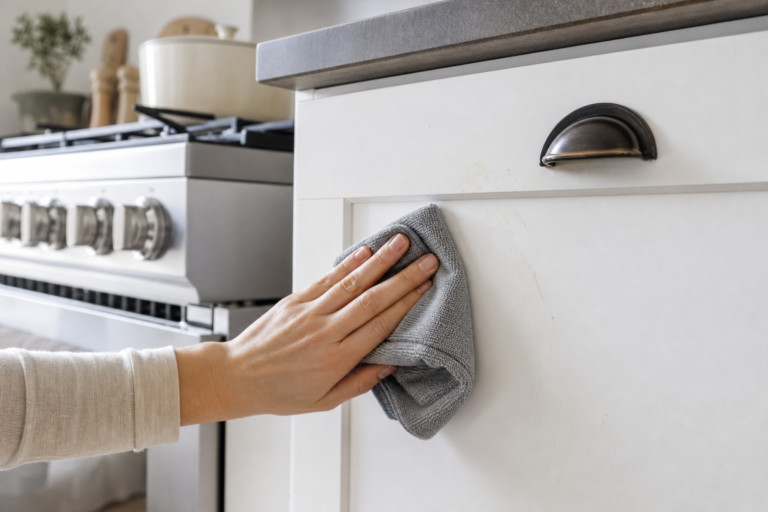
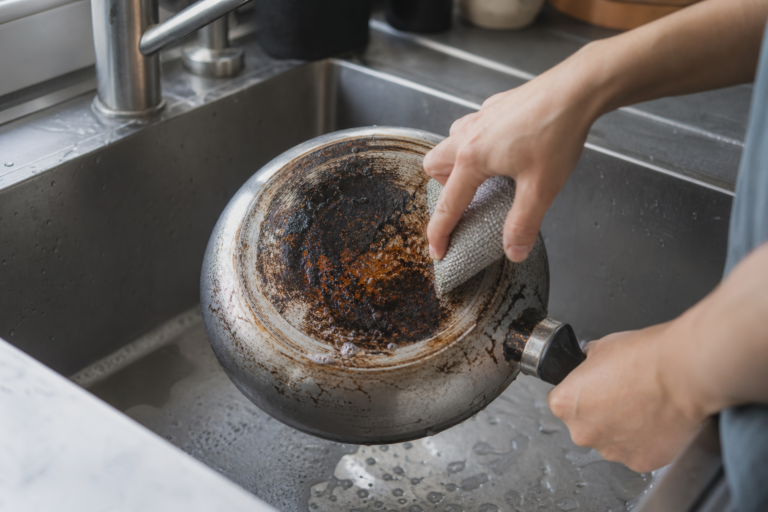
And if you are tackling a bigger kitchen refresh, these may help next: best way to clean grease off kitchen cabinets, how to clean sticky wood kitchen floors, and how to clean a burnt pan bottom without scratching.
When to use vinegar, and when not to
Vinegar is useful for hard-water spots and light scale. It is not the right everyday cleaner for every problem.
Use it when the sink has mineral marks or a cloudy film. Skip it if the sink only needs a routine wash, or if the manufacturer says not to use acidic products on that finish. Always dilute it, rinse it away, and dry the sink afterwards.
If you want the easiest habit for keeping the shine, do this tonight: after the last wash-up, rinse the sink and dry it fully with a clean microfibre cloth. That one step makes the biggest visible difference.
Frequently Asked Questions
How do you clean a stainless steel sink without leaving streaks?
Wash it with warm water and a little washing-up liquid, rinse thoroughly, then dry it straight away with a clean microfibre cloth. For the best finish, wipe with the grain of the steel. Most streaks come from water drying on the surface, not from the cleaner itself.
Can I use vinegar on a stainless steel sink?
Yes, diluted white vinegar is commonly used for hard-water spots and limescale on stainless steel sinks. Apply it briefly, wipe gently, then rinse very well and dry the sink. Check the manufacturer’s care guide first, and do not use vinegar with bleach or other cleaners.
Why does my stainless steel sink look cloudy after cleaning?
A cloudy look is often mineral residue from hard water or cleaner left behind after rinsing. If the sink air-dries, those minerals can leave a film even when the sink is clean. Rinse better, then dry immediately with a separate clean microfibre cloth.
What should you not use on a stainless steel sink?
Avoid steel wool, metal scourers, harsh abrasive pads and chlorine bleach. Steel wool can scratch and leave tiny iron particles behind, while bleach can damage stainless steel. It is also wise to avoid any cleaner that says it is not suitable for stainless steel surfaces.
How often should you clean a stainless steel sink to keep it shiny?
A quick daily rinse and dry is usually enough to keep the finish looking good. Then do a fuller clean once a week, including the edges and drain area, and treat any hard-water spots with diluted vinegar if needed. Regular drying matters more than frequent heavy scrubbing.
Free printable
Get the 15-minute weekly cleaning checklist
One short block a day keeps the whole home under control. Open the printable checklist, then join the list for one new practical guide a week. No spam, unsubscribe any time.