How to Get Rid of Fridge Smells Naturally
A bad fridge smell usually comes from a forgotten container, a spill under a drawer, or food packed so tightly that air cannot circulate. Mild smells are often easy to sort out in under an hour. Stronger odours, especially after spoiled food or a power cut, can take a few days to fade fully.
What you need
- Bin bag
- Microfibre cloths or soft sponges
- Washing-up liquid / dish soap
- Bicarbonate of soda / baking soda
- White vinegar
- Warm water
- Small bowl, tray or plate
- Old toothbrush or small cleaning brush for seals
- Optional: activated charcoal or fresh coffee grounds
Time: 30 to 45 minutes for a standard clean, plus 1 to 3 days if you need an odour absorber for lingering smells.
Difficulty: Easy
Safety notes: Unplug the fridge if your manufacturer advises it before deep cleaning. Check the appliance manual first. Test any cleaning method on a hidden area if you are unsure about the finish. Never mix bleach with vinegar, ammonia or any other cleaner. If you choose to use a stronger product later, rinse away other cleaners first and follow the label exactly.
Related kitchen guides
1. Empty the fridge and throw away the real cause
If you skip this step and go straight for a box of baking soda, your fridge will probably still smell tomorrow.
Take everything out. Check leftovers, sauces, soft fruit, salad bags, milk, meat, and the back corners where jars get forgotten. If anything smells off, is leaking, or is well past its date, bin it.
Also look for:
- Drips under meat packaging
- Spilled milk in door shelves
- Rotting veg in the crisper drawer
- Sticky rings under jars
- Damp packaging or paper liners
If the smell started after a power cut, be extra cautious with perishable food. Food does not always smell bad when it is no longer safe.
2. Remove shelves and drawers and wash them properly
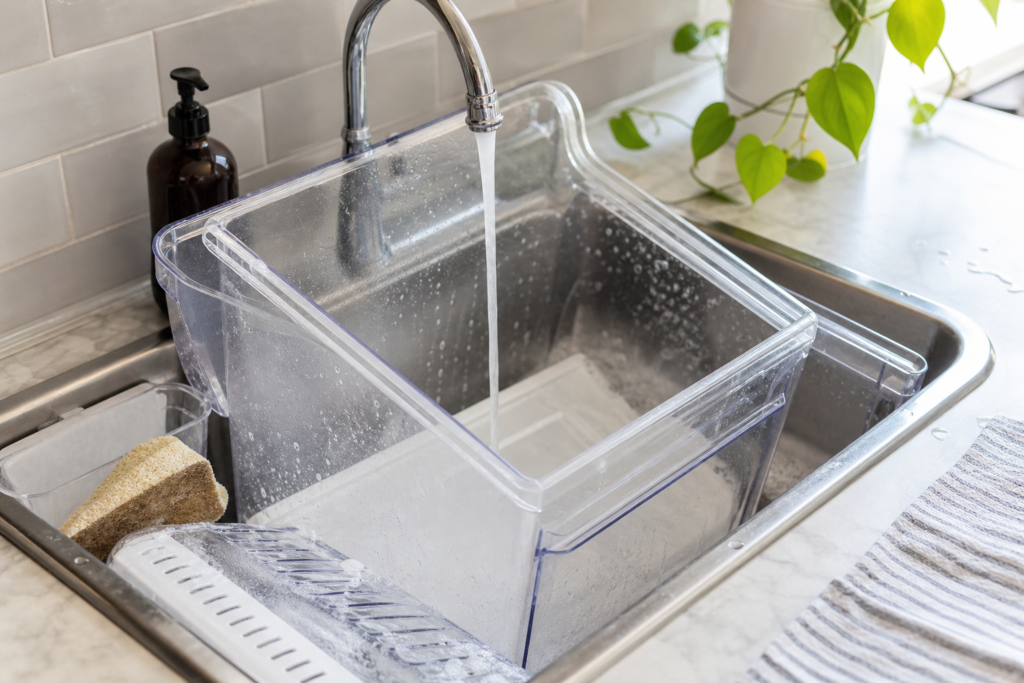
Take out removable shelves, bins and crispers. Wash them with warm water and washing-up liquid.
If they are cold glass, let them come closer to room temperature first. That helps prevent cracking from a sudden temperature change.
For a natural deodorising wash, use one of these simple mixes:
- Bicarbonate of soda / baking soda solution: 1 tablespoon per 1 quart of water or roughly 1 litre
- White vinegar solution: 1 cup vinegar per 1 gallon of water or about 4 litres
Use the baking soda mix for a general wipe-down. Use the vinegar mix if you want a natural option that cuts through stale smells. You do not need both in the same bowl.
If you have a lot of kitchen cleaning to catch up on, you might also like this guide on how to clean a stainless steel sink without streaks while the fridge parts are drying by the sink.
3. Clean the inside of the fridge, not just the obvious bits
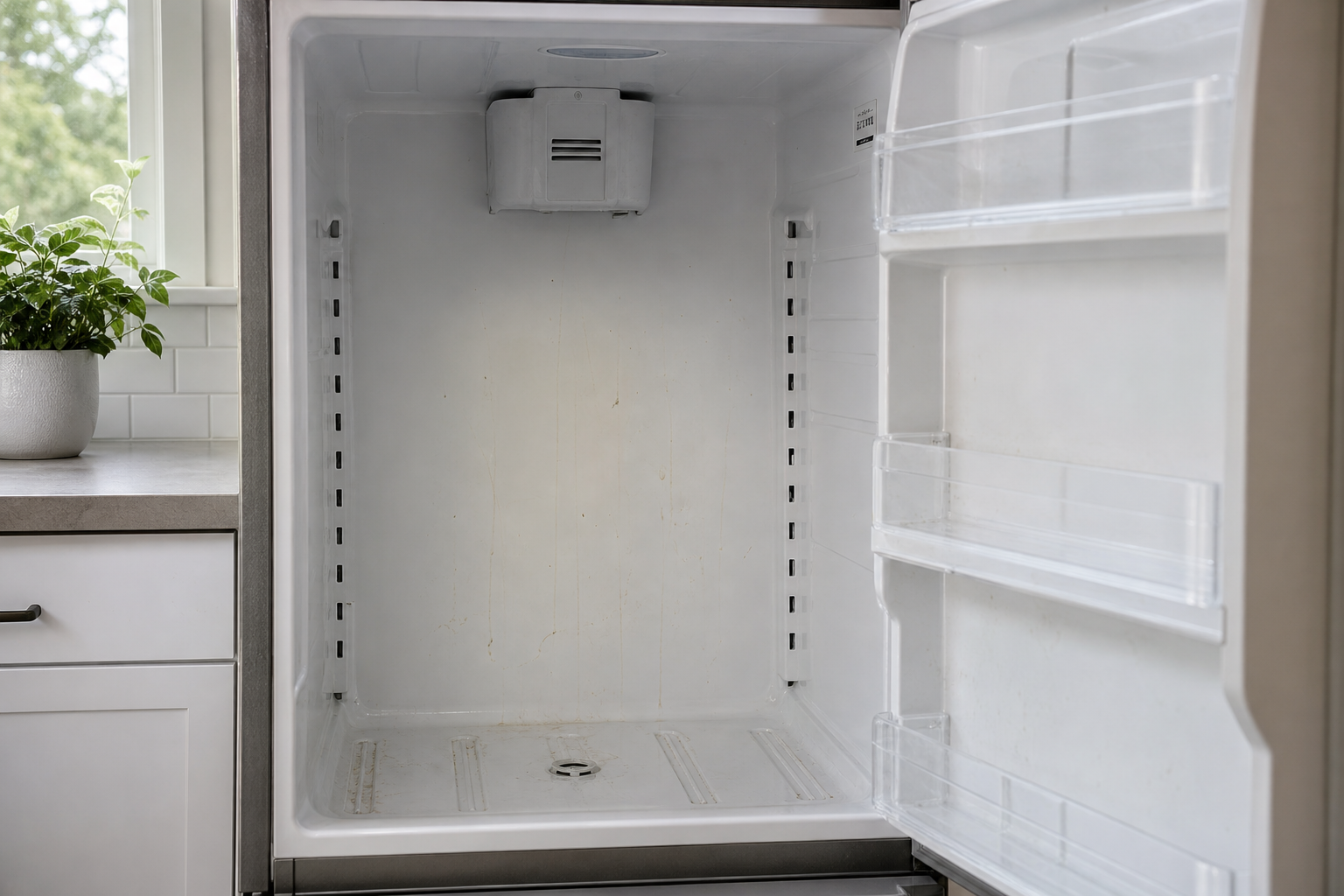
Now wipe the empty interior from top to bottom. Use your cloth dipped in the baking soda or vinegar solution.
Pay special attention to these spots:
- The grooves that hold shelves
- The underside of glass shelves
- The crisper drawer cavity
- The door shelves
- The rubber door seal
- The drain hole or channel, if your fridge has one and the manual says it is user-cleanable
An old toothbrush helps around the seal and in the corners. That is often where sour smells hide.
Once the inside is clean, wipe again with plain water if needed, then dry with a clean cloth. Leaving the door open for about 15 minutes helps air the interior out before you put food back.
If the rubber seal smells musty
Food drips and condensation can sit in the folds of the gasket. Wipe it carefully and dry it well. Smells and marks often build up in appliance seals, much like they do in this guide on cleaning a washing machine rubber seal.
4. Use a natural odour absorber for lingering smells
Once the fridge is clean, add something to absorb any smell left behind.
Here are the most useful options:
| Odour absorber | How to use it | Best for |
|---|---|---|
| Bicarbonate of soda / baking soda | Spread a thin layer on a plate or shallow bowl for more surface area | Everyday mild smells |
| Activated charcoal | Place in a bowl or tray in the empty or lightly stocked fridge for 2 to 3 days | Strong lingering odours |
| Fresh coffee grounds | Put in a shallow container for 2 to 3 days | Short-term deodorising when smell is stubborn |
Baking soda works better when it is spread out on a plate rather than left in a box with one small opening. The extra surface area helps it absorb odours more effectively.
Coffee grounds can help, but they may leave a light coffee smell behind for a while. Activated charcoal is usually the better next step if the fridge still smells after cleaning.
5. Put food back in a way that stops smells returning
This matters more than most people realise.
Before restocking, wipe jars and bottles so you do not put sticky residue back onto clean shelves. Then:
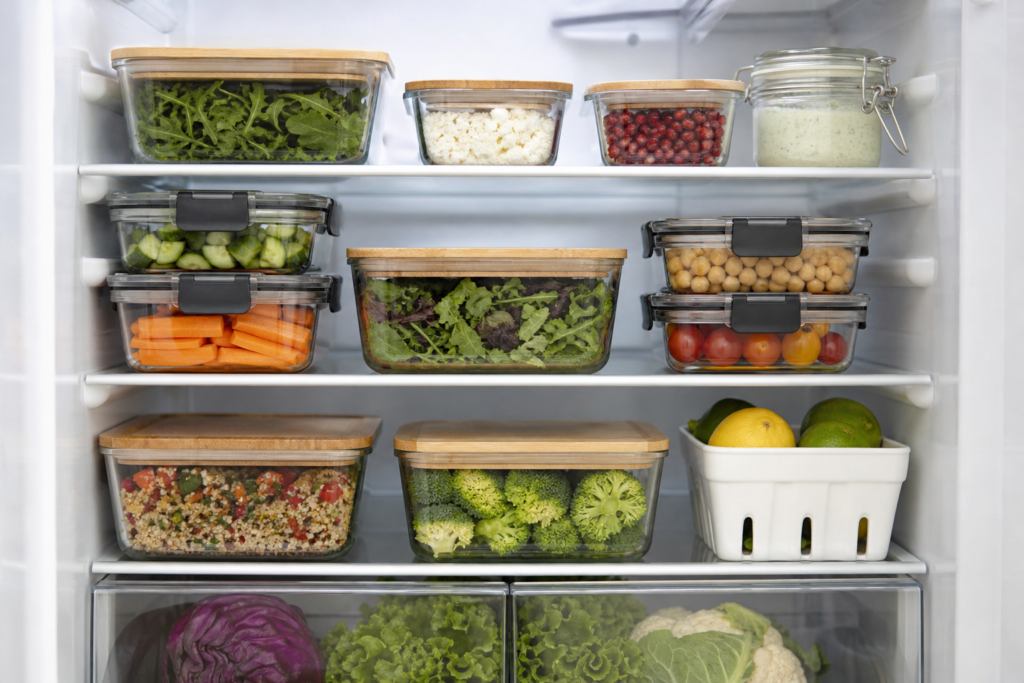
- Store leftovers in sealed containers.
- Keep raw meat well wrapped and on a lower shelf so it cannot drip.
- Do not overpack the fridge. Cold air needs room to circulate.
- Check that your fridge is at 40°F / 4°C or below.
- Use older food first.
If your under-sink area is where you keep cloths, brushes and spare cleaning bits for jobs like this, this guide on what to keep under the kitchen sink can help keep it usable.
What to do if the fridge still smells bad after cleaning
If you have cleaned every shelf and drawer and the smell is still strong, try this order:
- Repeat the cleaning and check again for hidden spills.
- Leave baking soda or activated charcoal inside for 2 to 3 days.
- If the smell came from severely spoiled food, keep the fridge running mostly empty while the odour absorber works.
- Check the drip tray or drain area only if your manufacturer instructions explain how to do this safely.
Very strong smells can sometimes soak into insulation, especially after food has spoiled badly or liquids have seeped into places you cannot reach. If that seems likely, contact the manufacturer or an appliance technician. Cleaning alone may not fully solve it.
Common mistakes that make fridge smells worse
- Putting baking soda in without cleaning first. It helps with leftover odour, not rotten food hidden in a drawer.
- Using too little baking soda. A shallow bowl or plate works better than a barely opened box.
- Ignoring the door seal. Crumbs and drips often collect there.
- Overfilling the fridge. Poor airflow can lead to uneven cooling and faster spoilage.
- Leaving spills for later. Wipe them as soon as you spot them.
For more simple upkeep habits, have a look at the Cleaning Routines section or this daily reset routine for a messy house. A five-minute fridge check once or twice a week can save you a much bigger clean later.
A simple routine to prevent bad smells in the fridge
You do not need a full deep clean every week. For most homes, this short routine is enough:
Twice a week
- Check leftovers and throw out anything past its best
- Wipe visible drips
- Quickly scan the crisper drawer for soft veg or fruit
Once a month
- Empty one shelf at a time and wipe it
- Clean bottle bottoms and condiment jars
- Check the temperature setting
- Replace the baking soda or refresh your odour absorber if you use one
If you are doing a wider kitchen reset, you may also find these useful: the best way to clean grease off kitchen cabinets, how to clean sticky wood kitchen floors, and more guides in the Kitchen category.
One good fridge clean, plus a two-minute check before the weekly shop, is usually enough to stop the bad smell creeping back.
Frequently Asked Questions
How do I get rid of smells in a fridge naturally without harsh chemicals?
Start by throwing away spoiled food and wiping up hidden spills. Then wash the inside with a bicarbonate of soda or baking soda solution, or a diluted white vinegar solution. After cleaning, place baking soda on a plate, or use activated charcoal, to absorb any lingering odour.
How do I get rid of bad smells in fridge naturally if baking soda did not work?
Baking soda often helps with mild smells, but it will not fix a hidden spill or badly spoiled food. Clean the shelves, drawers and door seal again, then try activated charcoal for 2 to 3 days. If the smell is still strong, it may have reached an area you cannot easily clean.
Is vinegar safe to use inside a fridge?
In general, diluted white vinegar is a common natural cleaning option for fridge interiors. Use it with water, not mixed with other cleaners, and wipe with a clean damp cloth afterwards if you prefer. Always check your fridge manufacturer instructions and test on a hidden area first.
Why does my fridge still smell after I cleaned it?
The most common reasons are a missed source, residue in the door seal, a spill under a drawer, or odour left in removable parts that were not washed well. In more severe cases, especially after spoiled food or a power cut, smells can linger for days and may need activated charcoal or professional advice.
Free printable
Get the 15-minute weekly cleaning checklist
One short block a day keeps the whole home under control. Open the printable checklist, then join the list for one new practical guide a week. No spam, unsubscribe any time.