How to Clean a Microwave With Lemon
This method works best for everyday mess, dried sauce spots and lingering food smells. The steam does most of the cleaning, while the lemon helps freshen things up.
What you need
- 1 lemon
- 1 1/2 cups water
- Large microwave-safe bowl or glass measuring jug
- Microfibre cloth or soft sponge
- Dry cloth or paper towels
- Oven gloves or a folded tea towel for the hot bowl
- Optional: a drop of washing-up liquid / dish soap for greasy residue
Time: about 10 minutes
Difficulty: easy
Related kitchen guides
Before you start
Check your microwave manual first, especially if the interior has special coatings or the manufacturer gives specific cleaning advice. Don’t use steel wool, scouring pads, oven cleaner, bleach or ammonia-based cleaners inside the microwave.
If you want to wipe the door trim, buttons or exterior with anything other than plain water, test it on a hidden area first. Use only a soft cloth on the control panel.
Safety note: use a large bowl so the liquid has room to boil without spilling. The bowl and steam will be very hot, so open the door carefully and lift the bowl out with oven gloves or a thick cloth.
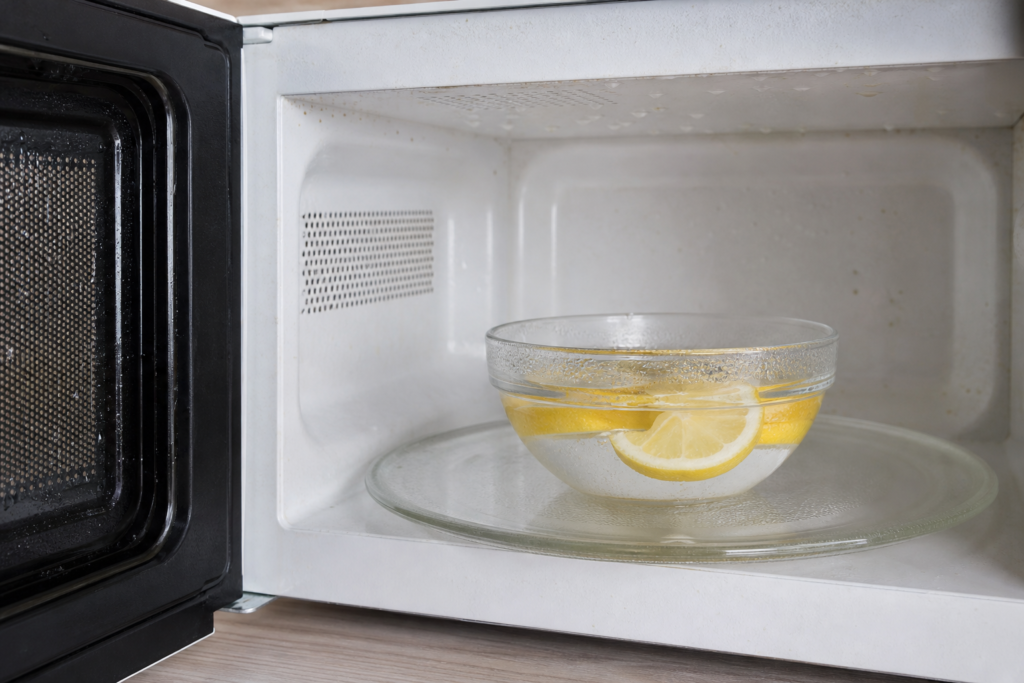
How to clean a microwave with lemon and water
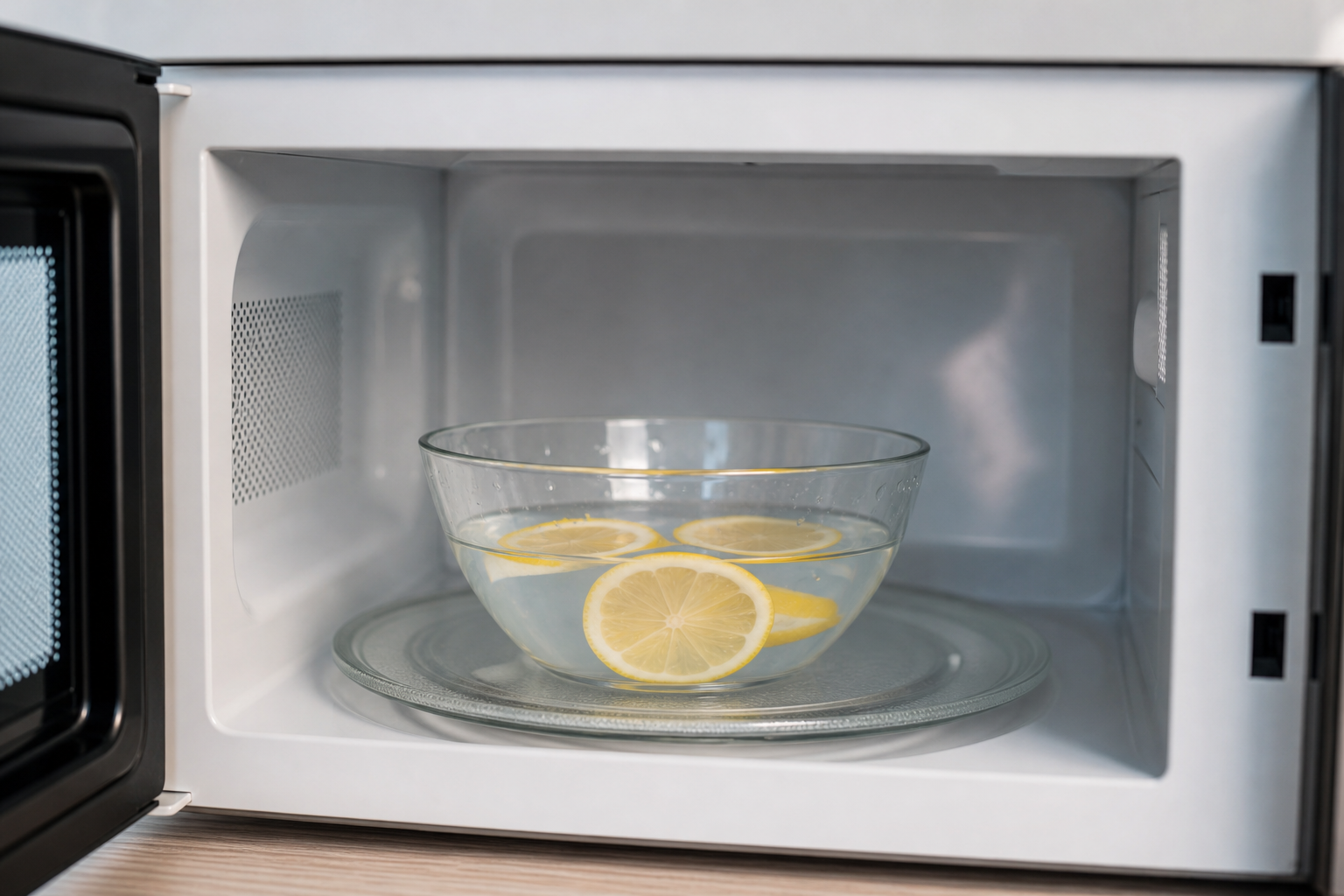
- Slice and squeeze the lemon. Cut 1 lemon in half. Squeeze the juice into a large microwave-safe bowl, then drop the lemon halves in too.
- Add the water. Pour in 1 1/2 cups of water. If you only have bottled lemon juice, use 1/2 cup lemon juice and 1 cup water.
- Heat until steaming. Microwave on high for 3 to 5 minutes, or until the liquid is boiling and the inside window looks steamy. The exact time depends on your microwave’s power.
- Let the steam sit. Leave the door closed for 5 minutes. This part matters. The standing time softens dried food much better than opening the door straight away.
- Remove the turntable. Take out the glass turntable and ring if your model has them. Wash them in warm soapy water, rinse and dry.
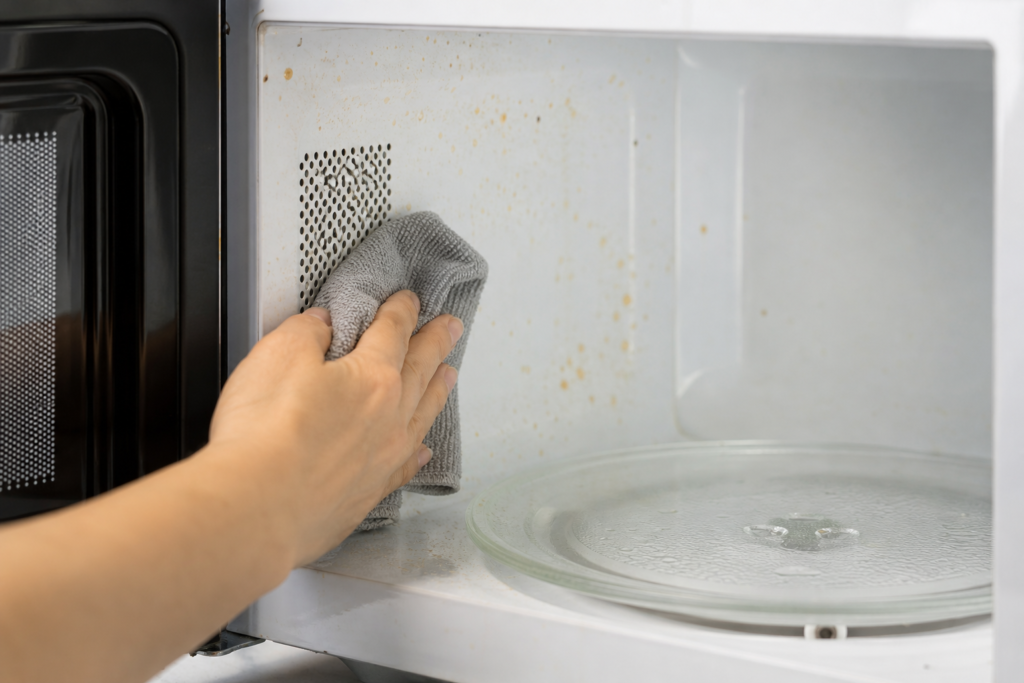
- Wipe the interior. Use a damp microfibre cloth or soft sponge to wipe the roof, sides, back, floor and door. Start at the top so loosened drips fall onto areas you haven’t cleaned yet.
- Tackle any stubborn spots. Dip the cloth in the hot lemon water and hold it on the spot for 20 to 30 seconds, then wipe again. For greasy marks, add a tiny drop of washing-up liquid to your cloth.
- Dry and reassemble. Wipe everything dry, replace the turntable and leave the door open for a minute or two if you want the inside to air out.
How long to clean a microwave with lemon
For most microwaves, 3 to 5 minutes of heating plus 5 minutes with the door closed is the sweet spot. If your microwave is small or powerful, start with 2 to 3 minutes and check for visible steam.
A simple rule: you want the water actively boiling and the inside coated with steam, not just warm. If there’s barely any steam, heat it for another 30 to 60 seconds.
| Microwave mess level | Heating time | Stand time |
|---|---|---|
| Light splatters | 2 to 3 minutes | 3 to 5 minutes |
| Moderate dried-on food | 3 to 5 minutes | 5 minutes |
| Strong odours | 3 to 5 minutes | 5 minutes or until safe to handle |
Does lemon actually clean, or is it just the steam?
Mostly, it’s the steam. The hot moisture loosens dried food so it wipes away more easily. Lemon helps freshen the smell, and the juice adds a little extra cleaning power, but it isn’t a disinfectant.
If you’ve had raw meat splatter or need to sanitise for another reason, follow your manufacturer’s instructions for safe cleaning after the basic wipe-down. Stick to general, product-label-led advice rather than guessing.
How to handle dried splatters without harsh scrubbing
If the first steam doesn’t clear everything, don’t reach for anything scratchy yet. Try this instead:
- Dip your cloth in the hot lemon water.
- Press it onto the dried splatter for 30 seconds.
- Wipe in small circles.
- If grease remains, add one drop of washing-up liquid to the cloth.
- Wipe again with plain water and dry.
For really baked-on mess, repeat the steaming cycle once more. That’s usually more effective than scrubbing harder.
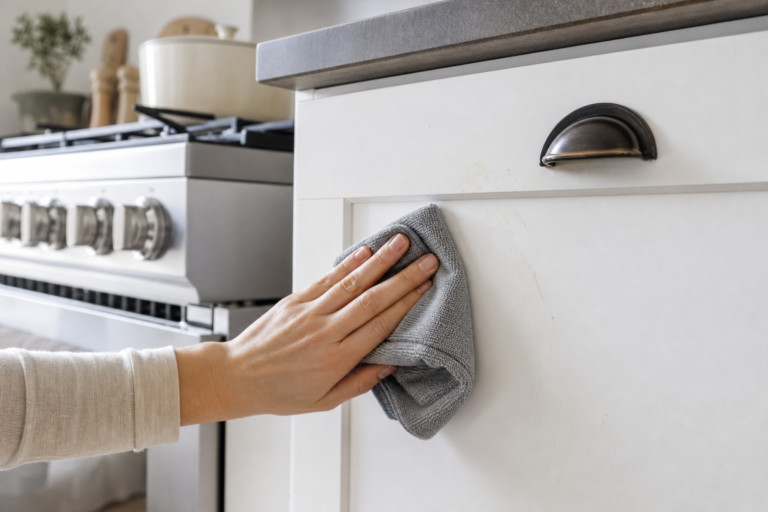
If you deal with greasy kitchen buildup elsewhere too, this guide on cleaning grease off kitchen cabinets without damage is useful for the same kind of sticky residue.
Can you clean a microwave with lemon juice instead of a whole lemon?
Yes. If you don’t have a fresh lemon, bottled lemon juice works. Use 1/2 cup lemon juice with 1 cup water in a microwave-safe glass jug or bowl. Heat until boiling, leave the door closed while it cools slightly, then wipe.
This is handy if you already keep lemon juice around for descaling or deodorising jobs. If vinegar smells too strong for you, you might also like how to remove limescale from a kettle without vinegar.
What about lemon and vinegar or lemon and baking soda?
You can find advice online for cleaning a microwave with lemon and vinegar or lemon and baking soda, but for this job they’re usually unnecessary. Lemon and water is enough for most microwaves, and plain steam is often doing the heavy lifting.
If you want to add something for tougher grime, a drop of washing-up liquid on the cloth is usually more useful than adding extra ingredients to the bowl. Baking soda can help as a gentle paste for a very small stubborn patch, but apply it with a soft cloth, not an abrasive pad, and wipe it away fully.
Safety note: never mix bleach with vinegar, lemon, ammonia or any other cleaner. Don’t use bleach or ammonia-based cleaners inside the microwave unless your manufacturer specifically says a product is safe, and even then follow the label exactly.
Small spots people often miss
A microwave can still smell grubby if you only wipe the middle. Pay extra attention to these areas:
- The ceiling: soups and sauces splatter upward more than you might think.
- The door edges and frame: wipe where the door meets the body of the microwave.
- The turntable ring: food collects under and around the wheels.
- The vents and exterior handle: use a lightly damp cloth and dry after wiping.
- The control panel: use only a soft damp cloth, then dry gently.
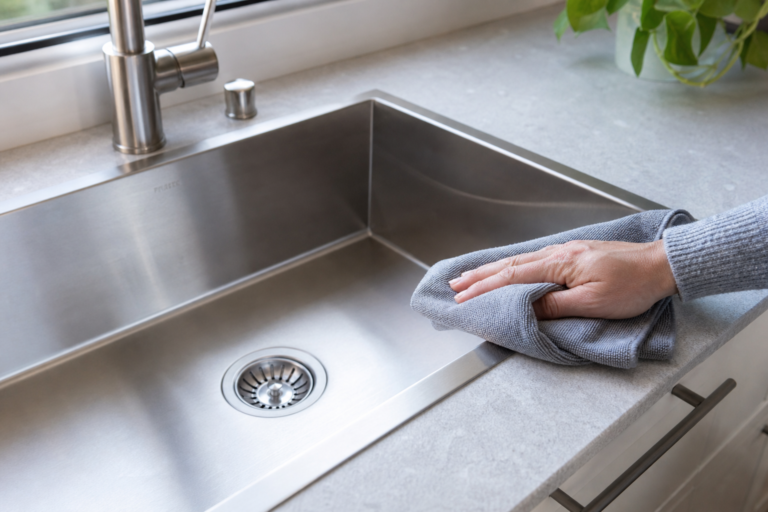
If you’re doing a quick kitchen reset, it also helps to pair this with cleaning your toaster tray safely, wiping down a stainless steel sink without streaks and cleaning an air fryer basket with baked-on grease.
How often should you do this?
For a microwave you use daily, once a week is a good target for the lemon steam method. If you cover food and wipe fresh splatters quickly, you may only need a deeper clean every couple of weeks.
A 30-second wipe after reheating messy foods makes a real difference. It stops the hard, crusty buildup that turns a 10-minute clean into a much bigger job.
If you want a routine that keeps kitchen mess from piling up, try adding this to a simple daily reset routine for a messy house. And if stale food smells tend to linger around appliances, getting rid of fridge smells naturally helps with the rest of the kitchen too.
When lemon isn’t the best option
Lemon is great for quick freshening and light to medium mess. It’s less useful when:
- There’s heavy greasy buildup that needs soap to cut through it
- Your microwave manual warns against acidic cleaners on certain parts
- You need disinfecting rather than simple cleaning and deodorising
- The spill has burned onto a specific spot several times
In those cases, warm water, a little mild washing-up liquid and a soft cloth is often the better next step.
Set a reminder to do this once a week, and your microwave probably won’t get bad enough to need anything stronger.
Frequently Asked Questions
How do you clean a microwave with lemon juice and water?
Mix 1/2 cup lemon juice with 1 cup water in a large microwave-safe bowl or jug. Heat it until boiling, usually 3 to 5 minutes, then leave the door closed for about 5 minutes so the steam can soften the mess. Wipe the inside with a soft cloth and dry it.
How long should I clean a microwave with lemon?
Most microwaves need 3 to 5 minutes of heating, plus 5 minutes of standing time with the door closed. If your microwave is very powerful, start at 2 to 3 minutes and check for strong steam on the window. The mess lifts best when the interior gets properly steamy.
Can I clean a microwave with lemon and vinegar?
You can find this method online, but it usually isn’t necessary. Lemon and water is enough for most microwave cleaning, and plain steam does most of the work. If you use any cleaner, follow your microwave manual, avoid harsh chemicals, and never mix bleach with vinegar, lemon or ammonia.
Can I clean a microwave oven with lemon and baking soda?
For general cleaning, use lemon and water first. If one small spot is still stuck, a little bicarbonate of soda / baking soda made into a gentle paste can help, but use a soft cloth and wipe the residue away well. Don’t use abrasive pads or scrubbers inside the microwave.
Does cleaning a microwave with lemon disinfect it?
No, not really. Lemon steam helps loosen food residue and reduce smells, but it is not the same as disinfecting. If you need more than routine cleaning, such as after raw meat splatter, check your manufacturer’s instructions and use a suitable food-safe product if recommended.
Free printable
Get the 15-minute weekly cleaning checklist
One short block a day keeps the whole home under control. Open the printable checklist, then join the list for one new practical guide a week. No spam, unsubscribe any time.