
How to Freshen a Mattress Without Baking Soda Overnight
You can freshen a mattress without leaving baking soda on overnight. For a straightforward same-day refresh, leave it on for 1 to 3 hours, then vacuum thoroughly, keep the room ventilated, and do only very light spot-cleaning if needed. If you’re dealing with one small smelly patch, some mattress brands say about 15 minutes can be enough before vacuuming.
If you’re renting, short on time, or simply don’t want a powdery mattress sitting out all day and night, this is the easier option. The key is to keep moisture low, improve airflow, and check your mattress care label before you start.
What you need
- Vacuum with an upholstery attachment
- Bicarbonate of soda / baking soda
- Clean microfibre cloths
- A small bowl of cool or lukewarm water
- Mild washing-up liquid / dish soap
- Fan, if you have one
- Clean mattress protector and fresh bedding
Time: 1.5 to 4 hours, mostly waiting time
Difficulty: Easy
Before you start
- Check the manufacturer’s instructions for your mattress. Foam and memory foam mattresses are usually more sensitive to moisture.
- Test any damp cloth cleaning on a hidden area first.
- Do not soak the mattress or spray lots of liquid directly onto it.
- If you use any cleaning product beyond mild soap, read the label first.
- Never mix bleach with vinegar, ammonia, or any other cleaner.
If your mattress is actually wet from a spill, sweat build-up, or an accident, drying it fully matters more than deodorising it. A mattress that stays damp can turn into a bigger problem than a bit of odour.
How to freshen a mattress without baking soda overnight
- Strip the bed completely.
Remove sheets, pillowcases, duvet cover, blankets, and the mattress protector. Put them straight in the wash so you’re not putting stale fabric back onto a cleaner mattress. If odour is a regular issue, wash bedding weekly. For musty linens, this guide on getting rid of musty smells without bleach may help with the fabric side of things. - Let the mattress air out for 15 to 30 minutes.
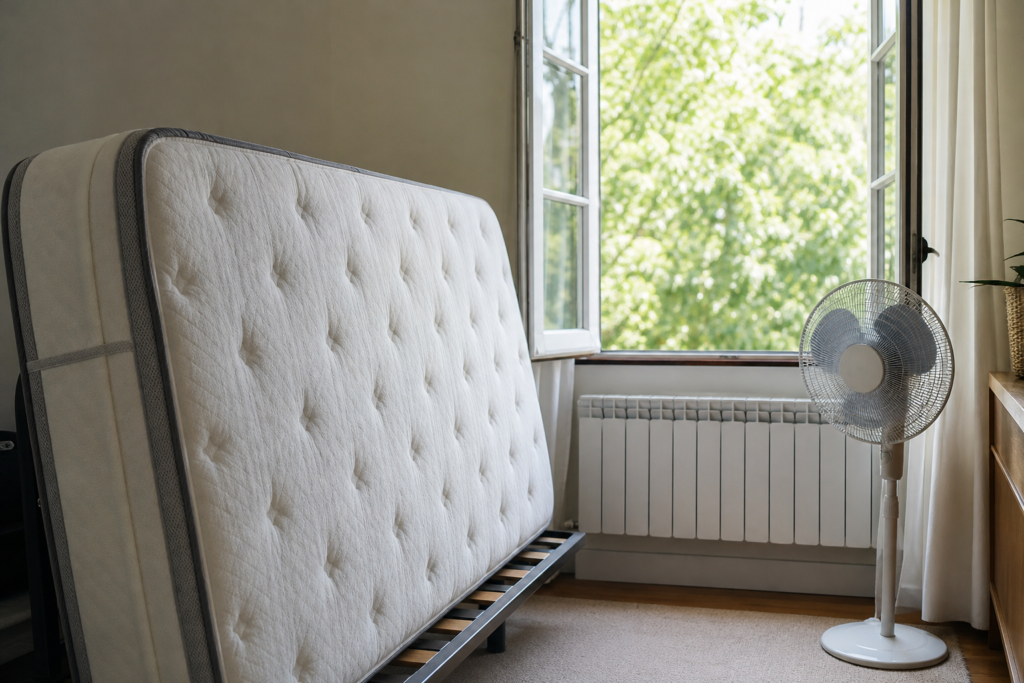
Open windows if the weather allows. If not, switch on a fan and point it across the bed, not straight down at one spot. Airflow helps carry off trapped odours and speeds up drying if you need to do any spot cleaning. - Vacuum the whole surface first.
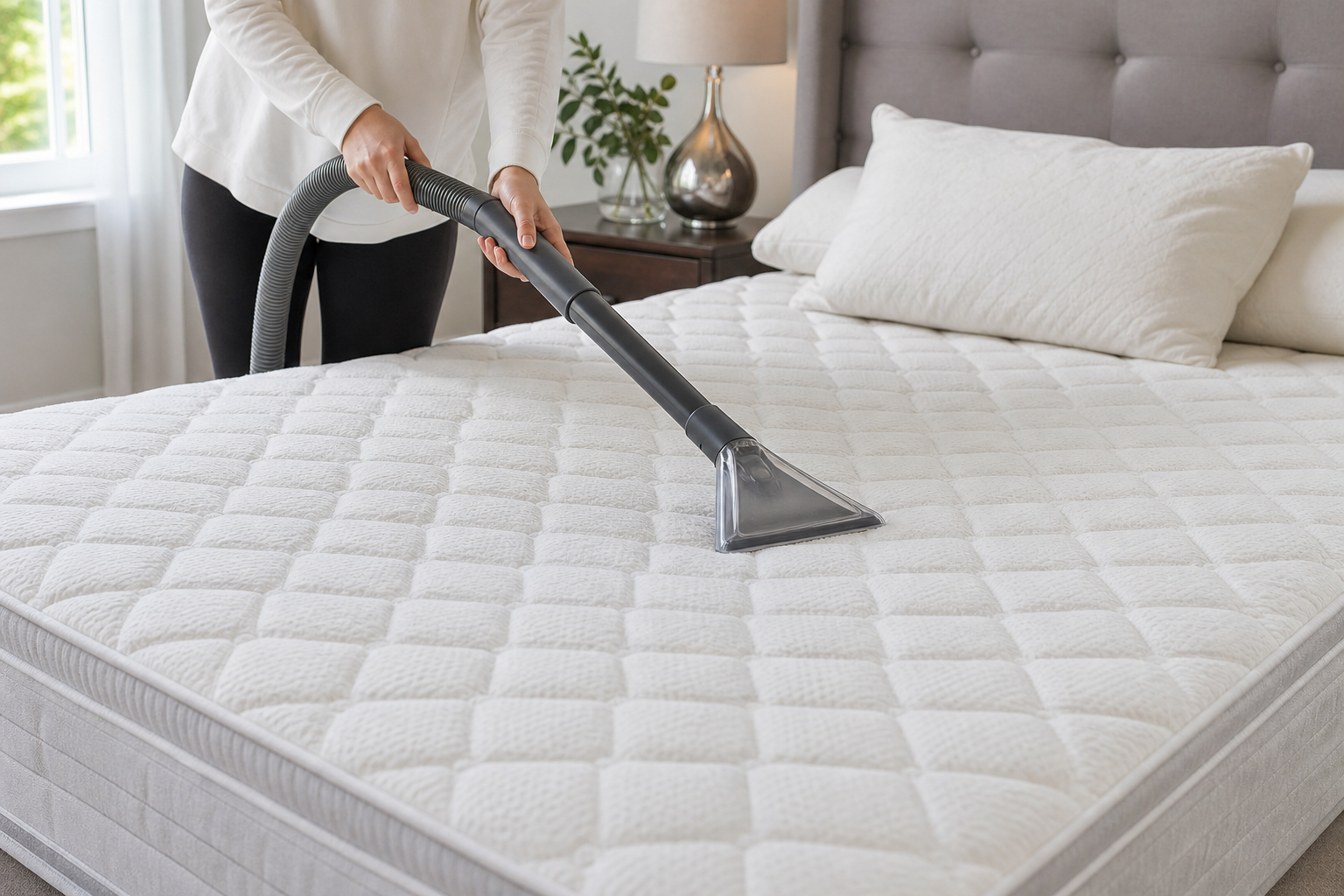
Use the upholstery attachment and work slowly. Go over the top, sides, seams, and piping. This lifts dust, hair, crumbs, and surface debris before you add any powder. If your vacuum manual warns against fine powder, be cautious with large amounts of baking soda and use a light sprinkle rather than a thick layer.
- Sprinkle a light, even layer of bicarbonate of soda / baking soda.
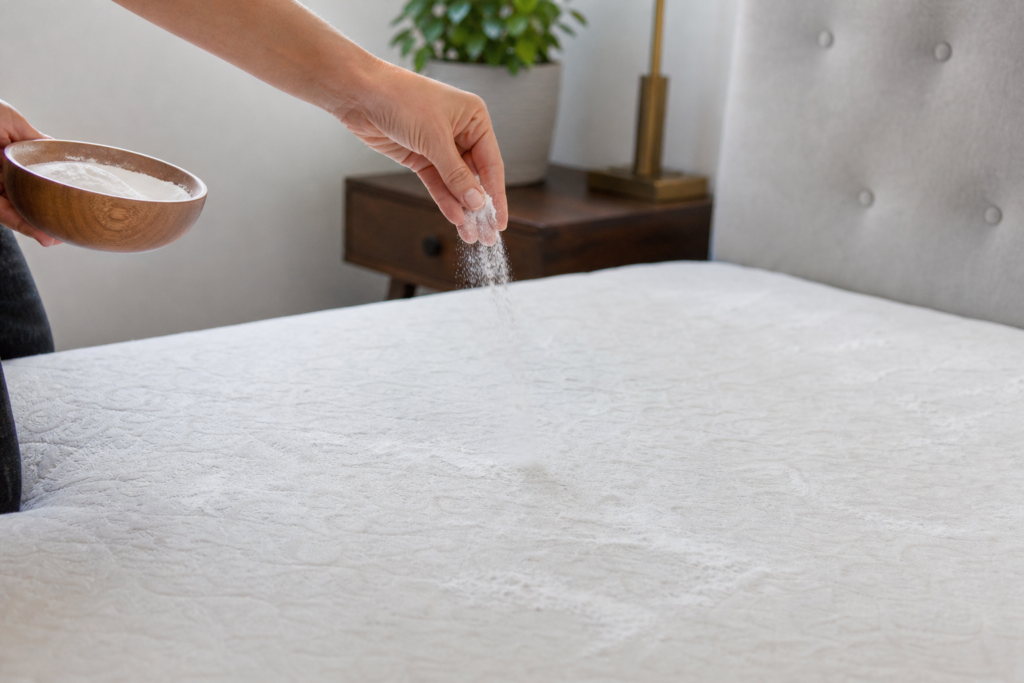
Don’t pile it on. You want a thin coat across the areas that smell stale, or across the whole mattress if you’re doing a general refresh. Too much powder only makes vacuuming harder. - Leave it on for a short same-day window.
For a full mattress refresh, 1 to 3 hours is a practical target. You do not need to leave it overnight. If you’re treating one small area only, around 15 minutes may still help. A bit longer can be useful if the room is stuffy or the mattress smells stronger, but overnight is optional, not necessary. - Vacuum thoroughly.
Use slow, overlapping passes until the powder is gone. Pay extra attention to seams and tufts where residue tends to collect. If you still see powder, go over it again rather than rubbing it in with a cloth. - Spot-clean only if there is a mark or specific smelly patch.
Mix a few drops of mild washing-up liquid / dish soap into a bowl of water. Dip a cloth in, wring it out very well, and blot the area gently. The cloth should be damp, not wet. Follow with a second cloth lightly dampened with plain water to remove any soap residue. Then blot dry with a towel. - Dry the mattress fully before remaking the bed.
Leave it uncovered for at least 30 to 60 minutes after spot-cleaning, longer if needed. Use a fan to help. The surface should feel fully dry, not cool or damp, before you add a protector and bedding.
How long does baking soda really need to sit on a mattress?
Not overnight. That’s the part most people want to know.
For a regular deodorising job, a few hours is commonly recommended. If you only have part of an afternoon, that’s usually enough to make the mattress smell fresher. For a smaller spot treatment, some mattress care guidance suggests about 15 minutes before vacuuming.
What matters most is not squeezing out every extra minute from the baking soda. It’s ventilation, a careful vacuum, and not leaving the mattress damp.
When smell means you need more than baking soda
A stale mattress smell is not always just something that “needs freshening.” Sometimes the cause is moisture, sweat build-up, spills, or allergens in the bedding.
Try this quick check
| If you notice | Most likely issue | What to do |
|---|---|---|
| Light stale smell, no stains | Surface odour | Vacuum, baking soda for 1 to 3 hours, ventilate |
| One smelly patch | Old spill or body oils | Short baking soda treatment, then light spot-cleaning |
| Damp feel or musty smell | Moisture | Dry fully with airflow before covering again |
| Ongoing sneezing or dusty smell | Bedding and dust build-up | Wash bedding weekly and use a mattress protector |
| Visible mould or persistent wetness | Bigger moisture problem | Check manufacturer guidance and consider replacement if it cannot be fully cleaned and dried |
If your bedroom often feels humid, that can make mattress odours worse. Keeping indoor humidity lower, using airflow, and not trapping moisture under heavy bedding all help.
What not to do
- Don’t soak the mattress. This is the biggest mistake. Mattresses, especially foam ones, are not meant to be saturated.
- Don’t spray lots of cleaner directly on the surface. Apply cleaner to a cloth first if you need to spot-clean.
- Don’t assume fragrance fixes the problem. Air freshener may cover smells for a while, but it won’t solve trapped moisture.
- Don’t ignore the bedding. A freshened mattress with sweaty sheets put back on top won’t smell fresh for long.
- Don’t use loads of baking soda if your vacuum struggles with fine dust. A light layer is enough.
How to keep the mattress fresher for longer
- Use a washable mattress protector.
A waterproof or at least washable protector is much easier to clean than the mattress itself. - Wash bedding weekly.
Sheets, pillowcases, and ideally the protector too, depending on the care label. If your laundry routine slips, a simple daily reset routine for a messy house can help you stay on top of the basics. - Air the bed out in the morning.
Pull the duvet back for 20 to 30 minutes before making the bed. That small habit helps moisture escape. - Vacuum the mattress now and then.
Every month or two is a sensible rhythm for many homes, or when rotating the mattress if your manufacturer recommends rotation. - Deal with spills straight away.
Blot first, clean lightly, and dry fully. Don’t let moisture sit.
If you’re trying to make the whole bedroom easier to manage, it also helps to cut back on general clutter and dust traps. These guides on organising a small space, the Laundry category, and Cleaning Routines have more low-effort ideas that fit busy households.
If you rent and need a fast same-day fix
Here’s the shortest version that still makes sense:
- Strip the bed and wash the bedding.
- Open the window or run a fan.
- Vacuum the mattress well.
- Sprinkle a light layer of baking soda.
- Leave it for 1 hour if that’s all you have.
- Vacuum again carefully.
- Use a protector before remaking the bed.
That won’t solve every deep odour problem, but it’s usually enough to make the bed feel fresher by evening without the mess of leaving powder on overnight.
When to stop freshening and think about replacing
If the mattress has been wet for a long period, smells musty no matter what you do, or has visible mould that cannot be safely cleaned and fully dried, a freshening routine is probably not enough. Check the care instructions for your mattress brand first. If the materials have been soaked or the odour keeps coming back quickly, replacement may be the safer and more realistic option.
For everyday upkeep, the best next step is simple: wash the bedding, add a protector, and give the mattress a quick vacuum while the sheets are off. That habit does more than most long cleaning routines.
Frequently Asked Questions
Do I really need to leave baking soda on a mattress overnight?
No. Overnight is optional, not required. For a general refresh, 1 to 3 hours is often enough before vacuuming. For a small localised area, some mattress care guidance suggests around 15 minutes can still help. The bigger factors are good airflow, thorough vacuuming, and keeping the mattress dry.
Can I freshen a mattress in one day?
Yes, if the smell is mild and the mattress is not wet. Strip the bed, wash the bedding, vacuum the mattress, apply a light layer of bicarbonate of soda or baking soda, leave it for 1 to 3 hours, then vacuum again. Use a fan or open window to improve airflow while you work.
What if I do not want to use baking soda at all?
You can still improve the smell by vacuuming the mattress carefully, airing it out, washing all bedding, and spot-cleaning marks with a barely damp cloth and mild soap. This will not absorb odours in quite the same way, but it can still make the bed smell fresher without soaking the mattress.
Why does my mattress still smell after vacuuming and baking soda?
Persistent odour often points to something more than surface staleness. The cause could be trapped moisture, an old spill, body oils, or stale bedding. If the mattress feels damp, dry it fully before covering it again. If the smell is musty or keeps returning, check for a moisture problem rather than adding more fragrance.
Is it safe to spray vinegar on a mattress to remove smell?
It is usually better to avoid spraying liquids directly onto a mattress. Too much moisture can be hard to remove, especially from foam. If you use any cleaner, check the manufacturer’s instructions first, test a hidden area, and apply it to a cloth rather than soaking the mattress. Never mix cleaners together.
Free printable
Get the 15-minute weekly cleaning checklist
One short block a day keeps the whole home under control. Open the printable checklist, then join the list for one new practical guide a week. No spam, unsubscribe any time.