How to Clean a Ceramic Hob With Burnt-On Stains
If you call it a glass stovetop in the US, the advice is the same. What matters is using the right tools and knowing which stains need dealing with quickly.
What you need
- Ceramic hob or glass cooktop cleaner
- Microfibre cloth or other soft lint-free cloth
- Non-abrasive cleaning pad
- Hob scraper / cooktop scraper with a fresh blade
- Washing-up liquid / dish soap
- Warm water
- Kitchen paper or a dry soft cloth for buffing
Time: 10 to 15 minutes for general burnt-on stains
Difficulty: Easy to moderate
Related kitchen guides
Before you start: quick safety notes
- Check the manufacturer instructions for your hob before using any cleaner or scraper.
- Test any cleaner on a hidden area first.
- For routine cleaning, make sure the hob is switched off and cool.
- Do not use steel wool, abrasive cream cleaners, scouring pads, oven spray, bleach, ammonia, rust remover or steam cleaners.
- Never mix bleach with vinegar, ammonia or any other cleaner.
- Use only a scraper designed for ceramic or glass hobs.
There is one exception: sugary spills and melted plastic should be removed quickly, even while the surface is still hot, because they can damage the finish if they are left to harden.
How to clean a ceramic hob with burnt on stains
- Remove loose crumbs first.
Once the hob is cool, wipe away any dry crumbs or grit with a damp microfibre cloth. This step matters more than it seems. Tiny bits of food can drag across the surface while you clean and leave fine scratches. - Apply ceramic hob cleaner.
Put a small amount of ceramic hob cleaner directly onto the burnt marks. If you do not have a specialist cleaner, a little washing-up liquid on a damp cloth can help with lighter grease. For dark burnt rings and baked-on spills, though, a proper hob cleaner usually does a better job. - Let it sit for a minute or two.
Give the cleaner a little contact time so it can soften the residue. You do not need to leave it on for long. If it starts to dry out, add a little more cleaner or a drop of water. - Rub gently with a non-abrasive pad.
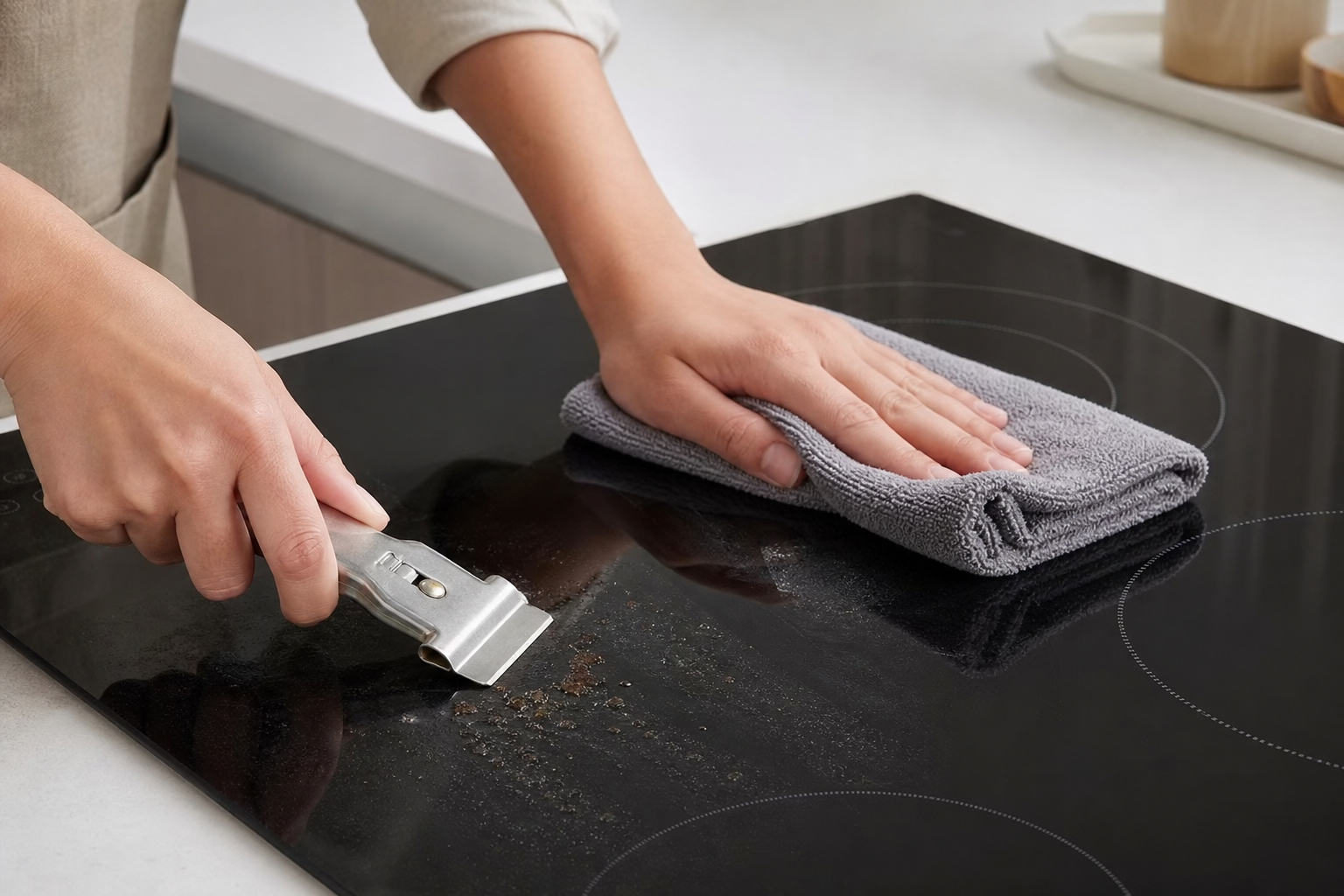
Use small circular motions or short back-and-forth strokes. Keep the pressure light. If the mark starts to lift, keep going until only the stubborn bits are left. - Use a hob scraper for the burnt-on spots.
Hold the scraper at about a 30 to 45 degree angle and push gently under the residue. Work in short strokes. Do not jab downwards. You are trying to lift the stain off the surface, not force the blade into it. - Wipe clean and inspect.
Use a damp cloth to remove loosened residue and leftover cleaner. If you can still feel rough patches, repeat the cleaner and scraper steps once more. - Buff dry.
Finish with a clean, dry cloth or kitchen paper. This helps prevent streaks and makes it easier to spot any marks you missed.
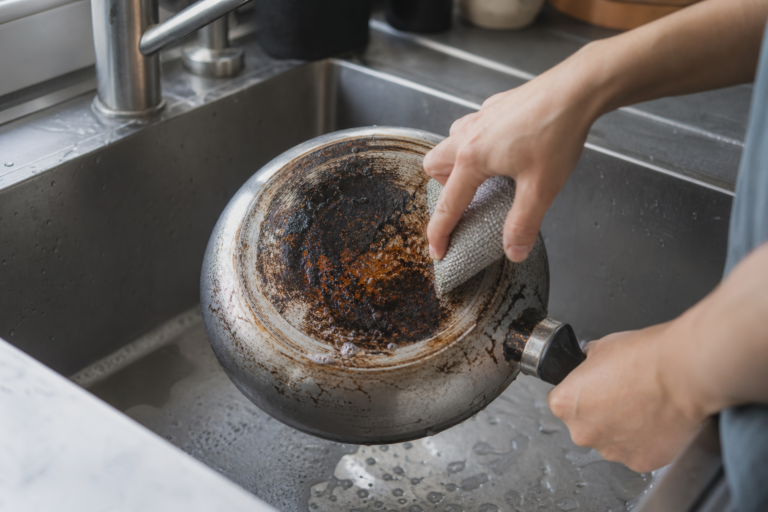
If your pan bases are leaving blackened residue behind, it may help to clean those too. This guide on how to clean a burnt pan bottom without scratching it can stop the same mess going straight back onto the hob.
When to use a scraper, and how to avoid scratches
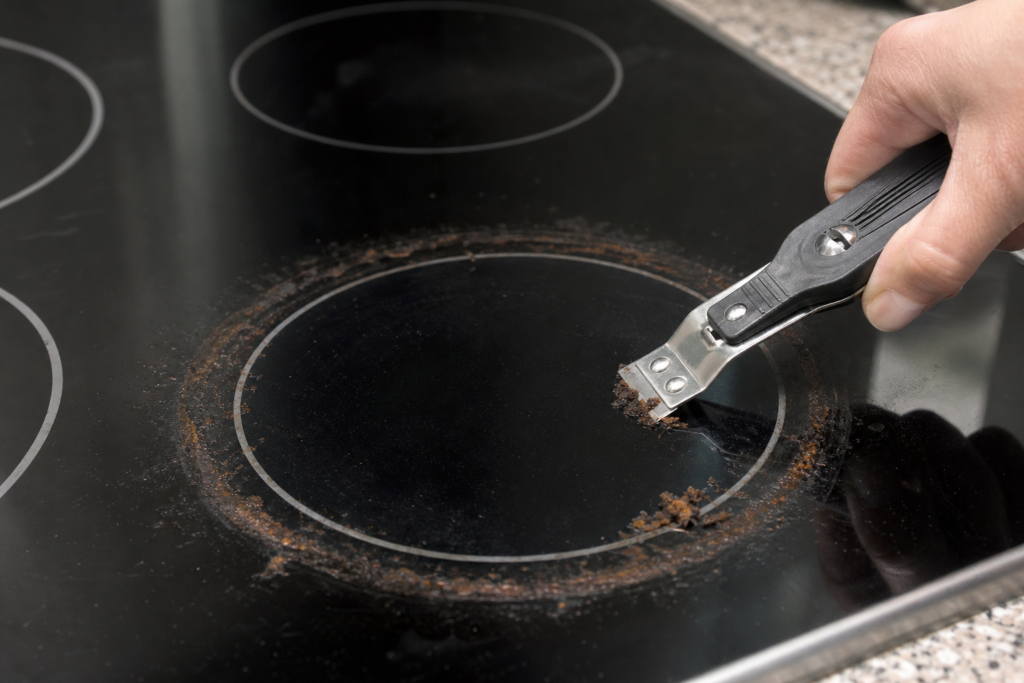
A scraper is the right tool for stubborn rings, baked-on sauce and carbonised spills. Used properly, it is much safer than an abrasive sponge.
- Use a clean, sharp blade
- Keep the angle low, around 30 to 45 degrees
- Push forward gently rather than sawing back and forth
- Stop if you feel grit under the blade and wipe first
- Replace bent or rusty blades
Some manufacturer guidance says a scraper can work best when the surface is still warm but not hot to the touch. That can help with stuck-on residue, but only do this if your hob manual allows it and you can work safely.
What to skip on a ceramic hob
This is where a lot of damage happens. Burnt-on stains are frustrating, but aggressive cleaning usually makes them worse.
- Do not use steel wool
- Do not use green scourers or abrasive pads
- Do not use abrasive powder cleaners
- Do not use oven cleaner or oven spray
- Do not use bleach or ammonia-based cleaners
- Do not use steam cleaners
- Do not scrape with knives or razor blades not made for hobs
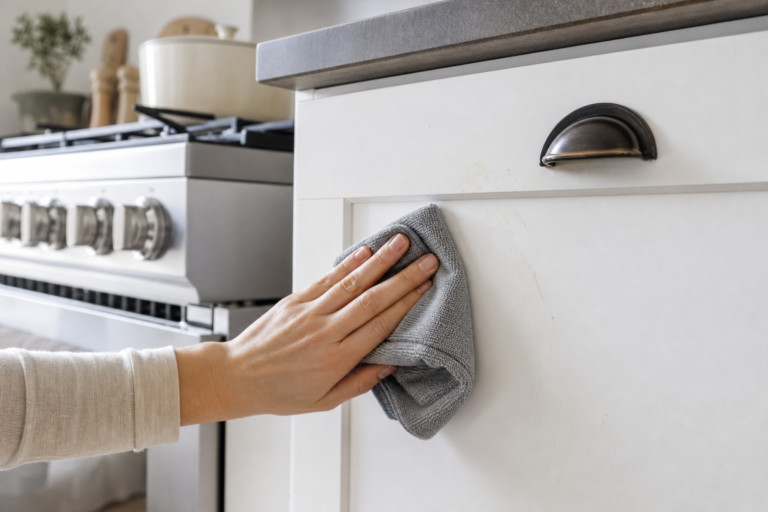
If you are sorting out the rest of the kitchen too, you might also like the best way to clean grease off kitchen cabinets and how to clean sticky wood kitchen floors. Burnt-on hob stains often come with a general layer of kitchen grease nearby.
Special cases: sugar, melted plastic and silvery marks
Sugary spills
Jam, caramel, syrup and sweet sauces need quick action. They can damage a ceramic hob if they are left to cool and harden. Switch the hob off and carefully remove the spill straight away using a proper hob scraper, while protecting your hands from the heat. Then clean the area fully once the surface has cooled.
Melted plastic
If plastic packaging, a bread bag tie or utensil has melted onto the surface, treat it the same way as a sugary spill. Remove it as soon as possible with a scraper. Do not leave it until your next kitchen clean.
Silvery or grey metal marks
These are sometimes transfer marks from aluminium or other pan bases rather than permanent damage. Try ceramic hob cleaner and firm but gentle rubbing with a soft cloth or non-abrasive pad. If the surface feels smooth, there is a good chance it is a deposit rather than a scratch.
Can you use baking soda or vinegar?
Sometimes, but they are not the best first choice for burnt-on hob stains.
Bicarbonate of soda / baking soda can add too much abrasion if you scrub hard, especially on dark glass surfaces where dull patches show easily. A paste may help with light residue, but it would not be my first pick for a ceramic hob.
White vinegar can help with mineral spots or light cloudy marks, but it is not usually the most effective option for thick burnt-on food. If you do use a vinegar-based cleaner for water marks, keep it targeted, rinse well, and check your hob instructions first.
For everyday cleaning with less guesswork, a dedicated ceramic hob cleaner is usually the safer option.
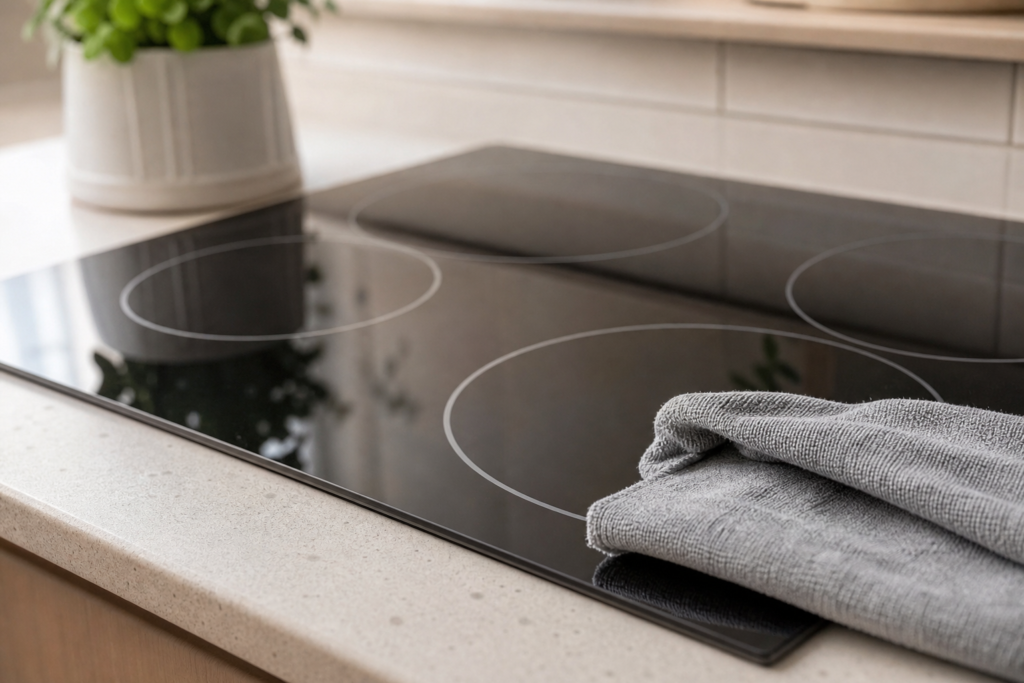
How to keep your hob clear between deep cleans
You do not need to deep-clean the hob every day. A quick wipe-down after cooking makes the biggest difference.
- Wait for the surface to cool.
- Wipe with a damp microfibre cloth.
- Dry with a second cloth so streaks do not set.
- Check pan bases for grease or burnt residue before the next use.
Also try these habits:
- Lift pans instead of sliding them
- Keep pan bottoms clean and dry
- Do not use the hob as extra worktop space
- Do not leave salt, sugar or crumbs sitting on the surface
If you are building a simple kitchen reset, this daily reset routine for a messy house helps you keep surfaces under control without a full evening clean.
Troubleshooting stubborn marks
| Problem | Likely cause | What to do |
|---|---|---|
| Dark burnt ring | Baked-on food or grease | Use hob cleaner, then scrape gently at 30 to 45 degrees |
| Cloudy film | Cleaner residue or mineral deposits | Buff dry first, then use a little hob cleaner or a suitable vinegar-based cleaner if allowed |
| Silvery streaks | Metal transfer from pan base | Rub with ceramic hob cleaner and a soft cloth |
| Rough sticky patch | Sugar or melted spill | Remove promptly with scraper, then clean fully once cool |
| Fine scratches | Abrasive pad or dirty pan base | Prevent more damage by changing tools and cleaning cookware bases |
A few useful related reads
If you are doing a bigger kitchen clean, these may help next:
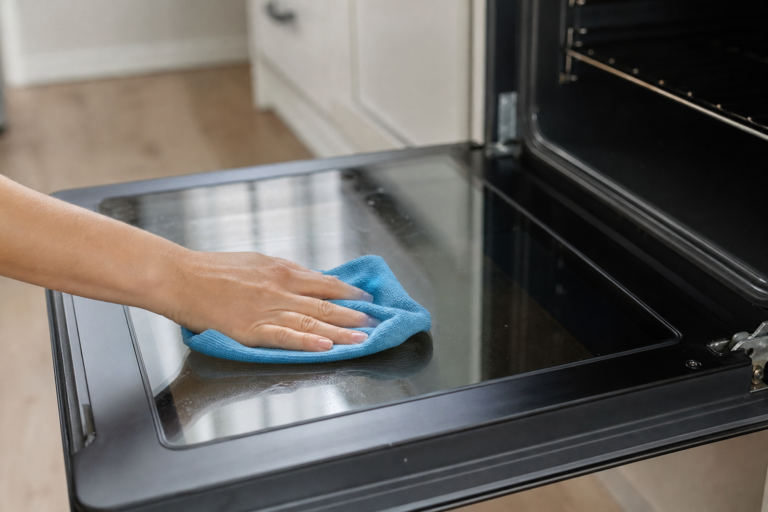
- How to clean between oven glass without taking the door apart
- How to clean an air fryer basket with baked-on grease
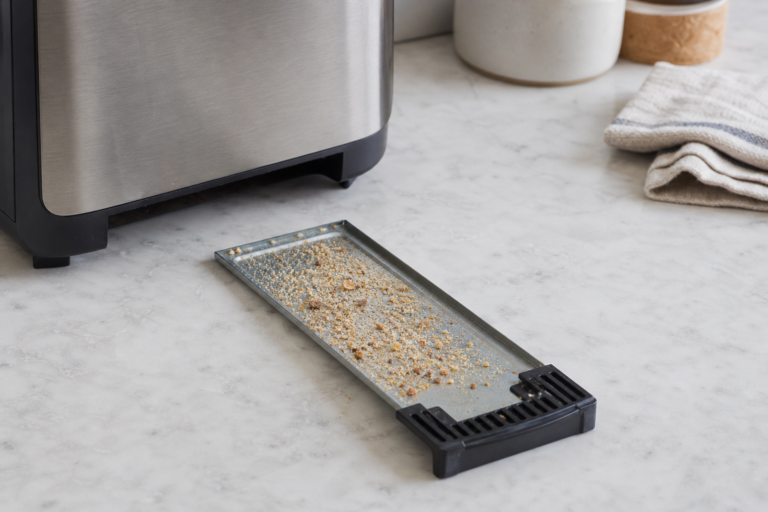
- How to clean a toaster tray safely
- What to keep under the kitchen sink in a small space
- More kitchen cleaning guides
For manufacturer-specific advice, it is worth checking guidance from NEFF on cleaning ceramic hobs or AEG’s hob care do’s and don’ts if your model has special finish or care instructions.
If your hob still looks marked after cleaning, run a finger lightly over the area once it is cool. If it feels smooth, it may be a transfer mark or discolouration rather than burnt residue. If it feels rough, another careful pass with cleaner and a proper scraper is usually the next step.
Start with the gentlest method that suits the stain, and your hob should stay clear and glossy for much longer.
Frequently Asked Questions
What is the best thing to use on a ceramic hob with burnt-on food?
A ceramic hob or glass cooktop cleaner, plus a soft cloth and a proper hob scraper, is usually the best combination. The cleaner helps loosen the residue, and the scraper lifts stubborn burnt bits without the heavy scrubbing that can scratch the surface.
Can I use baking soda on a ceramic hob?
You can use bicarbonate of soda, called baking soda in the US, on light residue, but use care. It can act as a mild abrasive, so rubbing too hard may dull the finish. For burnt-on rings, a dedicated ceramic hob cleaner is usually safer and more effective.
How do I remove burnt rings from a glass stovetop without scratching it?
First wipe away loose crumbs, then apply ceramic hob cleaner and let it sit briefly. Rub gently with a non-abrasive pad, and use a cooktop scraper at about a 30 to 45 degree angle for the stubborn ring. Finish by wiping clean and buffing dry.
Can I use a razor blade on a ceramic hob?
Only if it is a scraper designed for ceramic or glass hobs. A proper hob scraper holds the blade at the right angle and gives you better control. Do not use a loose blade, knife or random scraper, because that raises the risk of scratching the surface.
What should you not use on a ceramic hob?
Avoid steel wool, abrasive scourers, powder cleansers, oven spray, bleach, ammonia, rust remover and steam cleaners. These can scratch, stain or damage the glass-ceramic surface. It is also smart to check your hob manual before trying any new cleaner, even a mild one.
Free printable
Get the 15-minute weekly cleaning checklist
One short block a day keeps the whole home under control. Open the printable checklist, then join the list for one new practical guide a week. No spam, unsubscribe any time.