How to Clean Sticky Wood Kitchen Floors
If you want to know how to clean sticky wood kitchen floors, start with less liquid, less product, and more precise cleaning. A sticky floor usually is not a sign that you need a stronger cleaner. More often, it means there’s leftover residue, grease, sugary splashes, or too much moisture sitting on the surface.
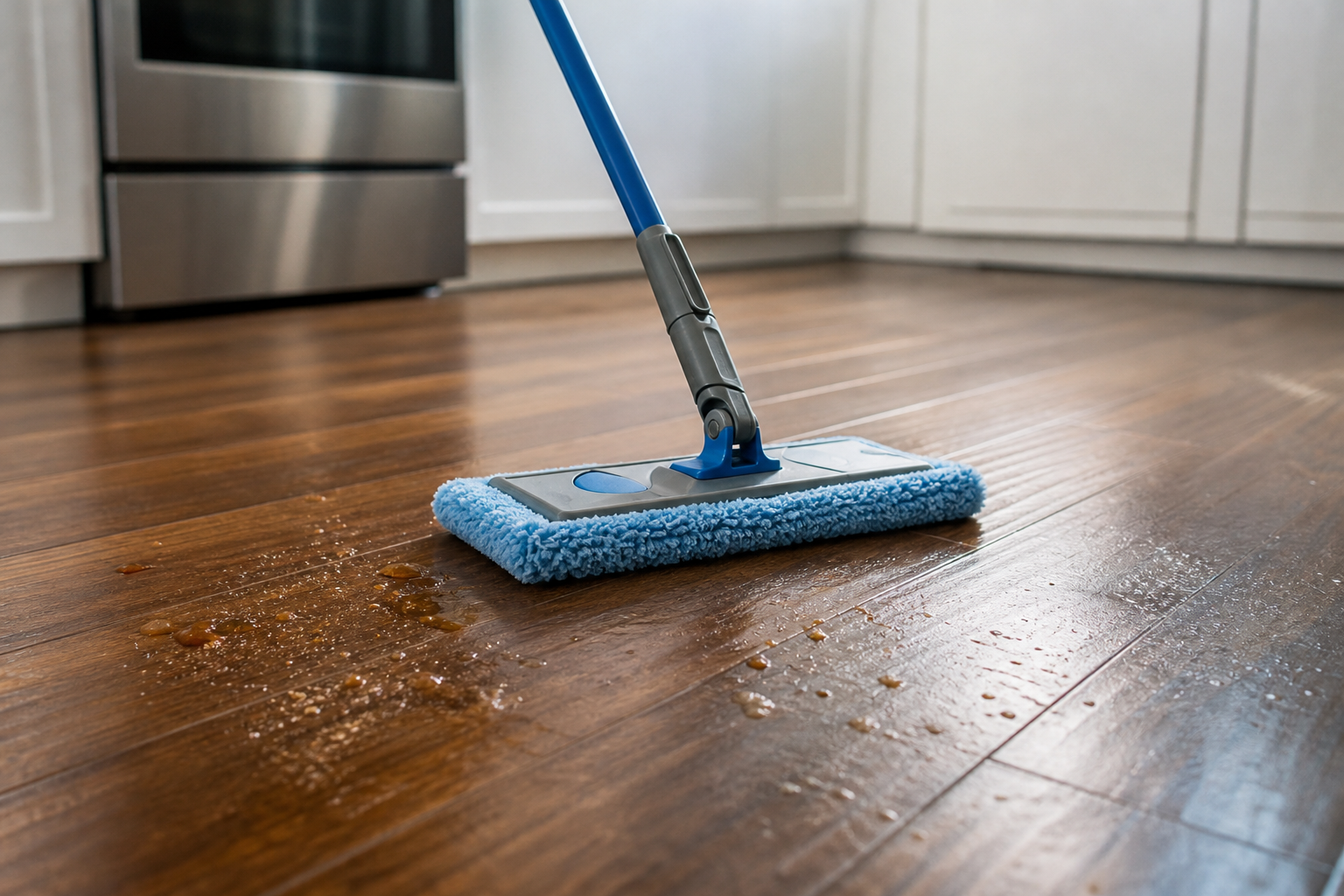
For sealed wood floors, the safest method is to vacuum or dry mop first, clean sticky spots separately, then use a clean microfibre pad lightly sprayed with a manufacturer-approved wood-floor cleaner. For laminate that looks like wood, the same low-moisture approach usually works, but check the care instructions for your specific floor first.
Why your wood kitchen floor feels sticky
Before you clean, it helps to figure out what kind of stickiness you’re dealing with. The fix for syrup near the fridge isn’t the same as the fix for mop residue across the whole room.
- Cleaner buildup: too much product, the wrong product, or “shine” products can leave a film.
- Grease: common near the hob / stovetop, bin, and cooker area.
- Sugary spills: juice, honey, soft drinks, jam, sauces.
- Too much water: wet mopping can leave a tacky feel and can damage wood over time.
- Dirty mop pads: a grimy pad spreads soil and cleaner instead of lifting it.
- Gummy residue: rug pads, tape, stickers, or adhesive tracked into the kitchen.
If the floor only feels sticky in patches, treat those areas first. If the whole floor feels tacky after mopping, residue buildup is the more likely cause.
What you need
- Soft broom, vacuum with hard-floor setting, or dry dust mop
- 2 to 3 clean microfibre cloths
- Microfibre flat mop with a clean pad
- Manufacturer-recommended wood-floor cleaner
- Warm water in a small bowl for spot cleaning
- Soft dry towel for buffing
For gummy adhesive residue only: mineral spirits, cotton pads or a soft cloth, and gloves.
Time: 15 to 30 minutes for a standard kitchen
Difficulty: Easy
Safety notes: Test any cleaner on a hidden area first and check the flooring manufacturer’s instructions before you start. Do not soak wood floors, do not use a steam mop, and do not use vinegar on wood finishes. If you use mineral spirits for adhesive residue, open a window, wear gloves, keep it away from flames, and use only a small amount on a cloth, not directly on the floor.
How to clean sticky wood kitchen floors without leaving residue
- Remove crumbs, grit, and dust first.
Vacuum using the hard-floor setting or use a dry microfibre dust mop. This step matters more than it looks. When dust mixes with cleaner, it can leave streaks and a tacky film. - Find the sticky areas.
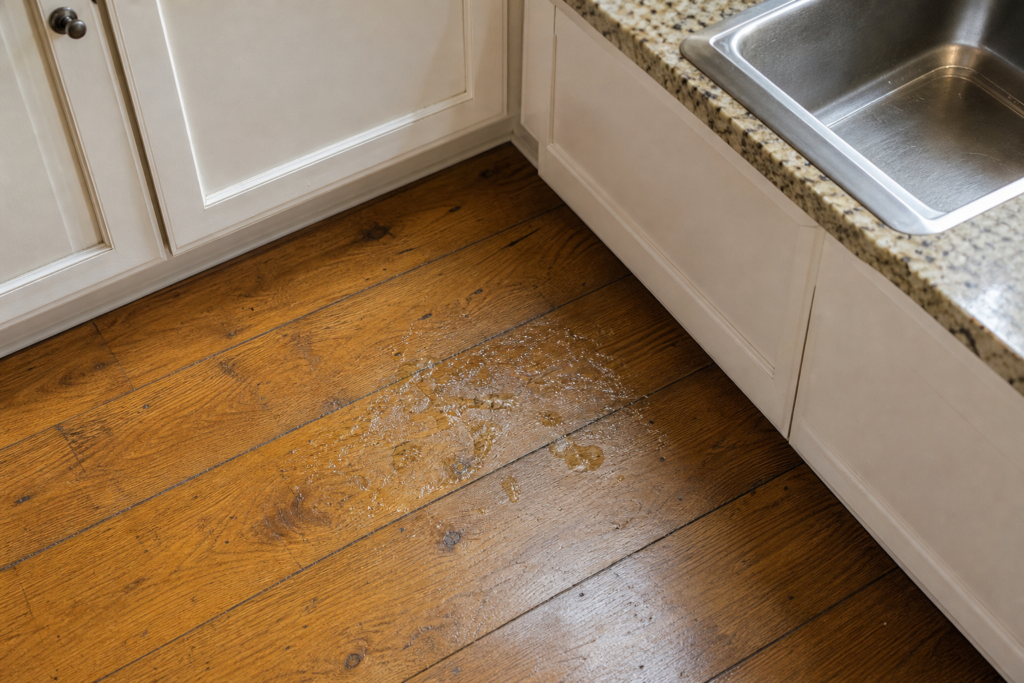
Walk the floor slowly in socks or check with clean dry hands. Kitchens often have problem spots in front of the sink, dishwasher, table, fridge, and hob / stovetop. - Spot-clean before you mop.
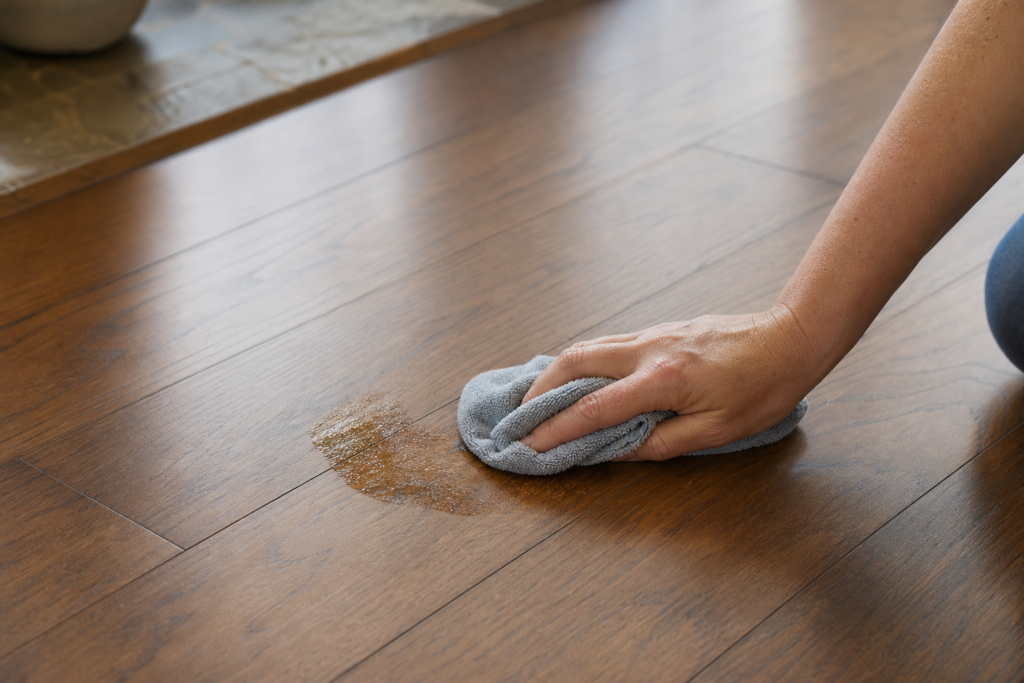
Dampen a microfibre cloth with plain water so it is just slightly damp, not wet. Rub the sticky patch gently, then dry it straight away with a second cloth. On modern sealed floors, this is often enough for fresh food or drink spills. - Use a wood-floor cleaner on stubborn patches.
If water alone does not lift the tackiness, spray a small amount of wood-floor cleaner onto the cloth or mop pad, not directly onto the floor. Wipe the area, then buff dry. Using less product is usually the key to avoiding new residue. - Mop the whole floor with a barely damp pad.
Attach a clean microfibre pad and lightly mist the pad with your wood-floor cleaner. Mop in small sections. If the pad starts to look grey or greasy, swap it for a fresh one. - Dry the floor as you go if needed.
If any area looks damp, buff it with a dry towel. You should never have standing water or visible wet patches on wood. - Check for remaining tacky areas.
Once the floor is dry, walk over it again. If a spot is still sticky, it may be grease buildup or adhesive rather than normal floor soil.
What to use for different kinds of stickiness
| Problem | Best first step | What to avoid |
|---|---|---|
| Whole floor sticky after mopping | Dry clean first, then re-clean with a clean microfibre pad and minimal wood-floor cleaner | More cleaner, bucket mopping, “mop and shine” products |
| Small sugary spill | Slightly damp cloth, then dry immediately | Soaking the area |
| Greasy patch near cooker | Wood-floor cleaner on a cloth, wipe gently, buff dry | All-purpose degreasers unless the floor maker says they are safe |
| Gummy adhesive residue | Tested small amount of mineral spirits on a cloth | Scrapers, steam, heavy rubbing with abrasive pads |
| Laminate lookalike floor | Low-moisture cleaning with approved laminate or hard-floor cleaner | Wet mops, steam mops, soaking edges and seams |
What not to use on sticky wood floors
This is where many sticky-floor problems begin.
- Vinegar: often suggested online, but wood-floor industry guidance warns it can damage the finish over time.
- Steam mops: the heat and moisture can force water into the floor.
- Traditional mop-and-bucket cleaning: too much water, too much risk.
- All-purpose cleaners: these can leave residue and may not be suitable for wood finishes.
- Oil soaps, waxes, or shine-restoring products: these can build up and leave floors tacky or slippery.
- Spraying cleaner all over the floor: this usually leaves too much product sitting on the surface.
If you have been using the wrong cleaner for a while, you may need a few gentle low-residue cleanings to fully remove the film. One heavy scrub usually is not the answer.
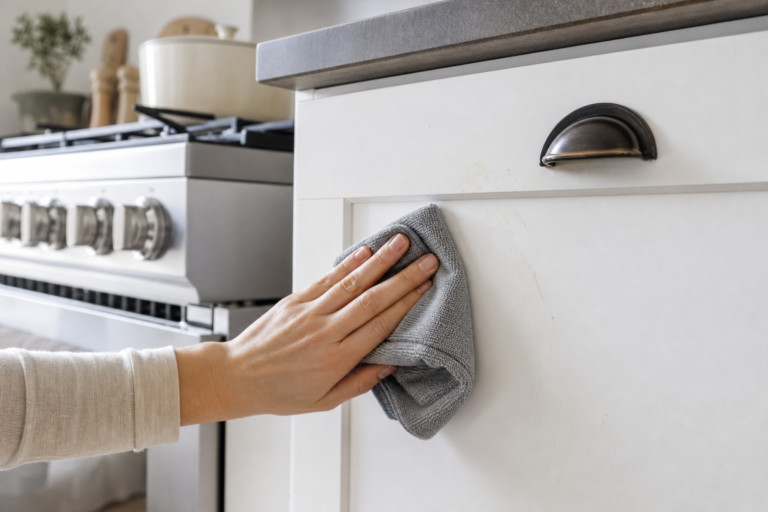
If greasy buildup is not just on the floor, you might also want to deal with nearby splash zones. This guide on the best way to clean grease off kitchen cabinets can help stop the same grime from settling back onto the floor.
How to deal with gummy or adhesive residue
If the sticky area feels rubbery or gummy rather than like dried food, you may be dealing with adhesive from a rug pad, sticker, or tape.
- Test a tiny hidden spot first.
- Put a small amount of mineral spirits on a cloth, never directly on the floor.
- Rub gently until the residue softens.
- Wipe the area with a clean dry cloth.
- Follow with the flooring manufacturer’s recommended cleaner if needed.
This is not for routine mopping. It is a spot treatment for true gummy residue. For general wood-floor care, low moisture and the right cleaner are still the main fix. The National Wood Flooring Association guidance also makes it clear that household cleaners and excess moisture can cause sticky or damaged floors.
If your floor is laminate, not real wood
A lot of people say “wood kitchen floor” when they really mean laminate or another wood-look floor. That matters because the top layer is different.
For laminate:
- Use the cleaner recommended for laminate or hard floors by the manufacturer.
- Keep moisture very light, especially near seams and edges.
- Dry any wet spots right away.
- Avoid soaking, bucket mops, and steam just as you would with wood.
If you are unsure what flooring you have, check spare planks, old paperwork, or the brand’s care page online before trying stronger methods.
How to stop wood kitchen floors getting sticky again
- Use less cleaner. If the label says lightly mist, it really does mean lightly.
- Spray the mop pad, not the floor. This helps control moisture.
- Change mop pads often. One dirty pad can smear soil around the whole kitchen.
- Wipe spills right away. Especially juice, sauces, oil, and anything sugary.
- Use mats in splash zones. Put one near the sink, but avoid rubber-backed mats that can trap moisture against hardwood.
- Dry mop between deeper cleans. A two-minute pass a few times a week makes a difference.
If your kitchen tends to collect mess quickly, a simple routine helps more than a bigger cleaning stash. You might like this daily reset routine for a messy house for keeping crumbs, spills, and clutter from building up.
It also helps to cut down the cleaner chaos under the sink. If that area is crammed with half-used sprays, this guide on how to organise under the kitchen sink in a small space makes it easier to keep only what you actually use.
When stickiness may be a finish problem
If the floor still feels tacky after careful cleaning, or it looks dull, patchy, peeling, or cloudy in certain spots, the issue may not be dirt at all. It could be finish wear or damage.
That is more likely if:
- the sticky area comes back quickly even when clean
- the surface looks uneven or rough
- water seems to darken the area
- the floor has been cleaned with vinegar, steam, or heavy water for a long time
At that point, stop experimenting with more products. Check the manufacturer’s care instructions or ask a flooring professional. A residue problem can usually be cleaned. A failing finish needs a different fix.
For more practical kitchen cleaning help, you can also read how to clean an air fryer basket with baked-on grease and how to clean between oven glass without taking the door apart. Less grease in the room often means less grime under your feet too.
If you want one next step, do this today: replace your mop pad, check your floor’s care instructions, and clean one sticky patch with the low-moisture method above. That small reset is often enough to show what the real problem is.
Frequently Asked Questions
Why is my wood floor sticky after mopping?
The most common reasons are too much cleaner, the wrong cleaner, a dirty mop pad, or too much water. Sticky floors often mean residue has been left behind rather than dirt still being there. Try dry cleaning first, then re-clean with a fresh microfibre pad and a small amount of approved wood-floor cleaner.
Can I use vinegar on sticky wood kitchen floors?
For real wood floors, it is better not to. Wood-floor guidance warns that vinegar can degrade the finish because it is acidic. If you have laminate, check the manufacturer’s instructions first. In most cases, a proper wood or laminate floor cleaner used sparingly is the safer choice.
What is the best mop for sticky hardwood floors?
A flat microfibre mop with washable pads is usually the best option because it uses very little moisture and picks up residue well. The key is not just the mop itself. Use a clean pad each time, lightly spray the pad instead of the floor, and swap pads when they get dirty.
How do I remove sticky spots from a wood floor near the sink or cooker?
Start with a slightly damp microfibre cloth and gently wipe the sticky spot, then dry it straight away. If that does not work, use a small amount of manufacturer-approved wood-floor cleaner on the cloth. For gummy adhesive residue, test mineral spirits on a hidden area first and use only a tiny amount.
Can I use a steam mop on a wood-look laminate kitchen floor?
It is usually best to avoid steam on laminate too, unless the flooring maker clearly says it is safe. Steam and excess moisture can get into seams and edges and cause swelling or damage. A low-moisture microfibre mop with the right cleaner is the safer everyday method.
Free printable
Get the 15-minute weekly cleaning checklist
One short block a day keeps the whole home under control. Open the printable checklist, then join the list for one new practical guide a week. No spam, unsubscribe any time.