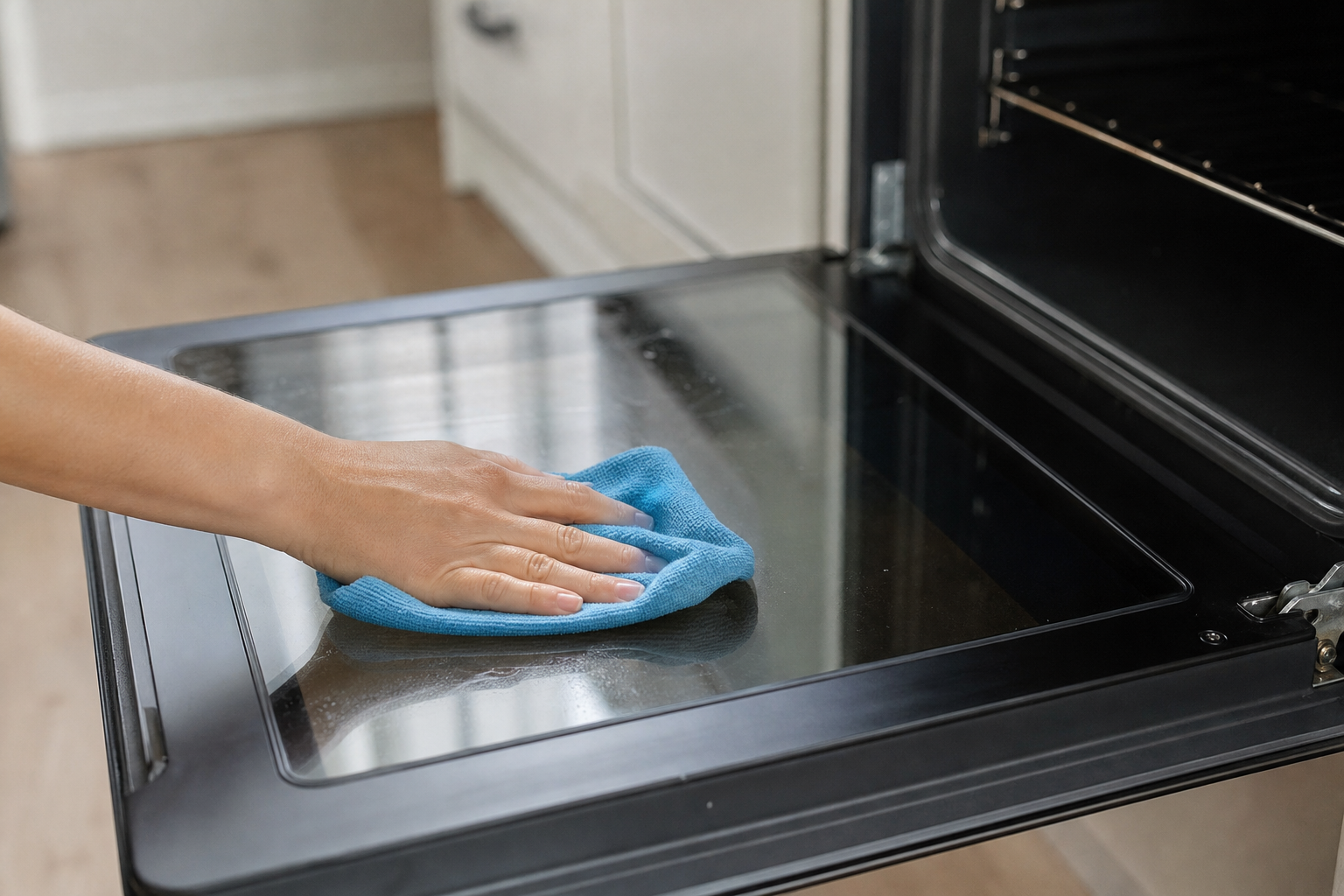
How to Clean Between Oven Glass Without Taking Door Apart
Yes, you can sometimes learn how to clean between oven glass without taking the door apart, but only on certain oven models. The safest way is to check your manual first, then use a cloth-wrapped flat tool through the access gap if the manufacturer allows it. If your model does not, stop there. Forcing anything can crack the glass or damage the door.
That distinction matters. “Without taking the door apart” often still means removing the whole door from its hinges, then cleaning through the bottom opening. It does not always mean cleaning it while the door is still attached.
What you need
- Microfibre cloths
- Warm water
- Mild washing-up liquid / dish soap
- A flat tool such as a yardstick, wooden spoon handle, ruler, or similar smooth non-sharp tool
- Elastic band or tape to secure the cloth
- Dry towel to protect the floor or worktop
- Optional: bicarbonate of soda / baking soda
- Optional: plastic scraper for baked-on marks on accessible glass only
Time: 15 to 30 minutes
Difficulty: Easy to moderate, depending on whether your oven door needs to come off its hinges
Before you start: the two checks that save trouble
- Check the manufacturer instructions. Some ovens have a bottom opening that gives access between the glass panes. Others don’t. Some brands also warn against this method on certain models, including some side-swing doors or doors with built-in cameras.
- Test any cleaner on a hidden area first. That includes the outer frame, trim and any coated surfaces near the glass.
If you have a self-cleaning oven, be careful with chemicals. Some manufacturers advise against commercial oven cleaners inside self-cleaning ovens because they can damage interior surfaces. If you use a stronger cleaner on areas your manual says are safe, wear gloves, keep the room ventilated and follow the label exactly.
Safety note: Never mix bleach with vinegar, ammonia or any other cleaner. Keep liquids away from wiring, door vents and seals.
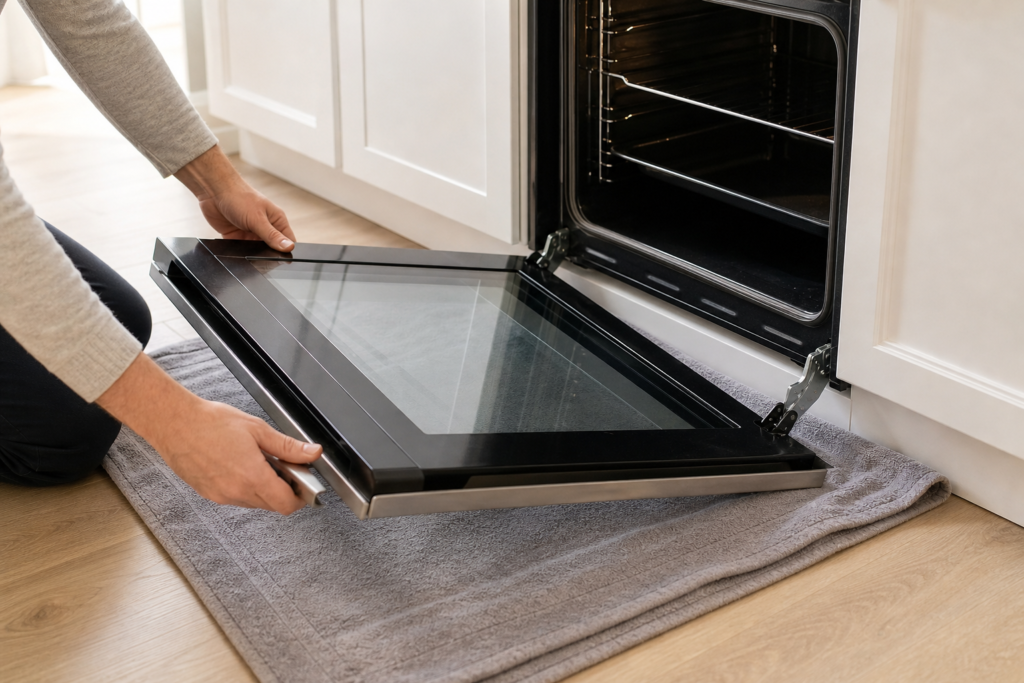
The best way to clean between oven glass without taking the door apart
For many ovens, the simplest way to clean between oven glass without taking the door apart is the cloth-and-stick method. It works best on greasy haze and light streaks, not thick burnt-on residue.
1. Turn the oven off and let it cool fully
Make sure the oven is completely cold. Unplug it if your manual recommends doing that before removing the door.
2. Remove the oven door only if your manual says to
On many models, access is much easier if you remove the whole door from the hinges and lay it handle-side down on a towel. That is still different from taking the door apart.
If your manual does not show a door-removal method, or the hinges look awkward or stiff, leave the door in place and contact the manufacturer instead.
3. Make a gentle cleaning tool
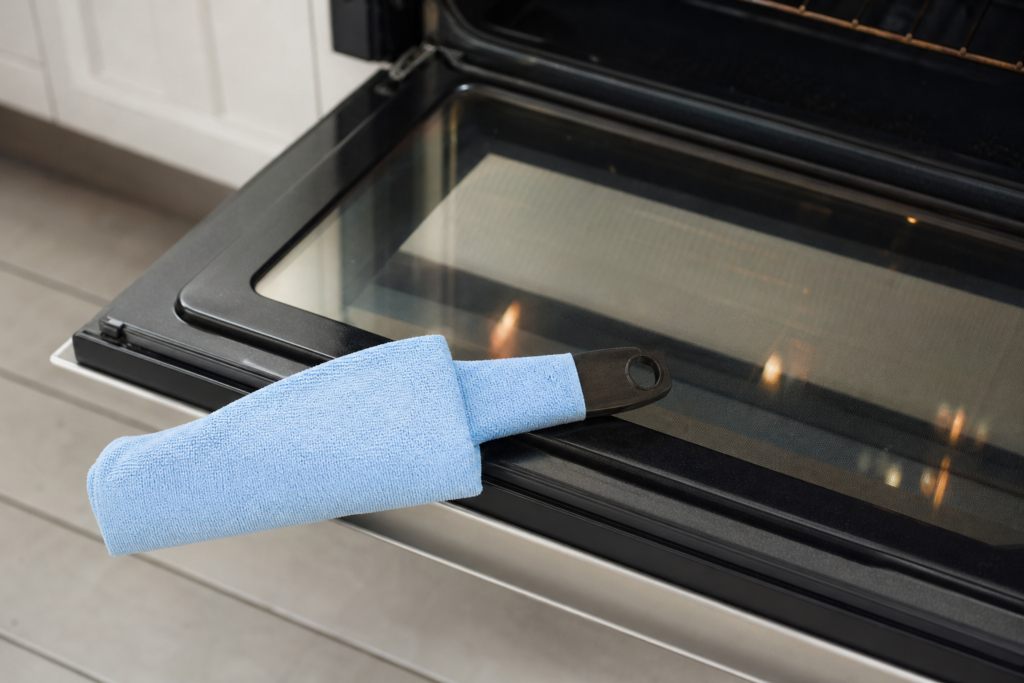
Wrap a slightly damp microfibre cloth around your flat tool and secure it with an elastic band or tape. The cloth should be snug, smooth and not dripping.
Add a small amount of warm water mixed with a drop or two of washing-up liquid. Don’t soak the cloth. Too much liquid can drip into the door and make the problem worse.
4. Insert it through the access gap slowly
Feed the cloth-wrapped tool through the bottom opening of the door if your model has one. Move slowly and don’t force it. You need enough room to move the cloth around without pressing hard on the glass.
If it catches, stop. Forcing the tool can bend trim, tear seals or crack the glass.
5. Let the damp cloth sit on greasy marks briefly
If you can reach the stained area, hold the cloth against it for 2 to 3 minutes. That brief contact helps loosen grease before you wipe.
6. Wipe, then switch to a clean dry cloth
Use gentle back-and-forth strokes. Then repeat with a clean dry cloth on the tool to remove moisture and cut down on streaks.
7. Refit the door and check for streaks
Once the inside is dry, put the door back according to the manual. If a few marks remain but the glass looks much better, leave it at that rather than keep scraping around inside the door.
If the grease is heavier, try this first on the reachable glass
Sometimes the marks are not actually between the panes. They’re just on the inner panel and look deeper than they are. Before you try any in-between cleaning, clean the accessible surfaces properly.
- Mix a paste of 1/2 cup bicarbonate of soda / baking soda with 3 tablespoons of water.
- Spread a thin layer on the inner glass only, avoiding gaps, vents and seals.
- Leave it for at least 20 minutes.
- Wipe with a damp microfibre cloth.
- Use a plastic scraper only if needed, never a metal blade.
- Buff dry.
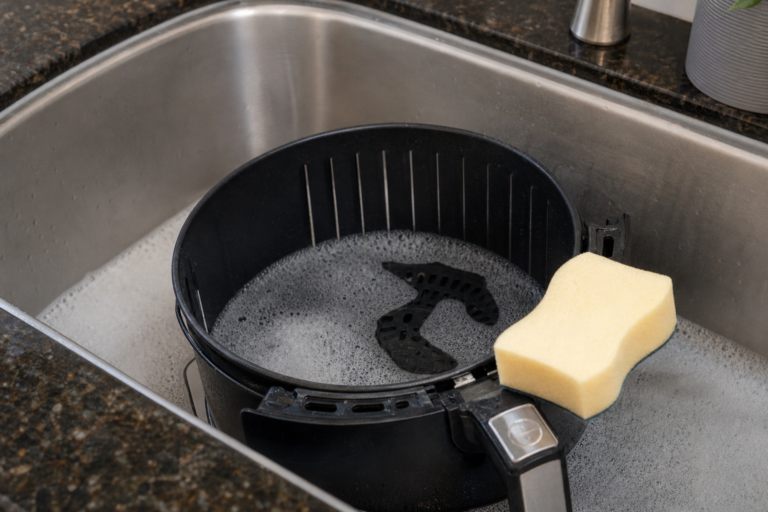
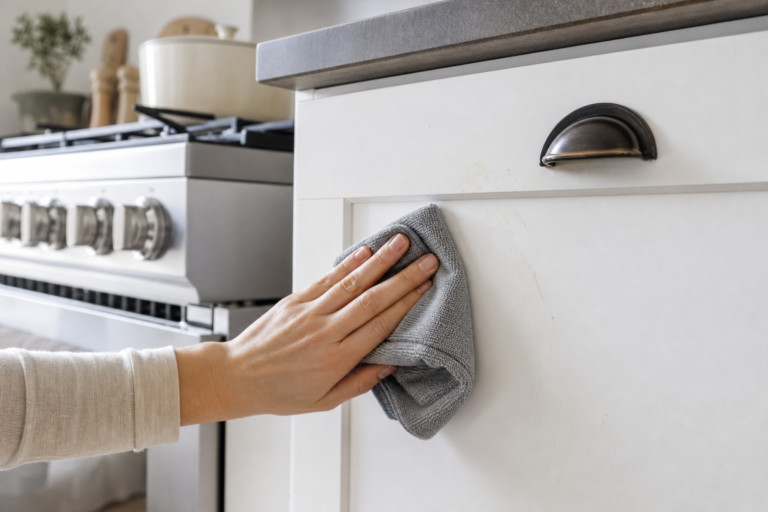
This same gentle approach works well on other kitchen grease jobs too, like an air fryer basket with baked-on grease or the best way to clean grease off kitchen cabinets.
When not to try this method
Stop and look up your model instructions if any of these apply:
- Your oven has no obvious access opening at the bottom of the door
- The door has a camera or unusual electronics built into it
- The door opens sideways rather than downward
- You would need to pry trim, seals or glass apart
- The stains look like damage inside the glass, not grease
- Your manual says service is required
If you have a Neff oven, the answer to how to clean between glass on Neff oven door without taking apart is the same as with any other brand: check the model manual first. Don’t assume a trick from another oven will work on yours just because the door looks similar.
For some brands, cleaning between the panes depends on the model. If you want an example of that kind of guidance, GE’s page on cleaning between the oven door glass explains that its method does not apply to every model.
Why grease gets between oven glass in the first place
It usually happens because vapour and moisture move through the door vents during baking, broiling and self-cleaning. That vapour can carry grease with it, and when it dries, it leaves haze or brown streaks between the panes.
That’s why the self-clean cycle does not usually fix it. Once the grease is trapped between the panes, it often needs a direct wipe.
How to stop it happening again
- Wipe up splatters and excess grease before long roasting or high-heat cooking.
- Clean the inside glass before running a self-clean cycle.
- Do not spray cleaner directly into door edges, vents or seams.
- Use only a lightly damp cloth near the door frame.
- Keep up with small kitchen cleaning jobs so grease does not build up everywhere. A simple daily reset routine helps more than deep scrubbing once a month.
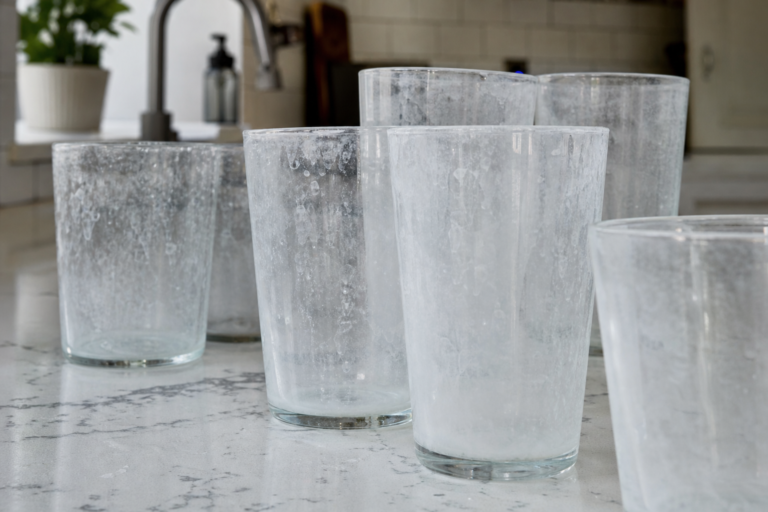
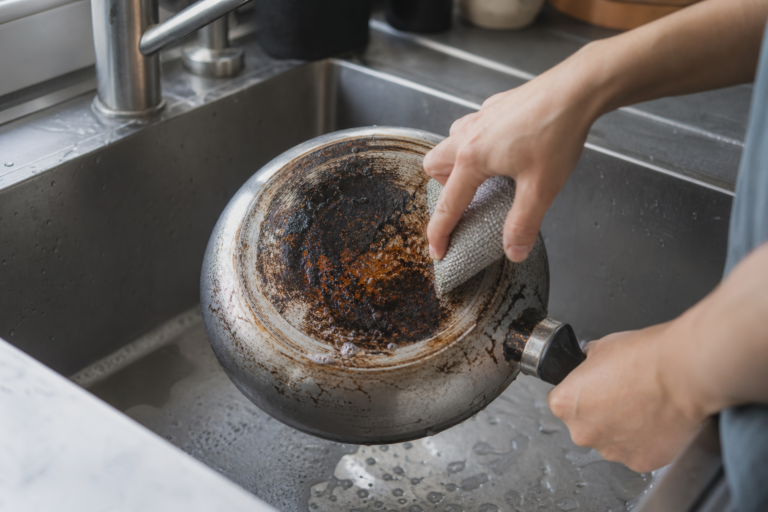
If you’re doing a bigger kitchen tidy-up, these guides may help too: how to clean a burnt pan bottom without scratching, how to clean cloudy drinking glasses from the dishwasher, and how to organise under the kitchen sink in a small space.
Common mistakes that make the problem worse
| Mistake | What happens | Safer option |
|---|---|---|
| Spraying cleaner into door gaps | Moisture can get trapped between panes | Apply cleaner to a cloth, not directly to the door edges |
| Using too much water | Drips can spread grime and leave streaks inside | Use a lightly damp cloth only |
| Forcing a ruler or hanger inside | Glass, trim or seals can crack or bend | Stop if the tool does not move freely |
| Using metal scrapers | Can scratch glass | Use a plastic scraper on reachable glass only |
| Ignoring the manual | You may damage the door or affect warranty | Check model-specific instructions first |
When it is better to call for service
Sometimes the safest answer isn’t a DIY one. If the glass looks loose, if there is dirt deep inside that your tool can’t reach, or if the door would need partial disassembly, professional service is often the better option.
Whirlpool also notes that cleaning between oven door glass often involves removing or taking apart the door and may not be recommended for every owner. Their guide on how to clean an oven inside and out is a useful reminder to check what your specific appliance allows.
If you’re unsure, find your model number first and search the maker’s support pages before trying another internet hack. Ten extra minutes spent checking can save an expensive oven door.
Frequently Asked Questions
How to clean oven glass without taking door apart?
First check your oven manual to see if your model allows access through the bottom of the door. If it does, use a lightly damp microfibre cloth wrapped around a flat tool with a little washing-up liquid. Move gently, never force it, and dry the area with a second cloth.
What is the best way to clean between oven glass without taking the door apart?
The safest first method is usually a cloth-wrapped ruler, yardstick or similar flat tool used through the access gap, often after removing the whole door from its hinges. Use only mild soapy water, keep the cloth just damp, and stop if your model does not allow enough space to move freely.
How do I clean between glass on a Neff oven door without taking apart?
Do not assume a generic oven hack will suit a Neff door. Check the Neff manual for your exact model to see whether the door can be removed from the hinges and whether there is approved access between the panes. If the instructions do not show a safe method, contact Neff support or book service.
Can I use vinegar or baking soda between oven door glass?
Bicarbonate of soda or baking soda paste is better for reachable inner glass, not usually for the space between panes where paste can be hard to remove. White vinegar can help on accessible glass, but do not spray it into seams or gaps. Apply any cleaner to a cloth first and keep moisture minimal.
Why is there grease between my oven door glass?
Grease can get between the panes when vapour and moisture move through the door vents during baking, broiling or self-cleaning. That vapour may carry grease, which dries into streaks. Cleaning spills early and avoiding liquid cleaners in the door gaps can help stop it building up again.
Free printable
Get the 15-minute weekly cleaning checklist
One short block a day keeps the whole home under control. Open the printable checklist, then join the list for one new practical guide a week. No spam, unsubscribe any time.