How to Remove Toothpaste Stains From Bathroom Sink
To remove toothpaste stains from bathroom sink surfaces, start with the gentlest method first: warm water, a little washing-up liquid, and a soft microfibre cloth. If the white marks do not lift, the next step depends on the sink material, since ceramic, resin and composite sinks can all react differently to vinegar, abrasives and stronger cleaners.
In many homes, the stain is not just toothpaste. It is usually a mix of dried paste, soap residue and hard-water minerals, which is why the mark keeps coming back or feels chalky instead of greasy.
What you need
- Warm water
- Washing-up liquid / dish soap
- 2 soft microfibre cloths
- Non-scratch sponge
- Old soft toothbrush
- Bicarbonate of soda / baking soda
- White vinegar, only if your sink manufacturer says it is suitable
- Cotton buds or a small detailing brush for tight areas
- Dry towel or cloth
Time: 10 to 20 minutes
Difficulty: Easy
Before you start: 3 quick safety checks
- Check the sink care instructions. Ceramic, acrylic, resin, stone and composite sinks all come with different care guidance.
- Test any cleaner on a hidden area first. This matters most for resin, cultured marble, stone and composite finishes.
- Never mix bleach with vinegar, ammonia or any other cleaner. If bleach has been used in the sink recently, rinse thoroughly and stick to mild soap and water unless the product label says otherwise.
Also take care around the tap / faucet and drain trim. Many metal finishes can be dulled by bleach, ammonia, alcohol or abrasive cleaners.
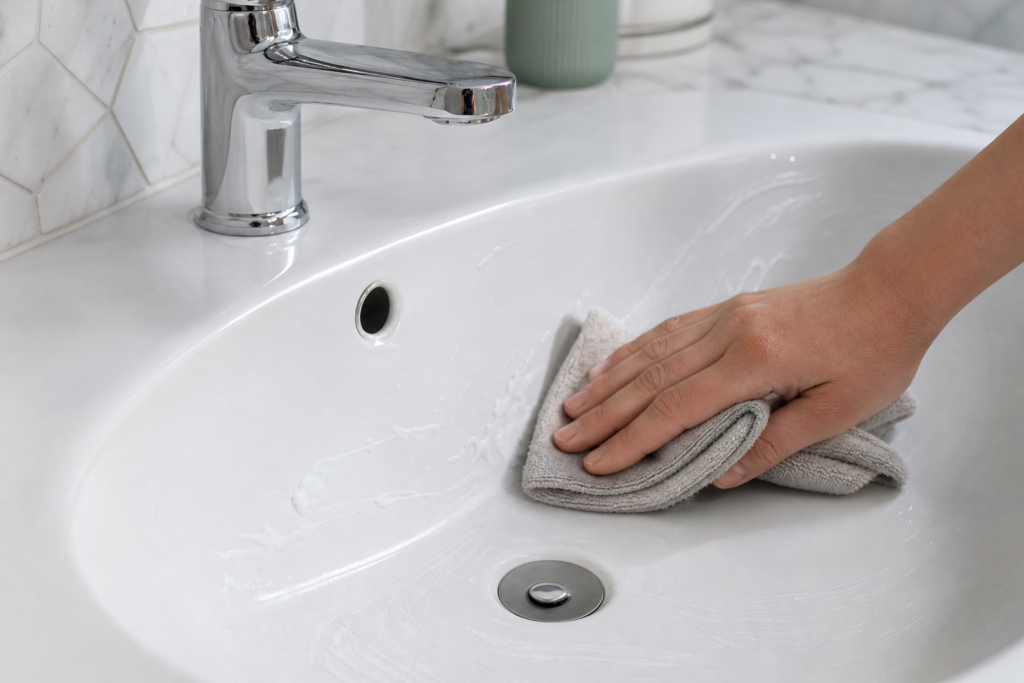
How to remove toothpaste stains from bathroom sink step by step
- Rinse the sink with warm water.
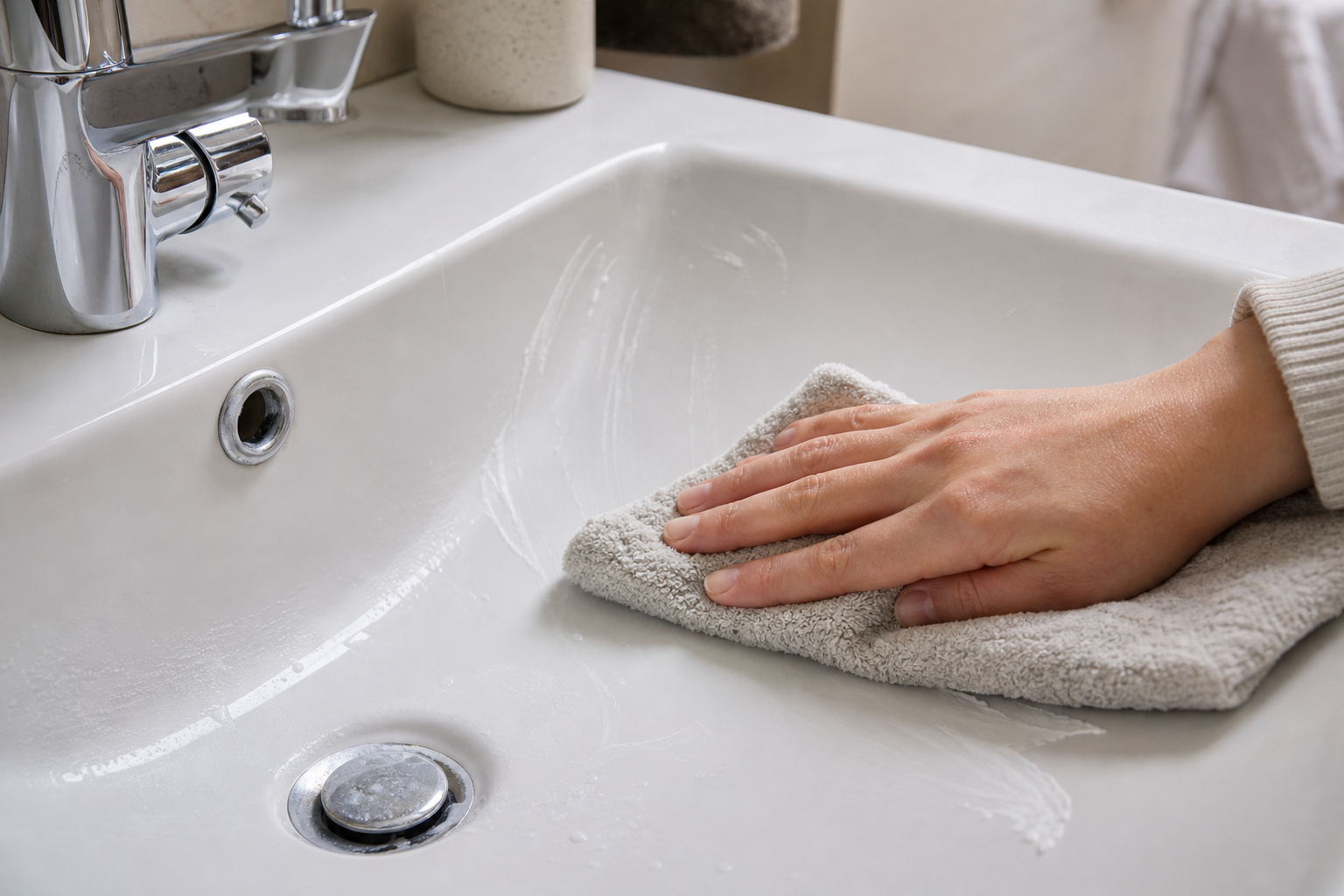
Loosen fresh toothpaste and soften dried splashes. Do not use very hot water on delicate resin or acrylic surfaces unless the manufacturer allows it. - Add a drop of washing-up liquid to a damp cloth or sponge.
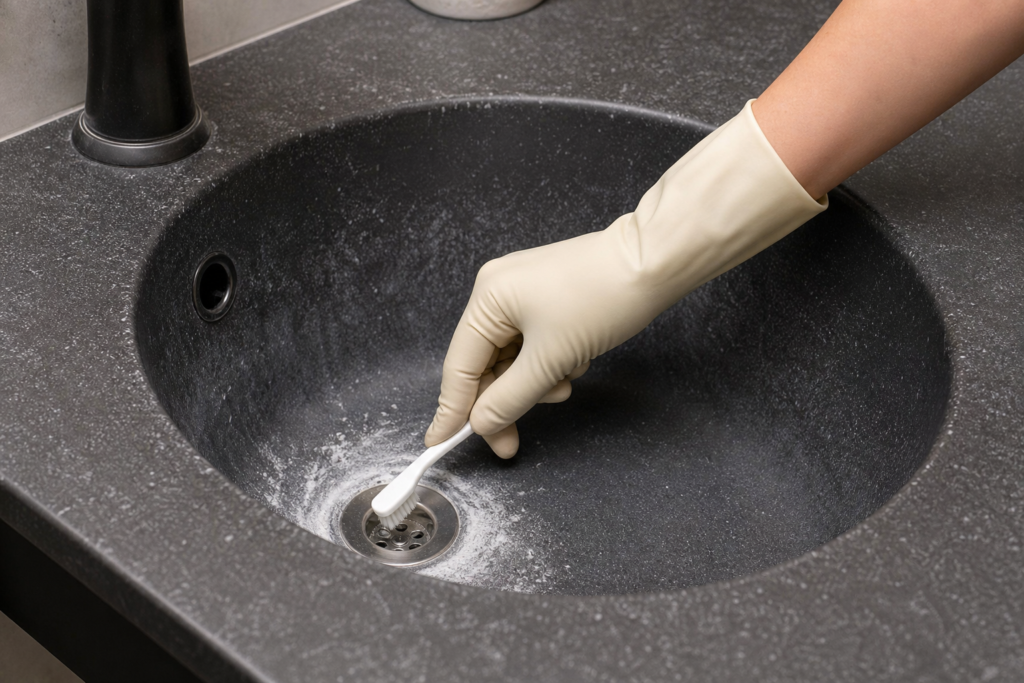
Wipe the whole basin, not just the obvious marks. Toothpaste often leaves a thin film that is easy to miss until it dries. - Work around the drain and tap base.
Use a soft toothbrush or cotton bud to lift buildup from the ring around the drain, the overflow opening and the base of the tap / faucet. - Rinse and inspect.
If the sink looks clean when wet but turns hazy as it dries, you are probably dealing with mineral buildup as well as toothpaste. - Use the right follow-up method for your sink material.
Jump to the section below for ceramic, resin or composite sinks. - Rinse well and dry fully.
Buff the basin dry with a clean microfibre cloth. This last step makes a noticeable difference and helps stop the white film coming back quickly.
Best method for ceramic or porcelain sinks
Ceramic and vitreous china sinks are usually the easiest to clean, but harsh pads can still scratch them. Start simple.
For light or fresh toothpaste marks
- Mix warm water with a small squirt of washing-up liquid.
- Wipe with a non-scratch sponge or cloth.
- Rinse and dry.
For dried toothpaste or white rings
- Make a loose paste with bicarbonate of soda / baking soda and a few drops of water.
- Apply it to the stain with a damp cloth.
- Leave it for 5 to 10 minutes.
- Rub gently in small circles.
- Rinse well and dry.
If your manufacturer allows it, some ceramic sink care guides also suggest a baking soda and white vinegar paste for stubborn residue. Use that only if the sink finish and nearby metal parts can safely handle it, and never use it after bleach or alongside any other cleaner.
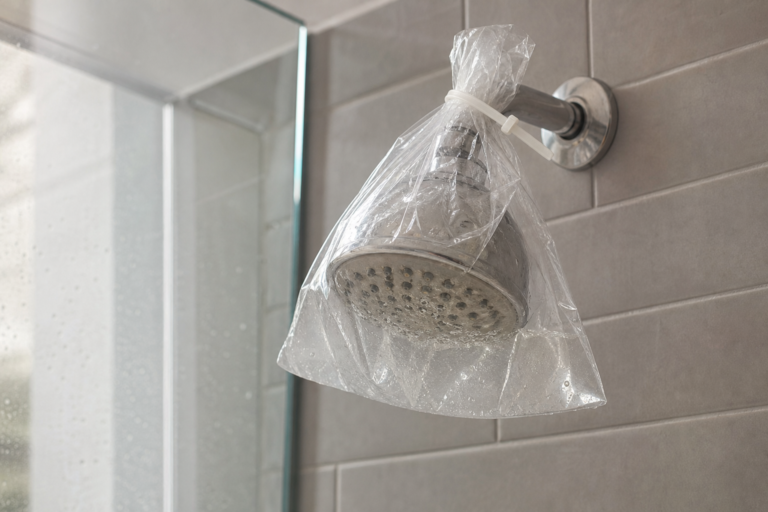
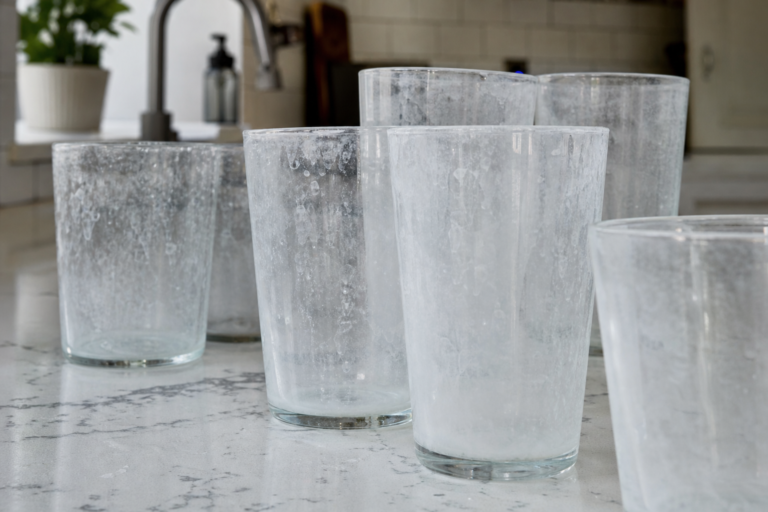
Avoid steel wool, wire brushes and abrasive scourers. If you have ever used gentle methods to remove cloudy mineral marks on glassware, the same principle applies here: the wrong scrubber often causes more trouble than the stain. If hard-water film is a recurring issue around the bathroom, this guide on removing limescale from a shower head without vinegar smell may help too.
Best method for resin, acrylic or cultured marble sinks
These surfaces scratch and dull more easily, so keep the method mild and skip anything gritty unless the manufacturer specifically says it is safe.
- Use warm water and washing-up liquid first.
- Wipe with a soft cloth, not the rough side of a sponge.
- For stubborn spots, hold a warm damp cloth over the mark for 2 to 3 minutes to soften it.
- Wipe again with gentle pressure.
- If residue remains, use a cleaner made for acrylic or cultured marble, following the label directions exactly.
- Rinse and dry thoroughly.
Do not use powdered abrasives, scouring cream unless approved for the material, solvents, or rough scrub pads. Even bicarbonate of soda can be too abrasive on some softer finishes, so check the care guide first.
Best method for composite or quartz sinks
Composite sinks vary. Some quartz composite models can handle mild abrasive cleaners, while others need gentler care. That is why the safest approach is to check the manufacturer instructions before trying any DIY paste.
- Clean first with washing-up liquid and warm water.
- Use a non-scratch sponge to lift the residue.
- If the sink care guide allows it, use a small amount of approved cleaner for mineral or soap buildup.
- Rinse well so cleaner does not dry on the surface.
- Dry with a soft cloth.
If your sink is dark grey, black or stone-look, dried toothpaste may show up as pale streaks. In that case, rinsing alone is not enough. Dry buffing after cleaning helps remove the chalky look.
How to tell if it is toothpaste or hard-water buildup
If the mark comes off easily when wet, it is probably mostly toothpaste.
If it feels rough, looks chalky, or keeps reappearing around the tap base and drain, hard-water minerals are likely part of the problem. Hard water contains dissolved calcium and magnesium, and those minerals can leave white scale behind. That is why some sinks always seem to look dusty even after a quick rinse. The U.S. Geological Survey guide to water hardness gives a simple explanation if you want to understand why this happens.
If mineral haze is showing up on other surfaces too, you may also find this article on cleaning cloudy drinking glasses from the dishwasher useful.
Common mistakes that make sink stains worse
- Scrubbing with steel wool or harsh scourers. This can scratch ceramic glaze and dull resin or composite finishes.
- Using the same cleaner on every sink. A method that works on porcelain may damage acrylic, stone or some composite materials.
- Ignoring the tap and drain edges. Toothpaste and mineral residue often build up there first.
- Letting cleaner dry on the sink. This can leave more residue behind.
- Using bleach as a default cleaner. It is often unnecessary for toothpaste marks, and it must never be mixed with vinegar or other cleaners. The CDC bleach safety advice is clear on this.
Quick prevention that actually helps
You do not need a big routine here. A 20-second reset is usually enough.
- After brushing, rinse the basin with warm water.
- Wipe away visible splashes near the drain and tap.
- Dry the sink with a microfibre cloth.
That last step matters most. It stops both toothpaste film and water spots from drying onto the surface.
If bathroom cleaning tends to pile up, keeping one cloth just for the sink inside the vanity or in a nearby basket can make the habit easier. You can find more simple upkeep ideas in the Cleaning Routines section, and more sink, shower and surface guides in the Bathroom category.
When the stain still will not move
If you have tried warm soapy water and a material-safe stain method and the mark is still there, stop before you scrub harder. The problem may be an etched finish, older mineral deposits, or wear to the surface rather than toothpaste alone.
At that point, check the manufacturer care instructions for your exact sink model or contact the brand for approved cleaning advice. That is especially wise for stone, coloured composite, cultured marble and older sinks with an unknown finish.
For everyday upkeep, the simplest plan works best: rinse, wipe, dry. It takes less time than scrubbing away a week of chalky toothpaste rings later.
Frequently Asked Questions
Why does toothpaste leave white stains in the bathroom sink?
Toothpaste can dry into a chalky film, especially if it is left around the drain or tap base. In many homes, the white mark is also mixed with hard-water minerals, which makes it look thicker and harder to remove than toothpaste alone.
Can I use baking soda on every bathroom sink?
No. Bicarbonate of soda, called baking soda in the US, is often fine for ceramic or porcelain sinks, but it can be too abrasive for some resin, acrylic, cultured marble or stone surfaces. Check the manufacturer instructions and test in a hidden spot first.
Is vinegar safe for removing toothpaste stains from a sink?
Sometimes, but not always. Vinegar may help on some ceramic sinks, especially when hard-water residue is part of the problem, but it is not suitable for every material. Avoid it on surfaces that do not allow acidic cleaners, and never mix vinegar with bleach.
How do I clean toothpaste buildup around the drain and faucet base?
Use a soft toothbrush or cotton bud with warm water and a little washing-up liquid. Gently work around the drain ring, overflow opening and base of the tap, then rinse and dry well. This removes the residue that a flat cloth often misses.
How can I stop toothpaste stains coming back?
Rinse the sink after brushing and dry it with a microfibre cloth. That quick habit stops both toothpaste and water minerals from drying onto the surface. If marks return fast, hard water is probably part of the issue, so regular drying will help even more.
Free printable
Get the 15-minute weekly cleaning checklist
One short block a day keeps the whole home under control. Open the printable checklist, then join the list for one new practical guide a week. No spam, unsubscribe any time.