How to Remove Deodorant Stains From Black Shirts
If you need to know how to remove deodorant stains from black shirts, start by separating the problem. Fresh white marks usually sit on the surface, so you can often lift them without washing. Older yellow or grey underarm buildup needs a proper pretreat and wash. The key is to avoid heat, test any product on a hidden area first, and stick to methods that are gentle on dark fabric.
That matters because black shirts show every chalky streak, and they can also fade quickly. The best way to remove deodorant stains from black shirts is to use the mildest method that will actually deal with the stain in front of you.
Know which stain you’re dealing with
Most people call both problems “deodorant stains”, but they’re not the same.
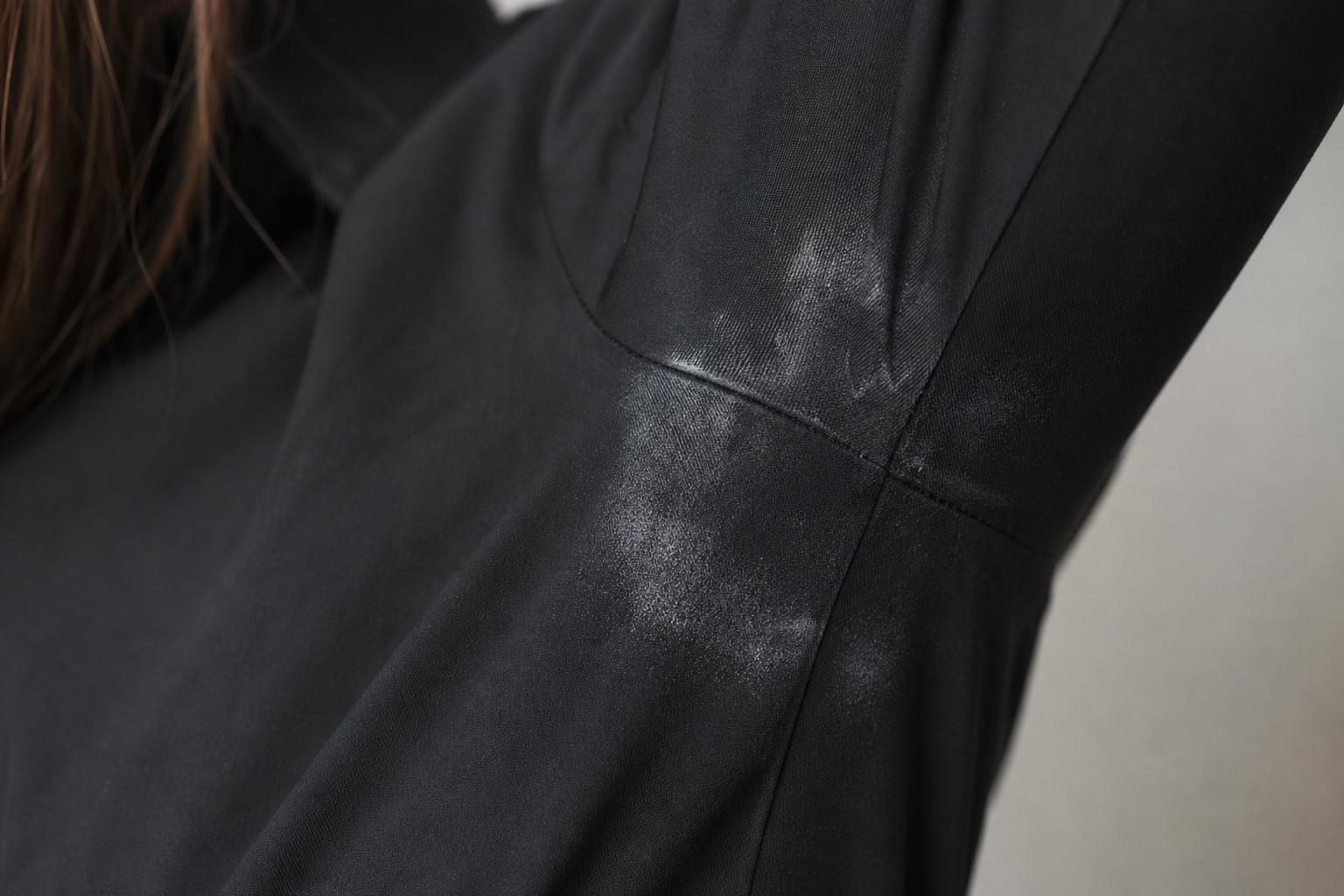
- White residue: Fresh, powdery or chalky marks from deodorant transfer. These are usually the easiest to remove.
- Yellow, grey or stiff underarm buildup: Older residue that can involve antiperspirant ingredients, sweat, body oils and detergent left in the fabric. This takes more work to remove.
If the shirt has already been tumble dried or ironed, the stain may be more stubborn. Heat can set the mark, so don’t dry it again until you’re happy with the result.
What you need
- Clean dry microfibre cloth or soft flannel
- Liquid laundry detergent
- Soft toothbrush or small laundry brush
- Cool to warm water
- Prewash stain remover for heavy buildup
- Oxygen bleach safe for colours, if the care label allows
- Bicarbonate of soda / baking soda, optional for gentle rubbing on surface marks
Time: 1 minute for fresh white marks, 20 to 40 minutes for set-in buildup plus wash time.
Difficulty: Easy to moderate.
Safety notes: Check the care label and any manufacturer instructions for the garment first. Always test on a hidden area for colourfastness. Never mix stain removers or bleach with vinegar, ammonia or other cleaners. Do not use chlorine bleach on black shirts.
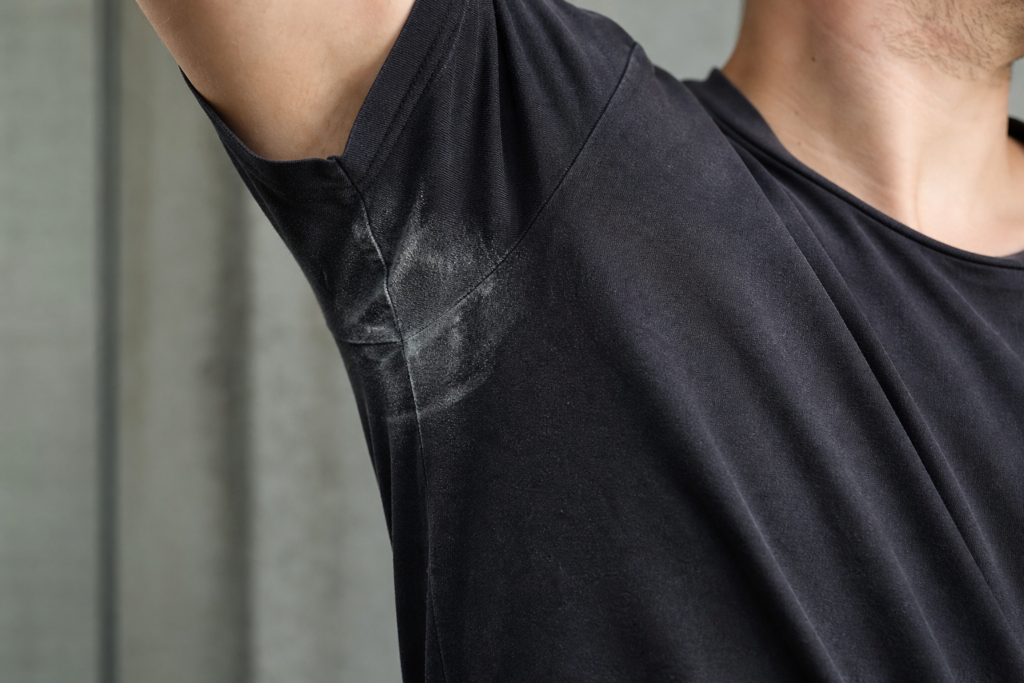
How to remove white deodorant marks from black shirts quickly
If the mark is fresh, start dry before you reach for water. That usually works best and helps prevent the fabric from looking rubbed in or patchy.
- Lay the shirt flat. Keep the fabric smooth so you don’t spread the mark.
- Rub gently with a dry cloth. Use a clean microfibre cloth or soft flannel and buff the mark with short strokes.
- Try the shirt-on-shirt trick. Rub the fabric against another clean part of the shirt. This can loosen surface transfer without adding any product.
- If needed, add one drop of water. Lightly dampen one corner of the cloth and blot, then buff dry.
- Let it dry fully before checking. Black fabric can look darker while damp, so give it a minute before deciding it needs more.
If you’re searching for how to remove deodorant stains from black shirts quickly without washing, try this first.
Natural quick fix for surface marks
If the residue is stubborn, sprinkle a tiny amount of bicarbonate of soda / baking soda onto a dry cloth and rub very lightly. This can help lift chalky transfer, but don’t scrub. Too much friction can leave black cotton looking dull.
How to remove deodorant stains from black shirts while wearing or on the go
You can usually improve white marks while the shirt is still on, as long as you keep it simple.
- Use a dry tissue, sock, flannel or microfibre cloth to rub the mark gently.
- If you have nothing else, rub the shirt fabric against itself.
- A barely damp cloth can help, but use very little water so you don’t leave a visible wet patch.
- Let the area dry before adding a jacket or bag strap over it.
Avoid random wipes, hand soap or strong stain pens on black fabric unless you know they’re safe for dyes. They can leave a ring or bleach the colour.
How to remove older deodorant buildup from black shirts
For underarm areas that feel stiff, look discoloured or still show marks after washing, use a proper pretreat. This is also the best way to remove deodorant stains from black shirts after washing.
- Turn the shirt inside out. That lets you work directly on the buildup.
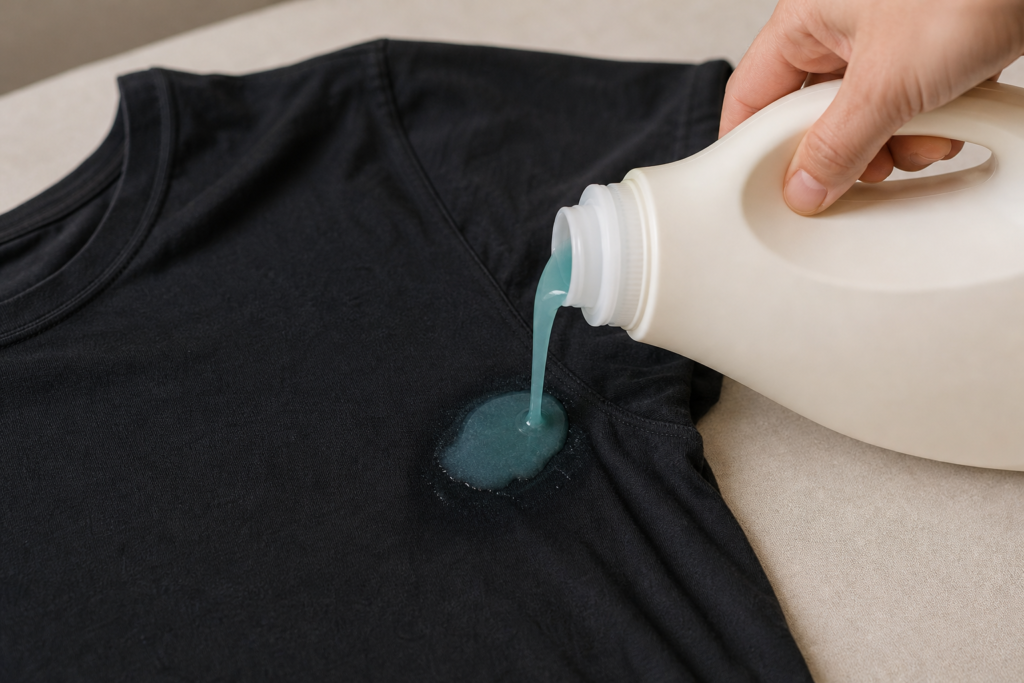
- Apply liquid laundry detergent. Cover the affected area with a small amount.
- Work it in gently. Use your fingers or a soft toothbrush to massage the detergent into the fibres for 30 to 60 seconds.
- Leave it for 5 to 10 minutes. Don’t let it dry out fully on the fabric.
- Rinse with cool to warm water. If the mark has started to lift, move on to washing.
- Wash according to the care label. Use the warmest water the label allows.
- Check before drying. If the stain remains, repeat the treatment instead of using the tumble dryer.
The American Cleaning Institute’s stain removal guide recommends liquid detergent for lighter deodorant stains and a prewash stain remover for heavier ones.
For heavy underarm buildup
If plain liquid detergent isn’t enough, use a prewash stain remover and leave it on for 5 to 10 minutes, following the product label. Then wash the shirt and, if the care label allows, use an oxygen bleach made for coloured fabrics.
Oxygen bleach is the safer bleach type for this job. Chlorine bleach is not suitable for black shirts and can cause obvious fading.
What to do if the shirt has already been washed
If you’re looking for how to remove deodorant stains from black shirts after washing, don’t assume the shirt is ruined. A wash can leave residue behind, especially if the buildup is old or the washer was overloaded.
Do this:
- Re-wet the underarm area.
- Pretreat with liquid detergent or a prewash stain remover.
- Leave for 5 to 10 minutes.
- Wash again with enough space in the machine for good circulation.
- Air dry and inspect before using heat.
Some set-in antiperspirant marks may need more than one round. In some cases, the residue or colour change may not come out fully, especially if aluminum salts have changed the fabric.
Mistakes that make black shirts look worse
- Using heat too soon. Skip the iron and tumble dryer until the stain is gone.
- Scrubbing too hard. This can create faded-looking patches on dark cotton.
- Using chlorine bleach. Fine for some white laundry, wrong for black shirts.
- Mixing cleaners. Never combine bleach, vinegar, ammonia or other stain products.
- Treating a fresh white mark like a set-in stain. Start with the mildest dry method first.
How to stop deodorant marks coming back
Prevention helps more than you might think, especially with black tops you wear often.
- Let deodorant dry fully before dressing. This reduces direct transfer onto fabric.
- Apply antiperspirant to dry skin. Applying it at night is often recommended so it has time to settle.
- Use less product. A thick layer is more likely to rub off onto your shirt.
- Wash shirts before buildup gets heavy. Rewearing sweaty tops makes the underarm area harder to clean.
- Don’t overload the washer. Clothes need room to move so detergent and rinse water can do their job.
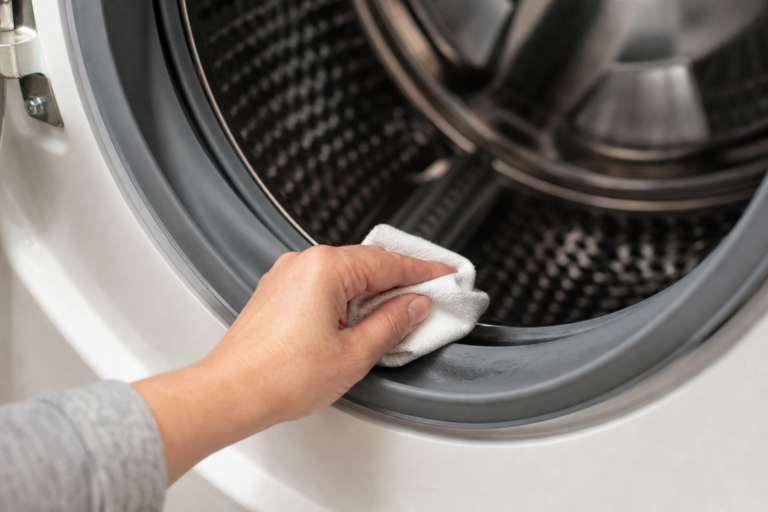
If your laundry needs a general reset, browse the Laundry guides on The Tidy Habit. You might also find how to clean washing machine rubber seal black marks helpful if your machine needs attention, and how to get rid of musty smell in towels without bleach if stale laundry smells are part of the problem.
Quick reference: which method should you use?
| Problem | Best first step | Do you need to wash it? |
|---|---|---|
| Fresh white streaks | Rub gently with a dry microfibre cloth | No, often not |
| White marks while wearing | Use a dry cloth or rub fabric against itself | No, not immediately |
| Older chalky underarm residue | Pretreat with liquid detergent for 5 to 10 minutes | Yes |
| Yellow or grey underarm buildup | Prewash stain remover, then wash | Yes |
| Stain still there after washing | Repeat pretreat before drying | Yes, wash again |
When the mark won’t fully come out
Sometimes the issue is no longer just residue. If the fabric has changed colour in the underarm area, full removal may not be possible. That’s more likely with older antiperspirant buildup, repeated heat or strong rubbing.
If you want to keep laundry care simpler overall, a short reset habit helps. The site’s daily reset routine for a messy house is aimed at general home tidying, but the same idea works for laundry too: a few minutes now can stop bigger jobs later.
Start with the gentlest fix that matches the stain, and stop before you overwork the fabric. Black shirts usually respond better to patience than force.
Frequently Asked Questions
How to remove deodorant stains from black shirts quickly without washing?
For fresh white marks, use a dry microfibre cloth or soft flannel and rub gently. You can also rub the fabric against another clean part of the shirt. If needed, use a barely damp cloth, then let the area dry. This usually works for surface residue and avoids fading from over-treating.
How to remove deodorant stains from black shirts on the go?
Use the mildest dry method first. A tissue, clean sock, flannel or microfibre cloth can buff off fresh white marks. If you are stuck, rub the shirt fabric against itself. Avoid random wipes or strong soaps, which can leave a ring or affect the dye on dark clothing.
How to remove deodorant stains from black shirts after washing?
Pretreat the underarm area with liquid laundry detergent or a prewash stain remover and leave it for 5 to 10 minutes. Then wash again following the care label. Do not tumble dry until the stain is gone. Set-in buildup often needs more than one treatment, especially if it has already been heated.
What is the best way to remove deodorant stains from black shirts without fading them?
Match the method to the stain. For fresh white streaks, start dry with a soft cloth. For older buildup, pretreat with liquid detergent, wash on the warmest setting the care label allows, and check before drying. Always patch test first, avoid hard scrubbing, and never use chlorine bleach on black shirts.
Free printable
Get the 15-minute weekly cleaning checklist
One short block a day keeps the whole home under control. Open the printable checklist, then join the list for one new practical guide a week. No spam, unsubscribe any time.